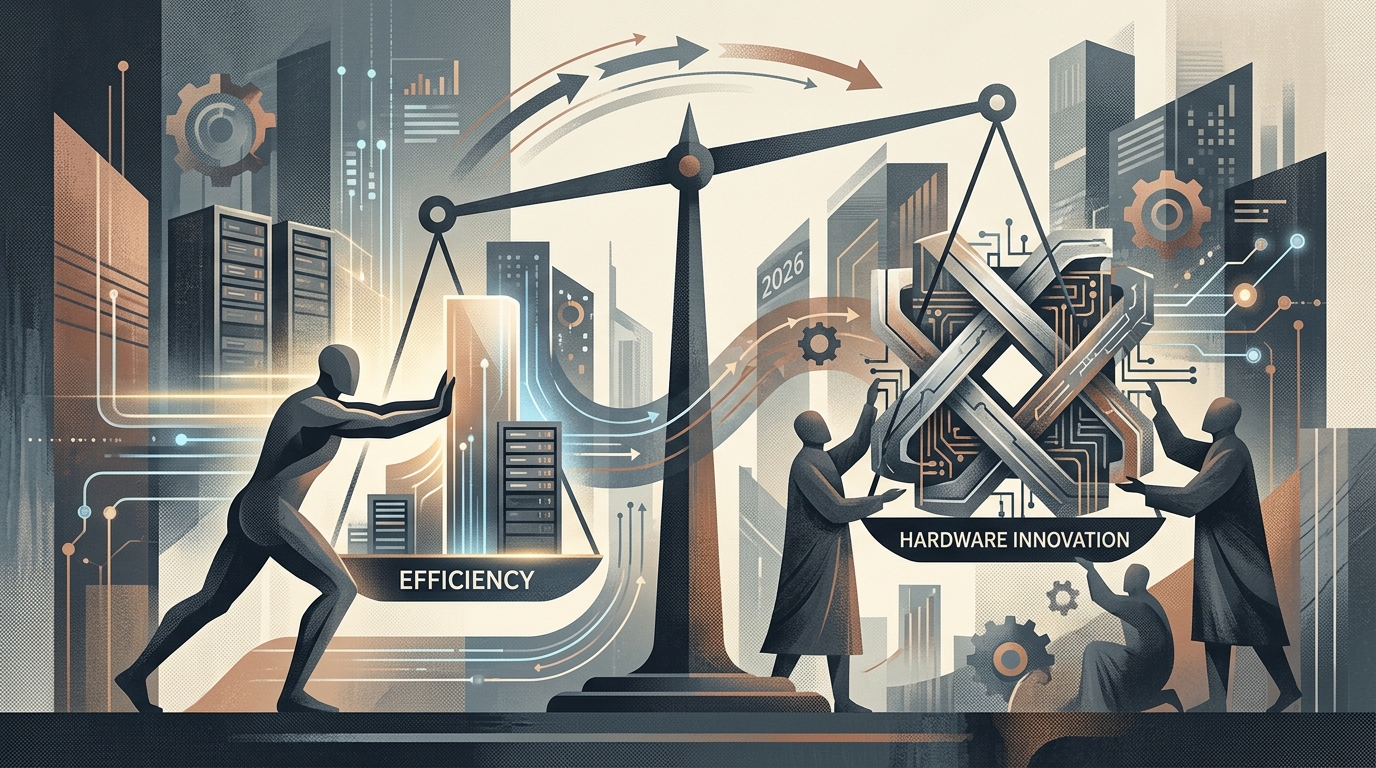
In the financial landscape of mid-2026, the concept of a "traditional bank" has become an anachronism. The integration of Generative AI has transitioned from a series of experimental pilot programs into an operational backbone for global finance. However, a stark warning from PYMNTS.com highlights a growing fracture: banks are racing into AI deployments at a speed that cybersecurity frameworks simply cannot match. This asymmetry is creating a high-stakes environment where innovation could inadvertently become the Trojan horse for systemic financial instability.
The Illusion of the Digital Fortress
Banks have historically been the world's most guarded institutions. Today, the walls of these fortresses are no longer made of granite and steel, but of complex, evolving code. Driven by the relentless pursuit of lower cost-to-income ratios and the demand for hyper-personalized consumer experiences, institutions are handing over critical functions—from credit underwriting to wealth management—to AI models. The central problem is that these models are often "black boxes," whose internal logic is opaque even to the data scientists who deployed them.
Cybersecurity, which has traditionally been a reactive discipline, is struggling to pivot toward threats that have no historical precedent. "Data poisoning" attacks, where adversaries inject subtle biases or falsehoods into training sets, can compromise a bank’s decision-making engine without ever triggering a standard intrusion alarm. Furthermore, the democratization of AI means that cyber-criminals now possess the same sophisticated tools as the banks, using them to craft indistinguishable deepfakes for bypassing KYC (Know Your Customer) protocols and launching automated, polymorphic phishing campaigns.
The Regulatory Labyrinth and Global Divergence
While the European Union has taken a decisive lead with the EU AI Act, enforcing these rules within the fast-moving banking sector is proving to be a Herculean task. Regulators are demanding full explainability of AI-driven decisions, a requirement that often conflicts with the inherent complexity of advanced deep-learning architectures. In the United States, the approach remains more fragmented, focusing on existing consumer protection laws that were never designed for a world of autonomous financial agents.
The critical question is whether regulatory compliance is synonymous with actual security. History suggests that regulations are often the "autopsy" of a previous crisis rather than a preventative shield. In the context of AI, a failure is not merely a localized data breach; it is a potential erosion of depositor trust—the very bedrock of the global economy. Financial institutions must now commit to investing in "Defensive AI" at the same scale they invest in "Front-end AI," creating self-healing systems capable of detecting algorithmic anomalies in real-time.
The Human Factor and the Ethics of Velocity
Beyond the technical vulnerabilities lies a profound social risk. The automation of banking minimizes human intervention and, by extension, human empathy and situational intuition. If an algorithm incorrectly denies credit due to a localized model hallucination or an undetected bias, the impact on the real economy is immediate and damaging. The "velocity" promised by AI must not come at the expense of "equity" and "accountability."
"Technology is a useful servant but a dangerous master," and in the banking sector of 2026, this adage has never been more pertinent.
In conclusion, the banking industry's race toward AI is both inevitable and necessary for survival in a digital-first world. However, speed without strategic oversight is a recipe for systemic failure. The industry must find the courage to calibrate its pace, ensuring that security protocols are not just an afterthought but a foundational element of every deployment. Trust is built over decades; in the age of AI, it can be liquidated in a matter of milliseconds by a single unmonitored algorithm.