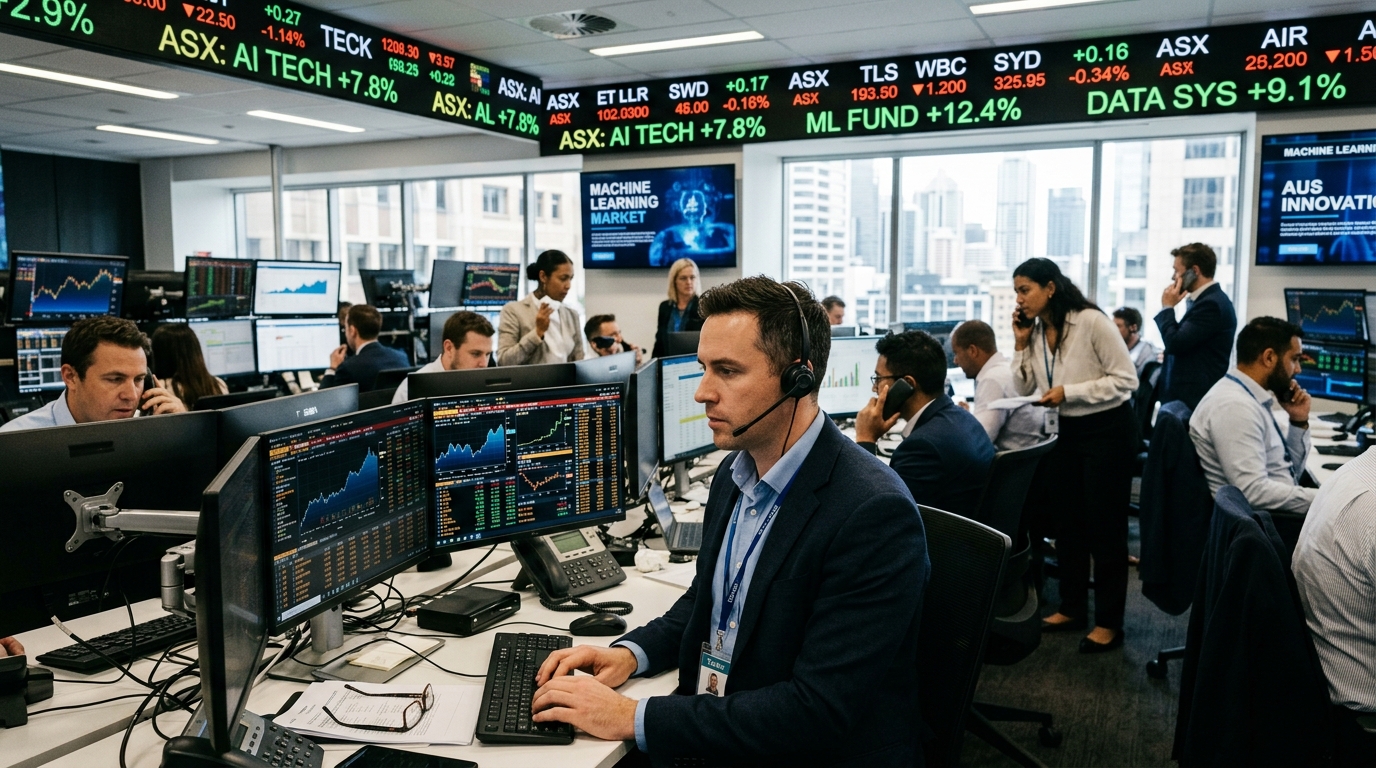
Australia, a nation traditionally defined by its vast natural resources and agricultural prowess, is currently undergoing a radical metamorphosis. The Machine Learning (ML) market in the Land Down Under is poised for explosive growth, as AI adoption accelerates across every vertical—from the remote iron ore mines of the Pilbara to the high-frequency trading floors of Sydney. This shift is not merely a technological upgrade; it is a calculated strategic pivot designed to maintain global competitiveness in an increasingly data-driven world economy.
The Engine of Industrial Transformation
The mining sector, the historical backbone of the Australian economy, is leading the charge. Global giants like Rio Tinto and BHP are integrating machine learning algorithms to optimize complex logistics, perform predictive maintenance on multi-million dollar machinery, and automate drilling operations. By processing vast amounts of geological data in real-time, ML allows these firms to reduce operational costs and significantly enhance worker safety. We are witnessing the evolution of mines into outdoor "smart factories," where productivity is no longer measured solely by physical output, but by computational efficiency and algorithmic precision.
Simultaneously, the agricultural sector (AgTech) is leveraging machine learning to navigate the existential threats of climate change. Through the analysis of satellite imagery and IoT soil sensors, Australian farmers can now predict crop yields with unprecedented accuracy while optimizing water and fertilizer usage. In a continent frequently ravaged by droughts and extreme weather, ML provides a critical toolkit for resilience and sustainability, ensuring food security and economic stability.
Government Strategy and the Investment Landscape
Recognizing the transformative potential of these technologies, the Australian government has funneled billions into national programs and the CSIRO (Commonwealth Scientific and Industrial Research Organisation). The establishment of the National AI Centre serves as the cornerstone of this effort, aiming to foster a domestic ecosystem capable of competing with global hubs like Silicon Valley and Beijing. However, a significant hurdle remains: the acute skills shortage. The demand for data scientists and ML engineers far outstrips domestic supply, prompting a reevaluation of skilled migration policies to attract global talent to Australian shores.
- Increased venture capital flow into AI startups in Melbourne and Sydney.
- Strategic partnerships between universities and industry leaders for R&D.
- Focus on "Sovereign AI" to reduce reliance on foreign tech giants.
- Implementation of ethical AI frameworks to build public trust.
The Ethical Frontier and Data Sovereignty
As the market expands, so do concerns regarding privacy, bias, and data sovereignty. Australia is actively working to develop its own ethical AI standards, attempting to strike a delicate balance between fostering innovation and protecting citizen rights. There is a growing realization that over-reliance on algorithms developed in the US or China could compromise national security and economic autonomy. The push for "Sovereign AI"—models trained and hosted locally—has become a top priority for both policymakers and corporate boards.
"Artificial Intelligence is no longer a future promise for Australia; it is a present economic imperative that will define our prosperity for the next century," note industry analysts.
In conclusion, the explosion of the machine learning market in Australia is a multifaceted phenomenon. It represents more than just GDP growth; it is a redefinition of the nation's economic identity. By pivoting from a raw materials exporter to an exporter of intelligence and innovation, Australia is building a more resilient, diversified, and future-proof economy. The road ahead is complex, but the momentum is undeniable.