The phrase "too big to fail" has haunted the global economy since the 2008 financial crisis, when central banks were forced to bail out financial institutions whose collapse would have dragged down the entire global system. Today, in 2026, that same phrase is shifting from Wall Street to Silicon Valley. Artificial Intelligence (AI) is no longer just a technological innovation; it is the backbone of modern infrastructure, and a handful of companies—Microsoft, Google, Amazon, Nvidia, and Meta—control every facet of it.
Vertical Integration and the Oligopoly of Power
The concern increasingly voiced by economists and regulators, as highlighted by a recent France 24 analysis, pertains to the terrifying concentration of resources. To develop a leading AI model today, one needs three things: immense computing power (chips), access to unimaginable volumes of data, and billions in capital for energy consumption. Currently, only the aforementioned giants possess all three.
This "vertical integration" creates an environment where competition becomes nearly impossible. AI startups, instead of competing with the giants, are forced to become dependent on them. OpenAI relies on Microsoft's cloud infrastructure; Anthropic depends on Amazon and Google. This is not a free market, but a digital feudal system where "tech lords" provide the land (cloud) and the tools (models) to the "vassals" (startups), while keeping the lion's share of the value created for themselves.
Systemic Risk and the Digital Hydra
The problem extends beyond the boundaries of antitrust law. If one of these companies faces a major crisis—whether due to a cyberattack or a technical failure—the consequences will be global. Imagine a scenario where Microsoft's Azure or Amazon's AWS goes offline for 48 hours. In a world where healthcare, energy, transportation, and banking rely on AI models running on these servers, the paralysis would be total.
Regulators in the European Union and the US are on high alert. The EU Competition Commissioner has already begun scrutinizing partnerships between major players, fearing that these "investments" are actually disguised acquisitions designed to kill competition in its crib. However, technology moves faster than legislation. By the time a five-year investigation concludes, the market will have already solidified into a structure that is impossible to dismantle.
The Geopolitical Dimension and the Path Ahead
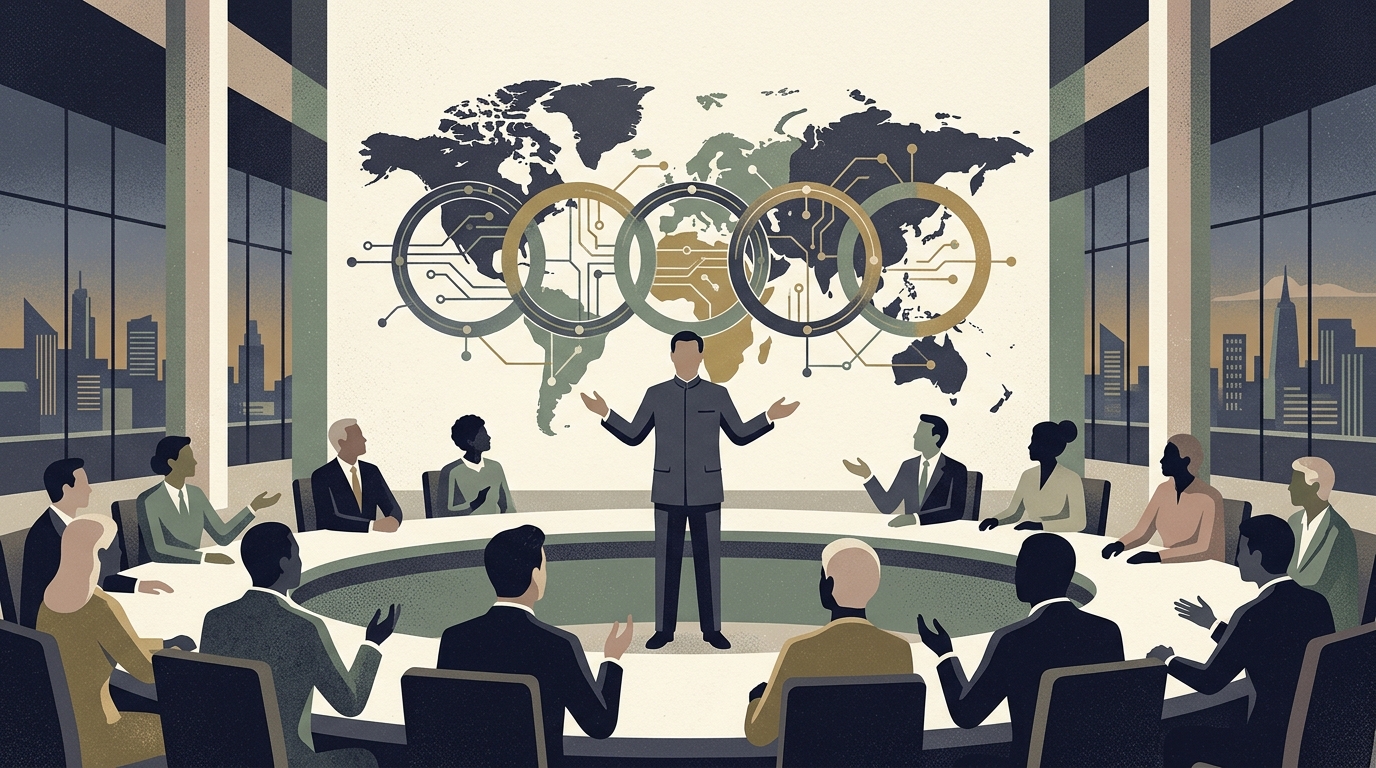
We cannot ignore the geopolitical aspect. The US government views these giants as national assets in the technological cold war with China. This creates a paradox: while regulators want to limit their power for the sake of consumers, governments protect them for the sake of national security. This "immunity" reinforces the belief that these companies are now above the state.
In conclusion, Artificial Intelligence risks transforming from a democratic promise into a closed elite system. The need for open-source standards and public computing infrastructure is more urgent than ever. If we allow the intelligence of the future to belong exclusively to five corporate boards, then the concept of the "free market" will remain only in history books.
- Big Tech's AI dominance creates massive barriers to entry for new competitors.
- Reliance on a few cloud providers for critical infrastructure poses systemic risks.
- Regulators are struggling to keep pace with the velocity of AI development.
- Geopolitical tensions between the US and China serve as a shield for tech monopolies.