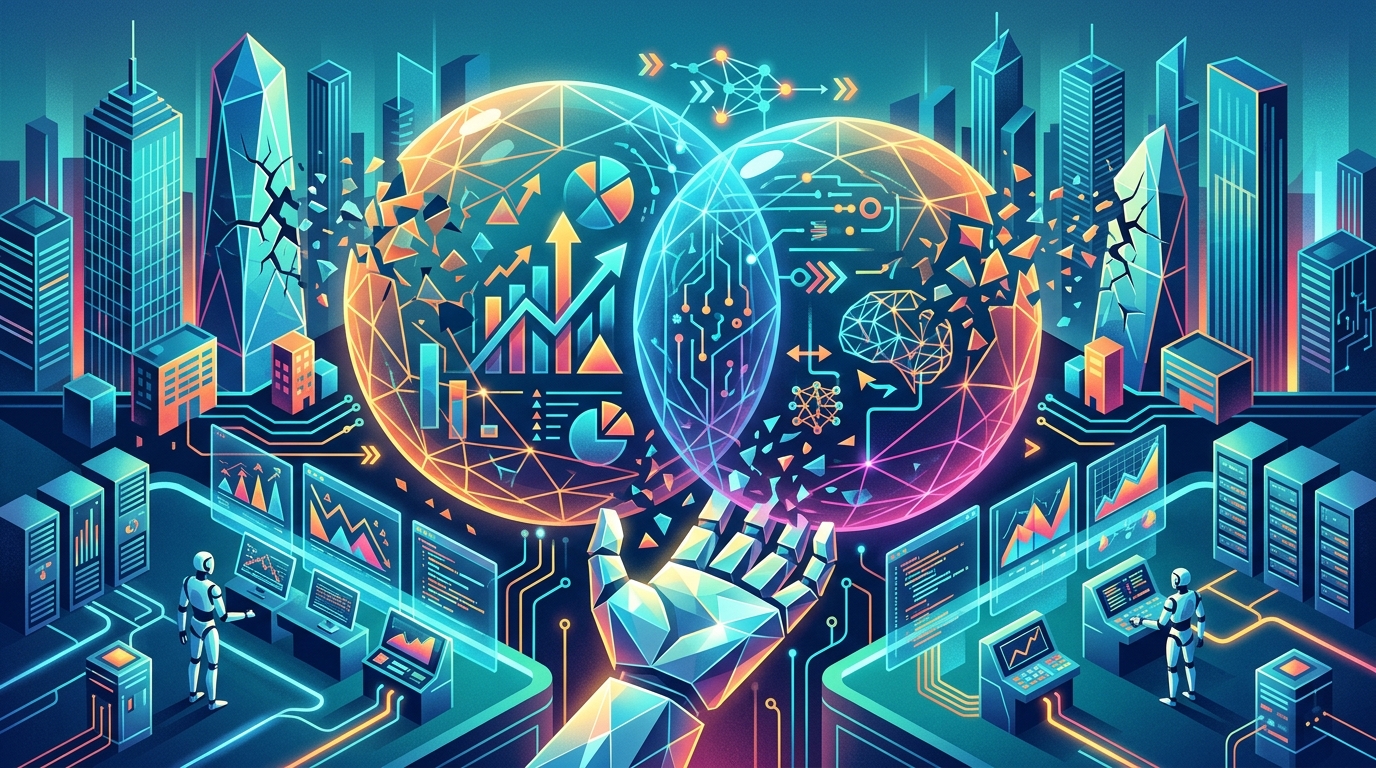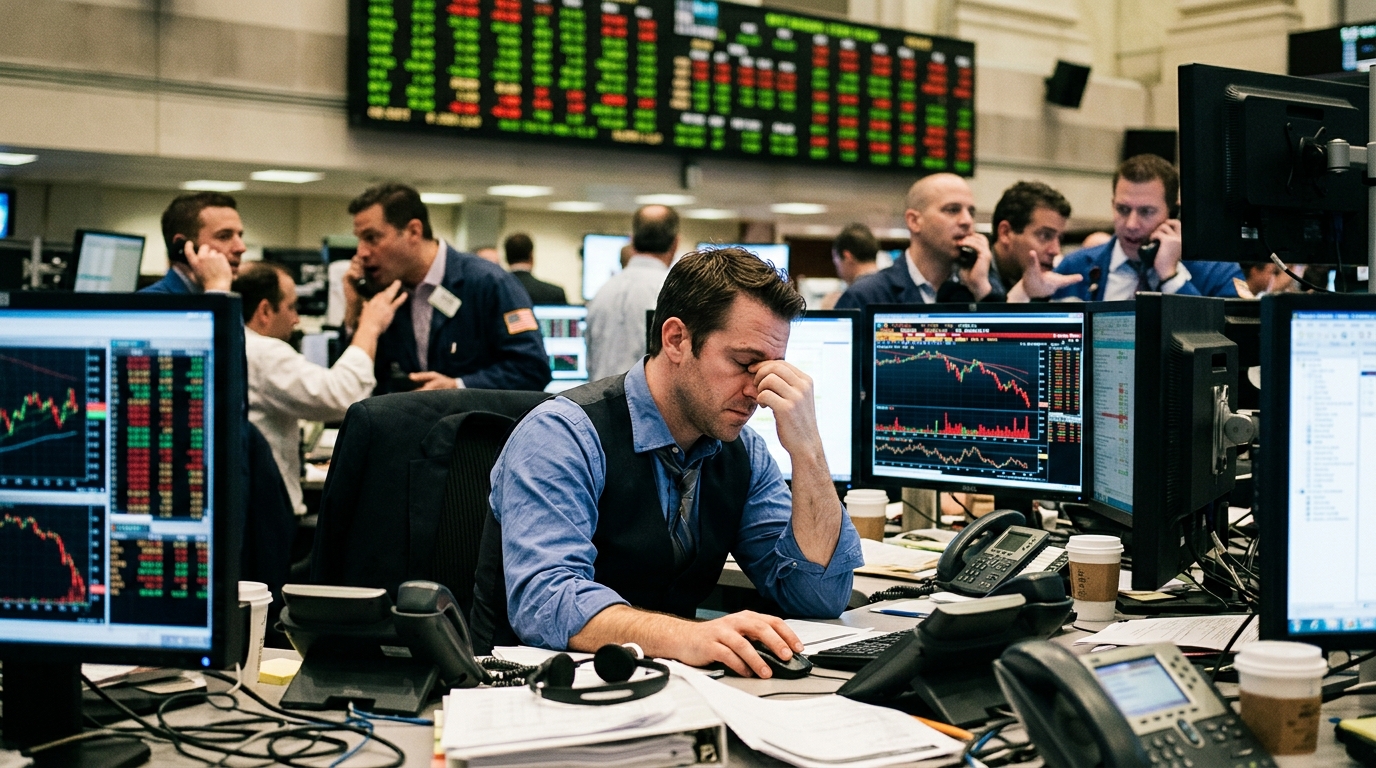
June 24, 2026, will likely be recorded in the annals of technological history as the day the 'compute bubble' began to deflate with a deafening roar. Stock markets in New York and Tokyo experienced a violent pullback, with semiconductor giants and cloud service providers losing hundreds of billions of dollars in market capitalization within hours. At the heart of this storm lies not a financial recession, but a technological revelation known as DeepSeek.
The Dethroning of the Brute Force Doctrine
For nearly three years, Silicon Valley operated under a sacrosanct doctrine: the more GPUs you buy and the more data you feed your models, the smarter they become. This 'Scaling Law' led to mammoth investments, with Microsoft, Google, and Meta spending tens of billions of dollars annually on Nvidia chips. However, the recent rise of DeepSeek, a China-based AI lab, has overturned everything.
DeepSeek proved it could build models that rival—or even surpass—GPT-4 and Claude 3.5 using a fraction of the resources and capital. While training top-tier American models is now estimated to cost over $500 million (with some estimates reaching a billion), DeepSeek achieved similar results with just $6 million. This gap in efficiency is not merely a technical detail; it is an existential threat to the business model of American Big Tech.
The Geopolitical Chessboard and China's Counterattack
DeepSeek's success comes at a time when the US is desperately trying to restrict China's access to advanced semiconductors. The irony is palpable: these restrictions forced Chinese engineers to become exceptionally creative in their model architecture. Instead of relying on an abundance of chips, they focused on algorithmic optimization and the use of techniques like Mixture-of-Experts (MoE) in a much more aggressive and effective manner.
- China's 'Efficiency-First' strategy is bearing fruit, eroding the US advantage in compute infrastructure.
- The decline in Nvidia's stock reflects the fear that GPU demand may plummet if models become 'lighter.'
- Investors are now questioning whether Microsoft's $100 billion Capex spending makes sense when a competitor achieves the same with 1% of the cost.
"We are not just seeing a price correction, but a philosophy correction. The era where intelligence was bought by the ton is over," says a leading Wall Street analyst.
Implications for the Future of AI
The current violent market pullback does not signal the end of AI, but its coming of age. Companies will now be forced to prove their profitability and the ROI of their investments. The 'DeepSeek Moment' marks the transition from the stage of hype to the stage of industrial optimization. For consumers, this is positive: AI will become cheaper, more accessible, and less energy-intensive. For shareholders of companies that relied on the exclusivity of compute power, the coming months will be painful.
In conclusion, the AI market is undergoing a catharsis. DeepSeek is not just a player from the East; it is the catalyst reminding everyone that in technology, smart engineering will always beat deep pockets in the long run. The correction we see today is the price of adjusting to this new, more rational reality.