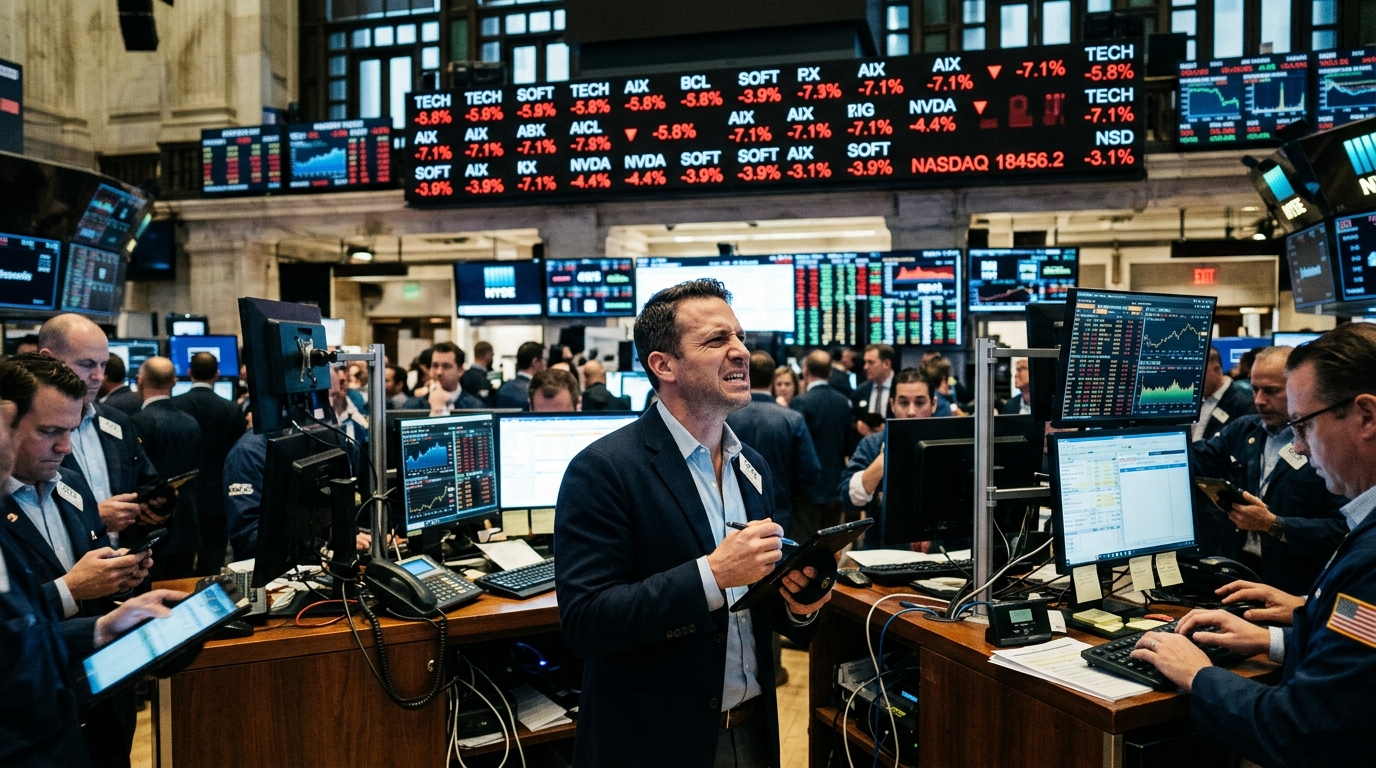
The global investment community is currently in a state that many analysts describe as "rational exuberance," while others categorize it as pure speculative fever. The surge in Wall Street indices, driven almost exclusively by the Artificial Intelligence (AI) sector, has brought to the fore a question that has haunted markets for decades: Are the current valuations of tech giants justified by their fundamentals, or are we on the brink of a "bubble" similar to the dot-com crash of the early 2000s?
The Comparison with 2000: A Historical Lesson or a False Analogy?
To understand today, we must look at yesterday. In 1999, internet companies saw their stocks skyrocket without even having revenue, let alone profits. The promise of the internet was enough to fuel a frenzy. Today, the situation presents significant differences. Companies like Nvidia, Microsoft, and Google are not just selling a vision; they are recording unprecedented profitability. Nvidia, for example, which is the "heart" of the AI revolution, reported revenue growth exceeding 200% year-on-year, backed by real demand for processing chips.
However, skeptics point out that market concentration in a few powerful players is dangerous. The so-called "Magnificent Seven" are responsible for the bulk of the S&P 500's gains. This lack of market breadth means that if one of these pillars falters, the entire structure risks collapse. History teaches us that when optimism becomes universal, danger lurks around the corner.
The Cost of Infrastructure and the Profitability Challenge
One of the main arguments of those speaking of a bubble is the massive capital expenditure (CAPEX). Big tech companies are spending hundreds of billions of dollars creating data centers and purchasing GPUs. The question arises: When will these investments actually yield profits for the businesses using AI, and not just for those manufacturing it?
- The Training Phase: We are currently in the stage where models are being trained, which requires enormous computing power.
- The Implementation Phase: The real test will come when companies must prove that AI tools increase productivity and reduce costs to an extent that justifies the price tag.
- The Energy Crisis: AI is energy-intensive. The pressure on power grids worldwide is a factor that markets may not have fully priced in.
"Artificial Intelligence is perhaps the most significant technological development of our time, but its stock market trajectory follows the laws of gravity. What goes up sharply often corrects violently."
Geopolitics and Regulation: The Invisible Risks
Beyond the financial data, the fate of AI is closely linked to the geopolitical chessboard. The reliance on Taiwan for the production of the most advanced chips is an "Achilles' heel" for the industry. Any escalation in the region could disrupt the supply chain and cause a shock to the markets. Furthermore, the European Union and the US are increasing pressure for regulatory rules, which could limit the speed of growth and the profitability of companies.
In conclusion, the bubble debate is not black and white. We are in a transition period where the technology is real, but investor expectations may have outpaced reality. Portfolio diversification and a focus on companies with healthy cash flow remain the golden rules for those wishing to navigate these uncharted waters.