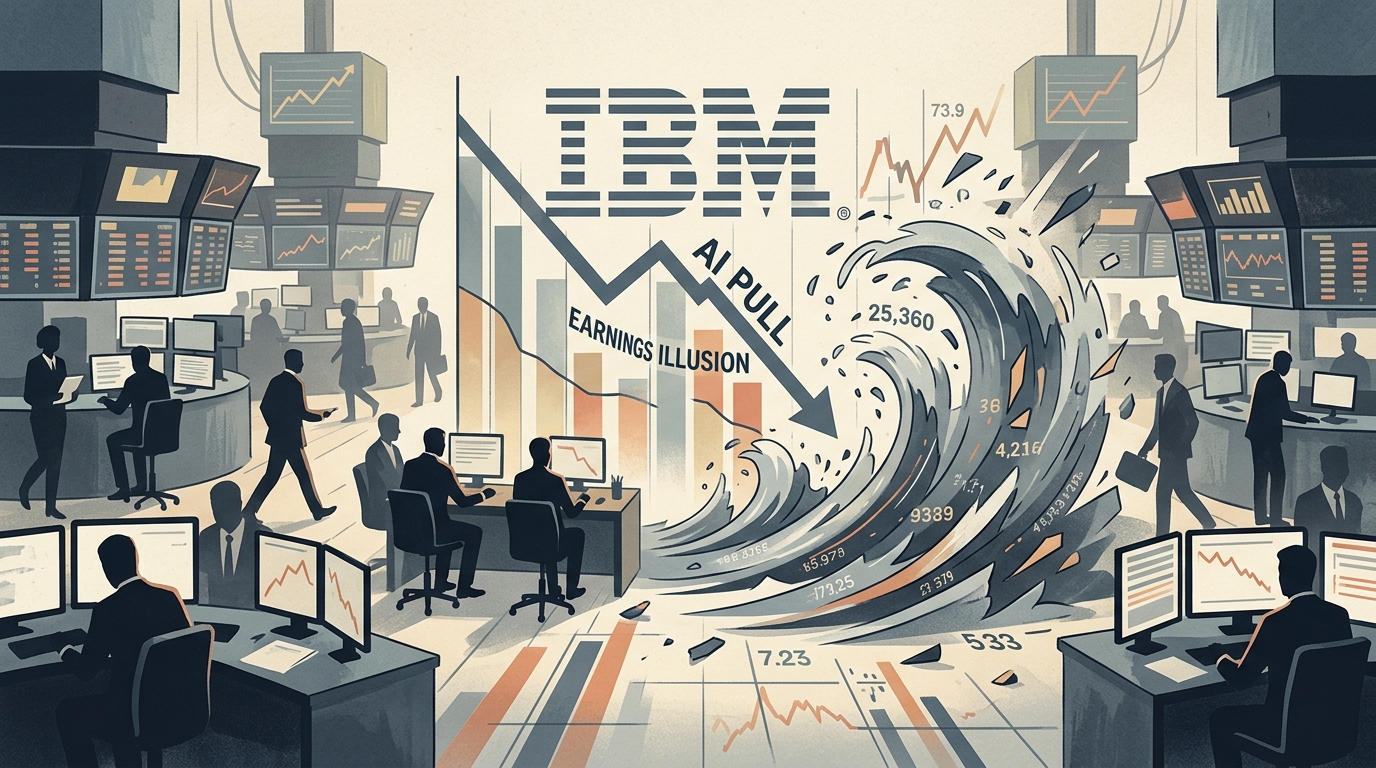
The news that a major technology firm, as reported by Vietnam.vn, has moved to eliminate 25% of its workforce due to the integration of Artificial Intelligence (AI), is no longer an isolated incident. It serves as a clarion call for a structural shift in the global economy. In an age where efficiency is the corporate 'holy grail,' the human workforce finds itself competing against a rival that never sleeps, never tires, and, most importantly, requires no salary or benefits.
The Pivot to an 'AI-First' Model
For decades, nations like Vietnam, India, and the Philippines served as the engine rooms of global tech, offering cost-effective yet skilled labor for software development and customer support. However, the advent of Large Language Models (LLMs) and Generative AI has fundamentally altered this calculus. When an AI model can write code, debug software, and handle complex customer inquiries in milliseconds, the need for thousands of entry-level employees diminishes sharply.
This Vietnamese firm is far from alone. Global giants like Klarna and Duolingo have already admitted that AI allows them to 'do more with less,' leading to hiring freezes or significant layoffs. Economic data suggests that the sectors most vulnerable are those involving routine cognitive tasks—coding, data analysis, and customer service—roles that were once considered safe harbor for the middle class.
The Efficiency Trap
The core question is whether this surge in productivity will ultimately benefit society or lead to a new form of technological feudalism. Corporations argue that AI liberates workers from repetitive tasks, allowing them to focus on creative and strategic endeavors. However, on the ground, this 'liberation' frequently translates into redundancy for a quarter of the staff.
"We are not just automating manual labor as we did in the first Industrial Revolution. This time, technology is targeting the very core of human cognition and creativity," market analysts observe.
In Vietnam, government officials and market experts are concerned that the economic growth model based on exporting tech services is under threat. If AI can perform the work of a developer in Hanoi at a fraction of the cost, the competitive advantage of lower labor costs evaporates instantly.
The Urgency of Reskilling and Social Safety Nets
The challenge for 2026 and beyond is not banning AI—which is practically impossible—but the rapid adaptation of educational systems. Workers must learn to 'ride' the AI wave rather than be submerged by it. This requires a shift from task execution to the supervision and strategic management of AI systems.
Simultaneously, governments are being forced to consider radical solutions, such as Universal Basic Income (UBI) or the taxation of robots and algorithms, to fund social safety nets. The case of the tech firm in Vietnam is merely the tip of the iceberg. Without coordinated global action, a 25% workforce reduction could soon become the standard operating procedure rather than a shocking headline.