Traditional investment wisdom dictates that diversification is the "only free lunch" in finance. However, at the dawn of the Artificial Intelligence era, this principle appears to be under severe assault. A recent letter to the Financial Times highlights a troubling trend: AI is giving diversification a "bad name," as investors who chose the safety of broad portfolios watch their returns pale in comparison to the gains of a few tech titans.
The Concentration Trap and the "Magnificent Seven" Phenomenon
Over the past two years, the US stock market—and by extension, the global market—has been driven almost exclusively by a small group of companies known as the "Magnificent Seven." Nvidia, Microsoft, Alphabet, and their peers have absorbed the lion's share of investment capital, promising a revolution that will change everything from productivity to daily life. The result is an unprecedented concentration of market capitalization. When five or six companies represent 25% or more of the S&P 500, the concept of an "index" stops representing the economy as a whole and starts functioning as a concentrated bet on a specific sector.
This concentration creates a paradox for the average investor. Those who followed the conservative path, spreading their capital across different sectors like energy, industry, or consumer goods, found themselves significantly lagging behind benchmarks. Diversification, once a risk management tool, began to be viewed as a "drag" on performance. This FOMO (Fear Of Missing Out) sentiment is pushing even the most cautious fund managers to abandon their strategies and pile into the same, arguably overvalued, tech stocks.
The Illusion of Safety and Systemic Risks
The problem with abandoning diversification is that it ignores the historical reality of financial bubbles. The current euphoria surrounding AI strongly echoes the dot-com era of the late 90s. Then, as now, the belief that "this time is different" led to extreme valuations. Artificial Intelligence is undoubtedly a transformative technology, but its economic payoff is not guaranteed for all players, nor will it happen overnight.
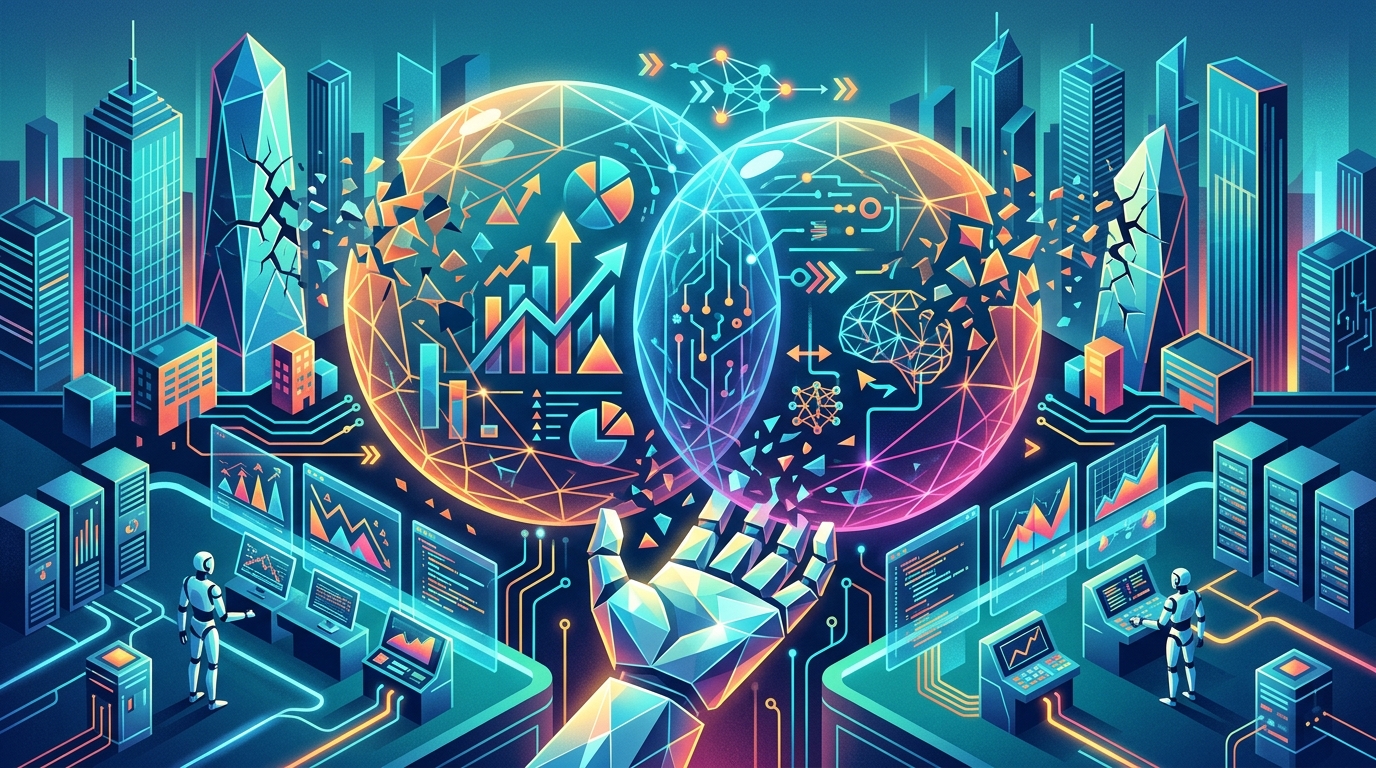
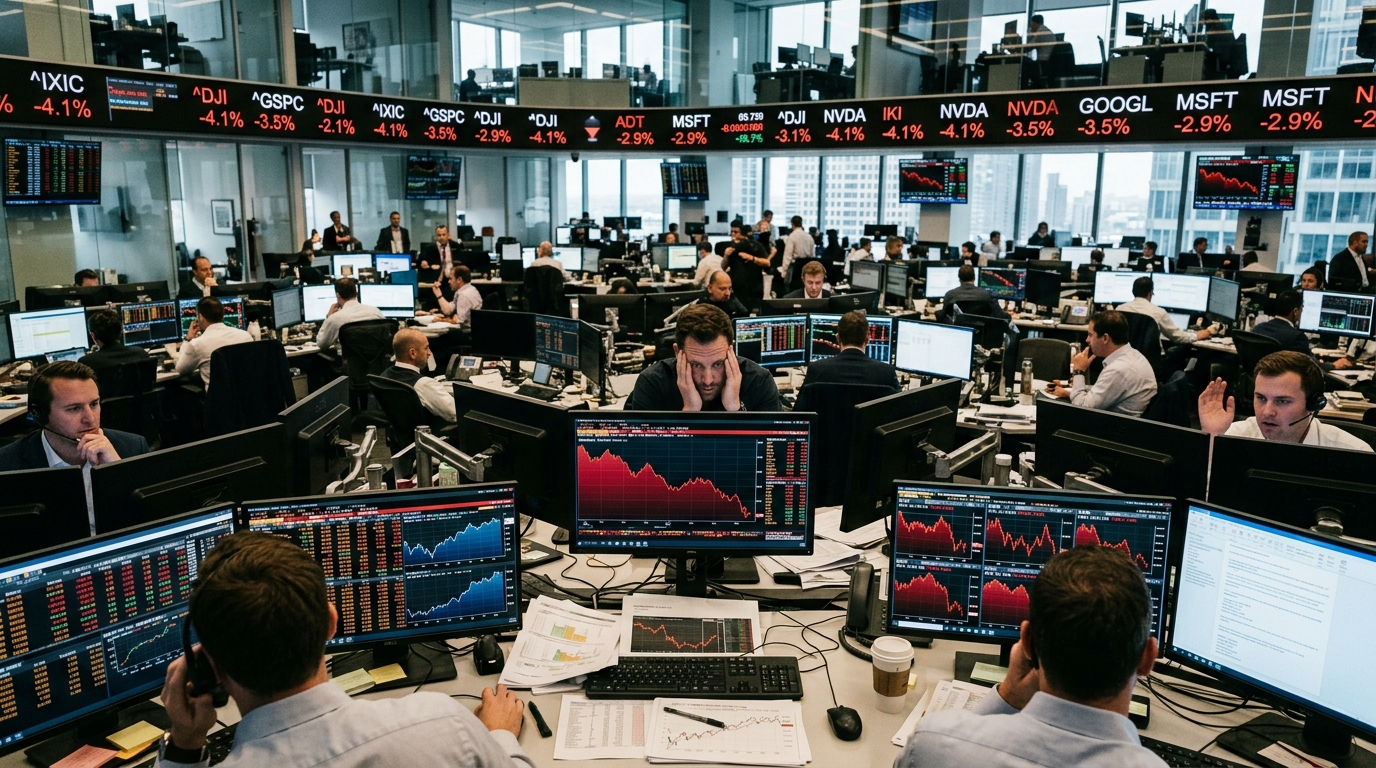
When the market becomes monolithic, systemic risk increases exponentially. If one of these major companies faces a serious issue—be it regulatory crackdowns, a failure in AI models, or geopolitical tensions affecting the semiconductor supply chain—its fall will drag the entire market down. Investors who believe they are "safe" because they hold an index are, in reality, exposed to a concentration risk that diversification was supposed to eliminate. The illusion of the perpetual rise of Big Tech blinds the market to the need for a balanced economic ecosystem.
The Productivity Paradox and Capital Misallocation
Beyond the stock market, the AI-driven disregard for diversification leads to a dangerous misallocation of capital. Huge sums are being poured into AI startups and infrastructure, often at the expense of other vital sectors that require innovation, such as green energy or healthcare logistics. While AI can certainly enhance these fields, the obsession with the "pure play" AI trade starves the broader economy of necessary investment.
"The history of markets is littered with 'undisputed winners' who eventually buckled under the weight of expectations. Artificial Intelligence is no exception to the law of gravity."
In conclusion, diversification is not an obsolete concept but a necessary defense against hysteria. Artificial Intelligence may be changing the world, but we must not allow it to distort the fundamental principles of prudent investing. A return to fundamentals and the recognition that value exists outside of Silicon Valley is the key to long-term portfolio survival in the 21st century. The "bad name" currently associated with diversification is merely a symptom of a market that has temporarily lost its sense of balance.