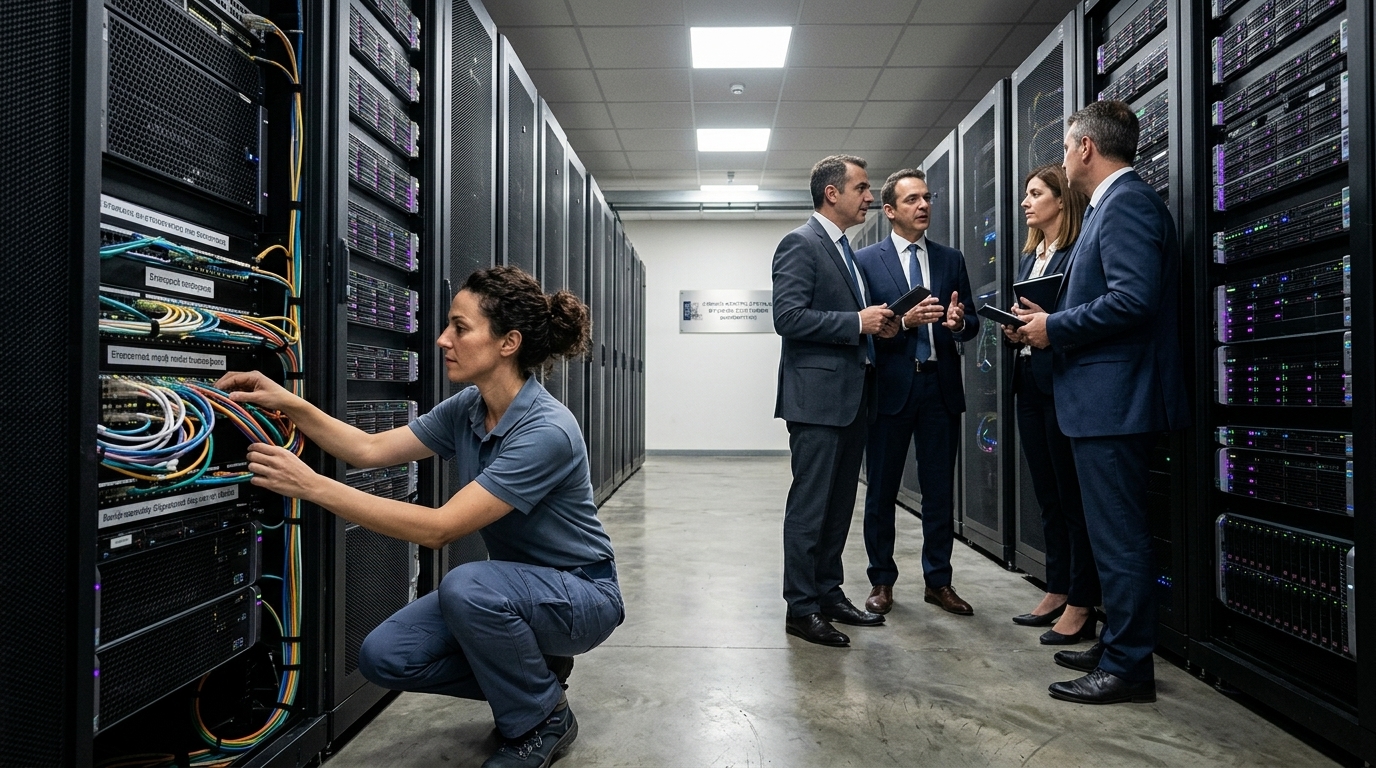
As we navigate the summer of 2026, the promise of Artificial Intelligence to usher in a new era of productivity and prosperity is colliding with a harsh, material reality. While users enjoy the seamless convenience of advanced language models and automated assistants, the "back end" of this technology—massive data centers—is triggering a chain reaction in the global economy, fueling a new type of inflation that analysts are already calling "AI-flation."
The problem is no longer just about electricity consumption; it's about how this consumption is reshaping the markets for basic goods, from electricity and water to construction materials and land. The strain on infrastructure is so intense that local communities and national governments are beginning to realize that the cost of digital progress may be passed directly onto the citizens' pockets.
The Energy Gluttony and the Cost of Utility Bills
Artificial Intelligence requires exponentially more energy than traditional internet searches. A single query to a modern LLM can consume ten times more electricity than a Google search. As these services scale to billions of users, energy demands have skyrocketed. In the United States, regions like Northern Virginia—the data center capital of the world—are seeing utility companies request rate hikes to fund grid expansions necessitated by the tech sector's growth.
The paradox is that while tech giants like Microsoft, Google, and Amazon promise net-zero emissions, their need for stable "baseload" power is forcing them to keep old coal plants running or to monopolize vast amounts of renewable energy. This siphons green power away from other sectors of the economy, forcing the rest of the population to rely on more expensive fossil fuels, thereby driving up the overall cost of energy for everyone.
The Battle for Raw Materials: Copper and Transformers
AI-flation is not limited to energy. Building these "temples of data" requires unprecedented amounts of copper, steel, and specialized equipment such as industrial transformers and advanced cooling systems. Copper, essential for electrical wiring, is in short supply as AI demand coincides with the global push for the electrification of transport. Metal prices are rising, affecting everything from the cost of building a house to the price of household appliances.
Furthermore, the supply chain for industrial transformers has reached a breaking point. With lead times now exceeding two years, utility companies are competing with tech giants for the same equipment. When a Big Tech firm is willing to pay any price to get its new data center online, smaller players and public services are left behind, with the costs of delays and higher prices eventually being passed on to the consumer.
Social Backlash and Political Costs
In many parts of Europe, such as Ireland and the Netherlands, public opposition is becoming organized and vocal. Data centers are being blamed not only for high energy prices but also for excessive water consumption—essential for cooling servers—during periods of drought. The perception that a nation's resources are being "sacrificed" to train models owned by foreign multinationals is creating a volatile political cocktail.
Governments are now faced with a choice: do they continue to subsidize digital growth as an engine of economic progress, or do they impose strict limits and "AI taxes" to protect their citizens' cost of living? The answer is not simple, as falling behind in the AI race is seen as a strategic defeat. However, inflation is an enemy that no government can ignore for long, especially when it is fueled by a technology that many still perceive as "intangible."
"We aren't just building computers; we are building a new industrial infrastructure that competes with humans for survival at the resource level," notes a prominent energy market analyst.
In conclusion, AI is no longer a free or cheap service living in the cloud. It is a heavy industry with a massive footprint in the physical world. Unless ways are found to drastically increase energy efficiency or to build new energy sources that do not strain the existing grid, the "invisible tax" of AI will continue to erode consumer income, turning the digital utopia into a long-term economic challenge.