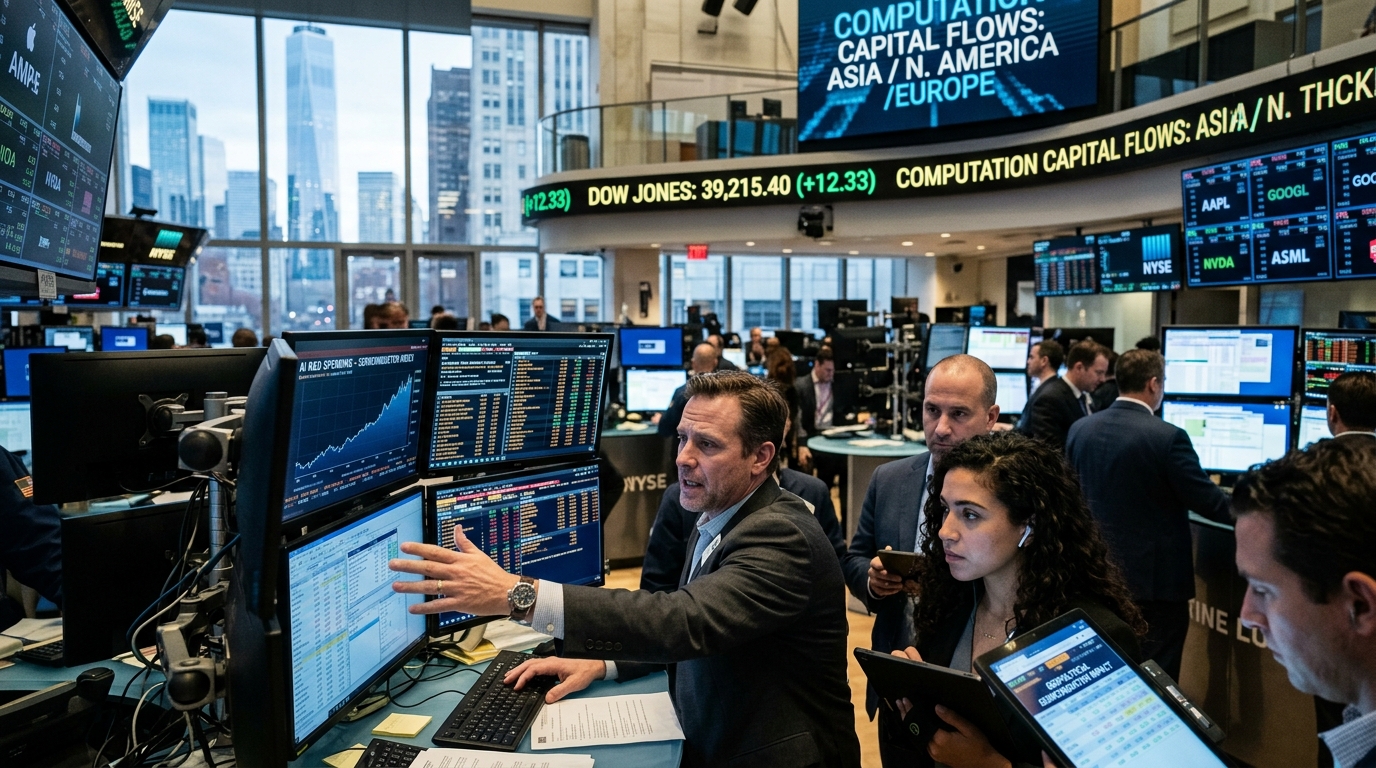
As we navigate the first half of 2026, the Artificial Intelligence (AI) industry has shed its image of lean startups operating out of Silicon Valley garages. Instead, we are witnessing an unprecedented economic war where the stakes are no longer measured in millions, but in hundreds of billions of dollars. The recent surge in global capital markets, as highlighted by financial analyses from outlets like Oikonomikos Tachydromos, underscores a stark reality: AI has ceased to be a mere software sector and has become a heavy infrastructure industry where capital is the ultimate moat.
The Era of Mega-Rounds and Power Concentration
The market dynamic has shifted radically. While 2023 and 2024 saw the explosion of Generative AI models, 2026 finds the market in a phase of violent consolidation. The 'Hyperscalers'—Microsoft, Google, Amazon, and Meta—no longer act merely as investors but as the ultimate gatekeepers of the ecosystem. The insatiable demand for computation (compute) has led to a funding cycle where the billions raised by companies like OpenAI or Anthropic are almost immediately funneled back to cloud providers and semiconductor giants like Nvidia.
This circular economy of capital creates a paradox: valuations are soaring to dizzying heights while profitability remains a distant goal for many. However, investors are not buying today's revenue; they are purchasing future hegemony. In the current geopolitical landscape, whoever controls the most advanced AI models will control the productivity of the next decade. This explains why Middle Eastern Sovereign Wealth Funds, such as Saudi Arabia's PIF, have emerged as the new 'kings' of funding, bridging the gap left by more cautious traditional Venture Capital firms.
The Cost of Infrastructure: Energy and Silicon
The real battlefield has moved from code to 'iron' and electricity. Fundraising is no longer just about hiring talented engineers; it is about securing energy resources. AI is energy-intensive at levels that threaten national power grids. Companies developing Large Language Models (LLMs) are now forced to invest directly in nuclear energy and their own proprietary data centers, driving Capital Expenditure (CapEx) to levels previously reserved for nation-states.
- The shift toward custom application-specific integrated circuits (ASICs) by Google and Amazon to reduce reliance on Nvidia.
- The creation of 'Sovereign Clouds' by European nations to protect their data integrity and digital independence.
- The growing pressure for sustainable AI, as the environmental footprint of data centers becomes a major political flashpoint.
This massive capital requirement creates a divide between the 'haves' and the 'have-nots.' Smaller startups, lacking access to billions, are forced to specialize in vertical markets or face acquisition by giants—a practice that has already drawn the scrutiny of antitrust regulators in both the US and the EU.
The European Challenge and the Market Outlook
Europe finds itself in a precarious position. While it leads in regulatory frameworks with the AI Act, it lags desperately in capital concentration compared to the US and China. Efforts to create 'European champions,' such as France's Mistral, are notable exceptions, yet their dependence on American cloud infrastructure remains a strategic vulnerability. The debate over a unified European investment strategy for AI is now more urgent than ever, as the risk of the Old Continent becoming a mere consumer of foreign technology looms large.
In conclusion, the competition for AI capital is not a bubble destined to burst tomorrow; it is the foundation of a new economic world order. The concentration of power in a few hands represents perhaps the greatest challenge to democracy and free markets in the 21st century. As observed, it is no longer about who has the best algorithm, but who has the deepest pockets and the most reliable access to energy.