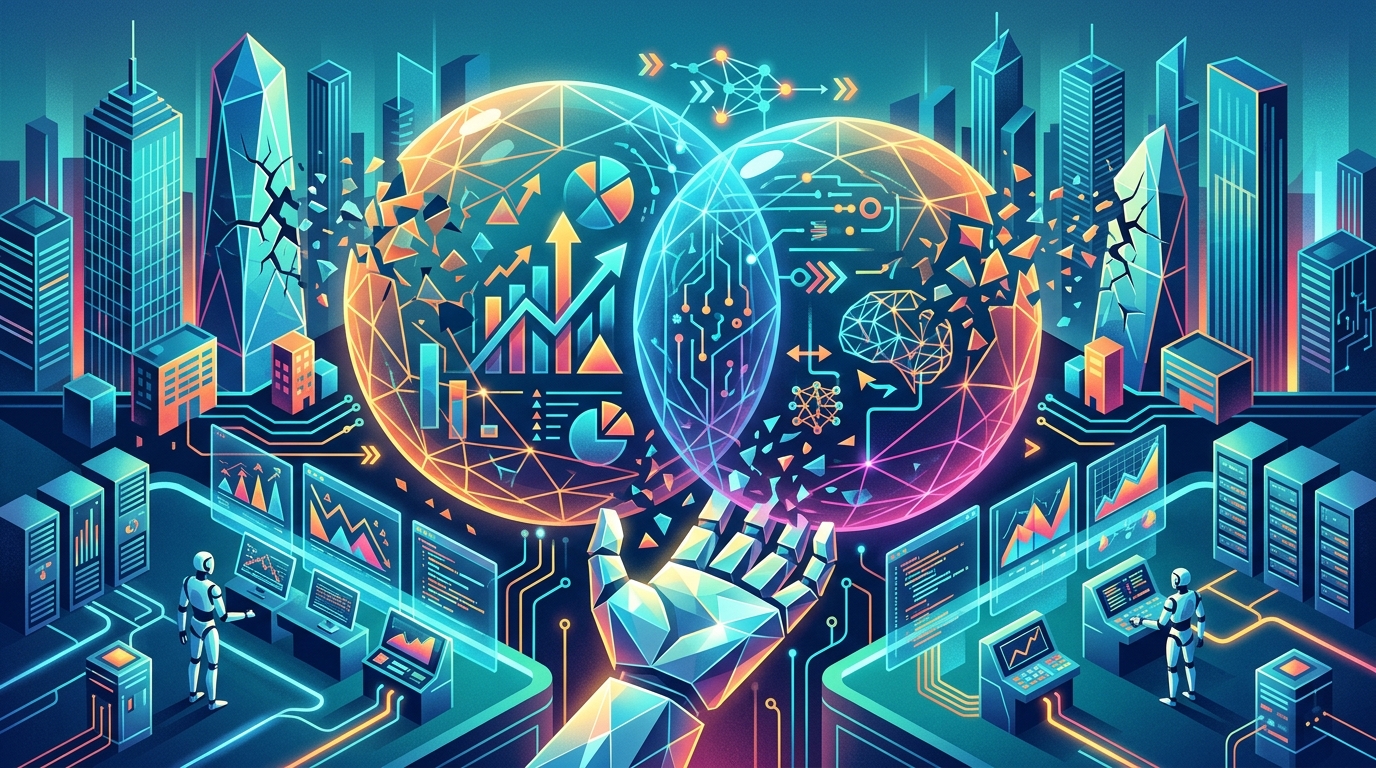
The era when a bank was a static institution, a mere custodian of deposits and a provider of loans, is firmly in the past. We stand on the threshold of a new reality where Artificial Intelligence (AI) is not just an automation tool, but the central nervous system of the financial system. The concept of "cognitive banking" promises an experience so personalized that the bank will be able to predict our needs before we even realize them ourselves.
The Shift from Reaction to Prediction
Traditional banking operated reactively: a customer requested a loan, the bank reviewed their history, and made a decision. With the use of Generative AI and advanced machine learning models, the process is being reversed. Banks are now analyzing vast volumes of data in real-time—from daily spending habits to global economic trends—to offer solutions tailored to each user's specific profile.
Imagine an application that alerts you that, based on your spending rate, you won't be able to cover your electricity bill at the end of the month, simultaneously suggesting a temporary transfer from a savings account or a micro-loan with zero interest. This "proactive intelligence" transforms the bank from an impersonal organization into a digital financial companion.
Security and Risk Management on the Digital Chessboard
One of the most critical areas for AI application is fraud prevention. Traditional security rules often fail to detect sophisticated cyberattacks. AI, however, can identify anomalies in a user's behavior within milliseconds. If, for instance, a transaction occurs in a country you have never visited, involving an amount that deviates from your habits, the system can freeze the movement before it is even completed.
- Credit Scoring 2.0: Creditworthiness assessment is no longer based solely on income. Algorithms examine alternative data, such as consistency in utility bill payments or even professional trajectory, allowing individuals previously excluded from the system to gain access to financing.
- Back-office Automation: Reducing operational costs through document and audit automation allows banks to invest more in customer service.
- Personalized Investments: Robo-advisors are becoming increasingly intelligent, offering wealth management strategies that were once available only to high-net-worth individuals.
Ethical Dilemmas and the Challenge of Trust
Despite the prospects, the entry of AI into banking brings serious questions. "Algorithmic bias" is one of the greatest risks. If the data used to train an AI contains past prejudices, there is a risk that the system will deny loans to specific social groups in an opaque manner. The European Union, through the AI Act, is attempting to establish a protective framework, requiring banks to be able to explain their algorithms' decisions.
"Technology should not replace human judgment, but enhance it. In banking, trust remains the most valuable asset," industry executives note.
The challenge for banks is to balance digital transformation with the maintenance of personal contact. In an environment where physical presence at a branch remains important for a large part of the population, AI must act as a bridge rather than a wall. The bank of the future will be invisible, integrated into our daily activities, yet more present than ever in ensuring our financial well-being.