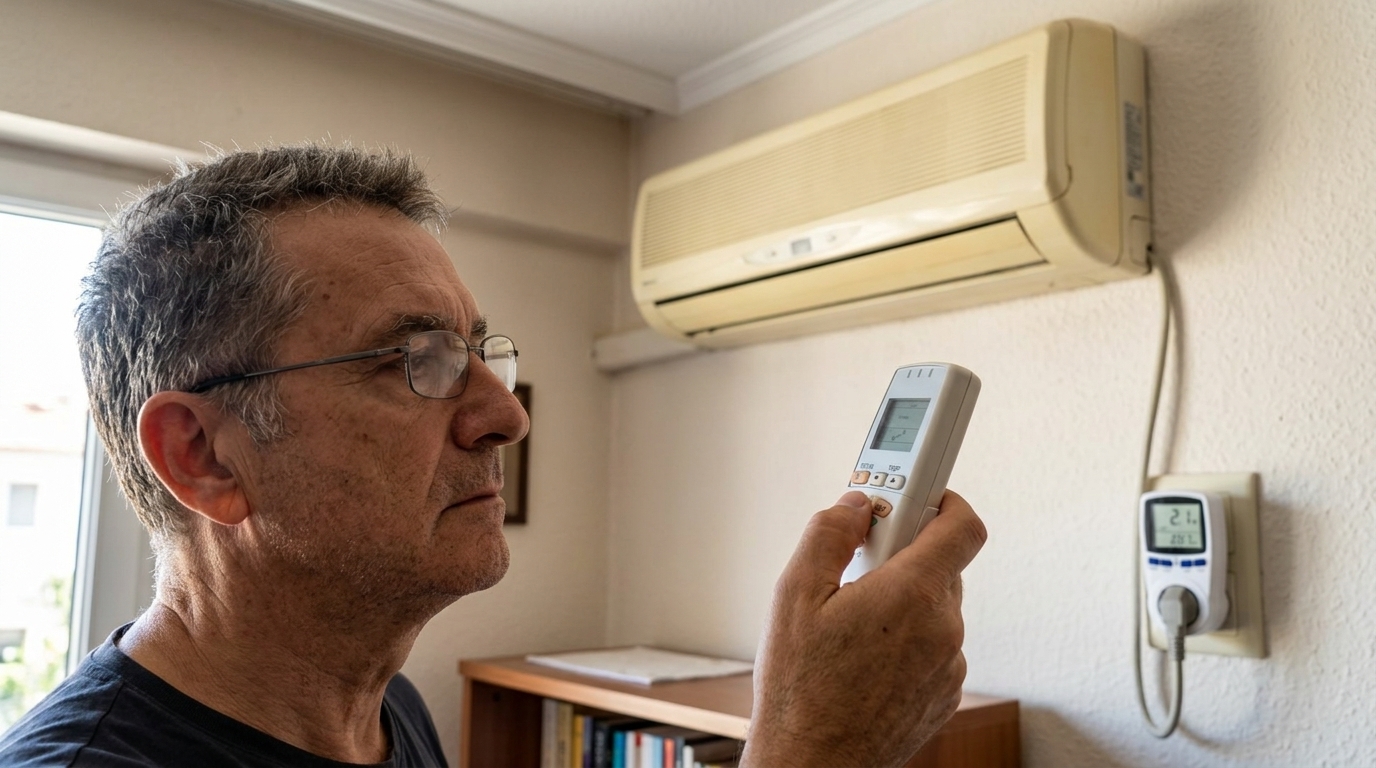
As we navigate through the summer of 2026, with temperatures in the Eastern Mediterranean hitting record highs, air conditioning has evolved from a luxury to a critical tool for survival. However, a disturbing reality is hidden behind your unit's digital display: energy consumption doesn't necessarily stop when you hit the 'off' button on your remote. This phenomenon, known among energy analysts as 'phantom load' or 'standby power,' represents a silent drain on household budgets.
The Illusion of Powering Down
Most consumers believe that turning off a device via remote control equates to zero power consumption. In reality, modern air conditioners remain in a state of constant vigilance. Infrared sensors must stay active to 'listen' for the next power-on command, while control boards and Wi-Fi modules in 'smart' units maintain network connectivity 24/7. This small but steady stream of electrons might seem negligible on an hourly basis, but on an annual scale, it translates into dozens of kilowatt-hours charged without providing any cooling or heating whatsoever.
Technological Culprits and the Compressor's Secret
Beyond the electronic control systems, there is a more significant and often unknown consumption factor: the crankcase heater. Many air conditioners, especially larger split units or heat pumps, feature a small electric heater located in the outdoor unit's compressor. Its purpose is to keep the lubricating oil at a higher temperature than the refrigerant, preventing refrigerant migration into the oil when the unit is idle. If refrigerant mixes with the oil, it can cause severe compressor damage upon startup. This heater can consume anywhere from 20 to 60 Watts continuously, depending on the model and outdoor conditions, inflating the bill without the user even touching the remote.
Economic Implications and the Power of Scale
If we assume an average AC unit consumes 10 Watts in standby mode, that equates to 87.6 kWh per year. At current electricity prices, the cost for a single unit might seem minor. However, in a household with three or four AC units, this amount multiplies. On a national level, considering the millions of air conditioners in countries like Greece or Italy, we are looking at a massive waste of energy that strains the grid and increases the national carbon footprint. 'Vampire power' from standby devices is estimated to account for 5% to 10% of total residential electricity consumption globally.
Mitigation Strategies: How to Stop the Drain
The solution isn't always as simple as pulling the plug, as this can be difficult with permanent installations. However, there are practical steps to take:
- Use the Dedicated Circuit Breaker: If your AC is connected to a separate fuse in your electrical panel (as is standard practice), you can switch it off during months when the unit isn't used at all (e.g., during mild spring or autumn days).
- Smart Switches: Utilizing heavy-duty smart plugs that can fully cut off power can help, though you must ensure the plug is rated for the AC's amperage.
- Choose Low-Standby Models: When purchasing a new unit, check the specifications for standby power consumption. While EU regulations have tightened, significant differences still exist between manufacturers.
In conclusion, awareness of invisible consumption is the first step toward a more responsible and economical lifestyle. In an era where the energy crisis seems to be the new normal, every saved Watt is a victory for both our wallets and the environment.