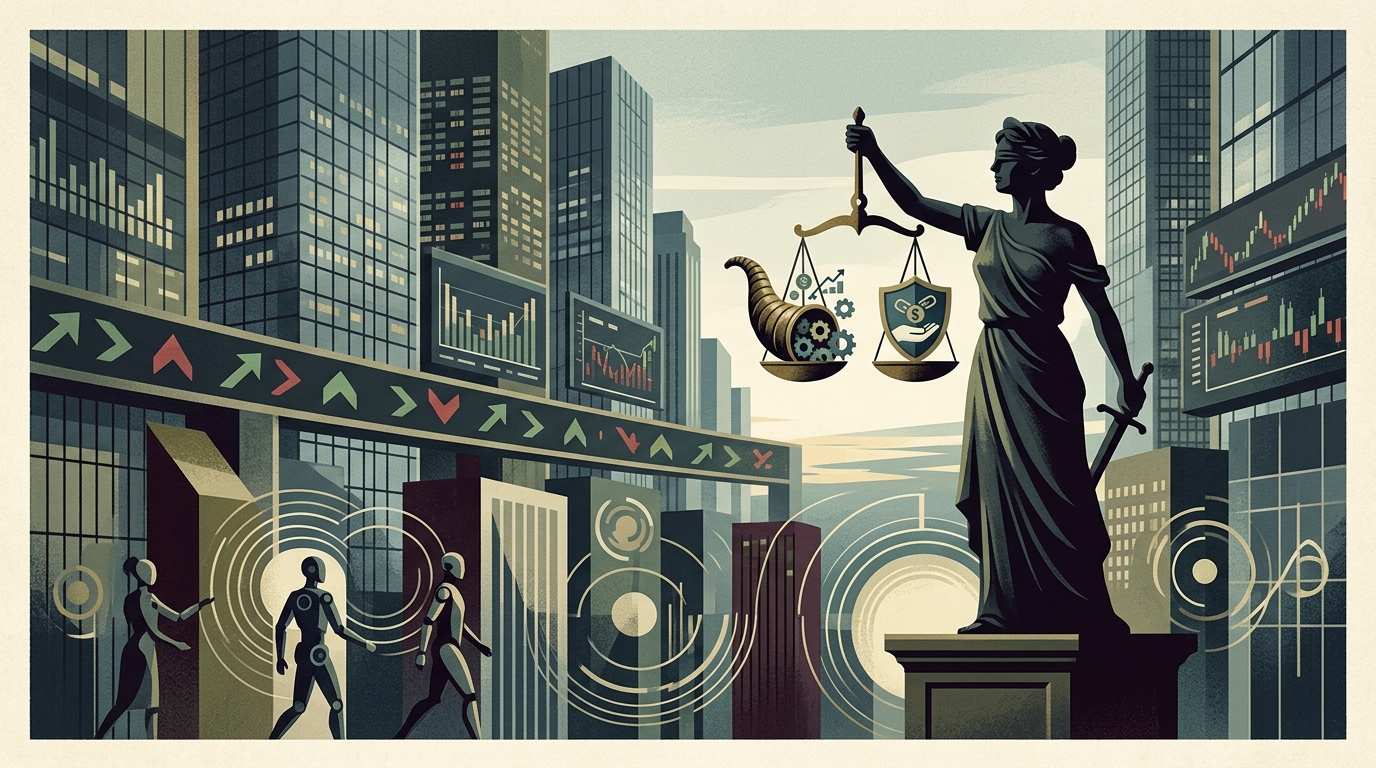
In an era where headlines are dominated by the threat of automation and the replacement of creative professions by algorithms, a job posting from Anthropic, OpenAI's primary rival, is turning the narrative upside down. The company is offering annual compensation reaching $400,000 for a role that isn't about coding or mathematical optimization, but about a human's ability to give 'character' and 'voice' to the Claude AI.
The Irony of High Pay in the Humanities
The position of 'Creative Writer' or 'Prompt Engineer' with a focus on creative direction represents a powerful admission: artificial intelligence, despite its terrifying power, remains a 'stochastic parrot.' It can synthesize texts, solve equations, and write code, but it fails miserably at perceiving subtle humor, cultural sensitivity, and the ethical nuance required for truly human interaction.
Anthropic is looking for individuals who can work on the 'alignment' of the model. This means that the person hired will have to teach Claude how not to sound like a cold corporate manual, nor like an uncontrolled content generation machine. The need for human judgment at this level is now priced higher than many senior developer positions.
The 'Last Mile' Problem in AI
In logistics, the 'last mile' is the most difficult and expensive part of delivering a product. In AI, the last mile is authenticity. Large Language Models (LLMs) are trained on massive volumes of data, but the final 'flavor' left by communication with them is determined by the meticulous fine-tuning performed by humans. Anthropic seems to understand that market differentiation won't come from who has the most parameters, but from who has the most 'relatable' and reliable model.
- AI lacks lived experience, making it weak in empathy.
- Creative direction requires an understanding of a constantly shifting social context.
- Model safety depends on the ability to predict human irrationalities.
"Technology can produce the text, but only human experience can give it meaning and purpose," say labor market analysts.
The Economic Dimension: Investing in Brand Identity
Why would a company pay $400,000 for a writer? The answer lies in competition. With OpenAI, Google, and Meta offering similar technical specifications, the 'brand personality' of the AI becomes the primary selling point. If Claude manages to be seen as the most 'human' and 'cultured' AI, Anthropic can dominate sectors like education, mental health, and creative writing, where trust is everything.
This development marks a shift in the labor market. While many fear that the humanities are dying, Silicon Valley is resurrecting them in the most expensive way possible. Philologists, philosophers, and screenwriters who can understand the structure of language and thought are becoming the new architects of our digital future. The ability to ask the right questions and distinguish quality from mediocrity is the new 'hard skill' of the decade.
Conclusion: The Return to the Human
The Anthropic case is not an exception, but an indicator of the future. As AI becomes a commodity, value shifts from production to curation. The $400,000 salary doesn't just buy time; it buys the ability to bridge the gap between binary systems and the human soul. Ultimately, artificial intelligence may not replace creators, but rather highlight those who master the art of communication at a level that no machine can authentically simulate.