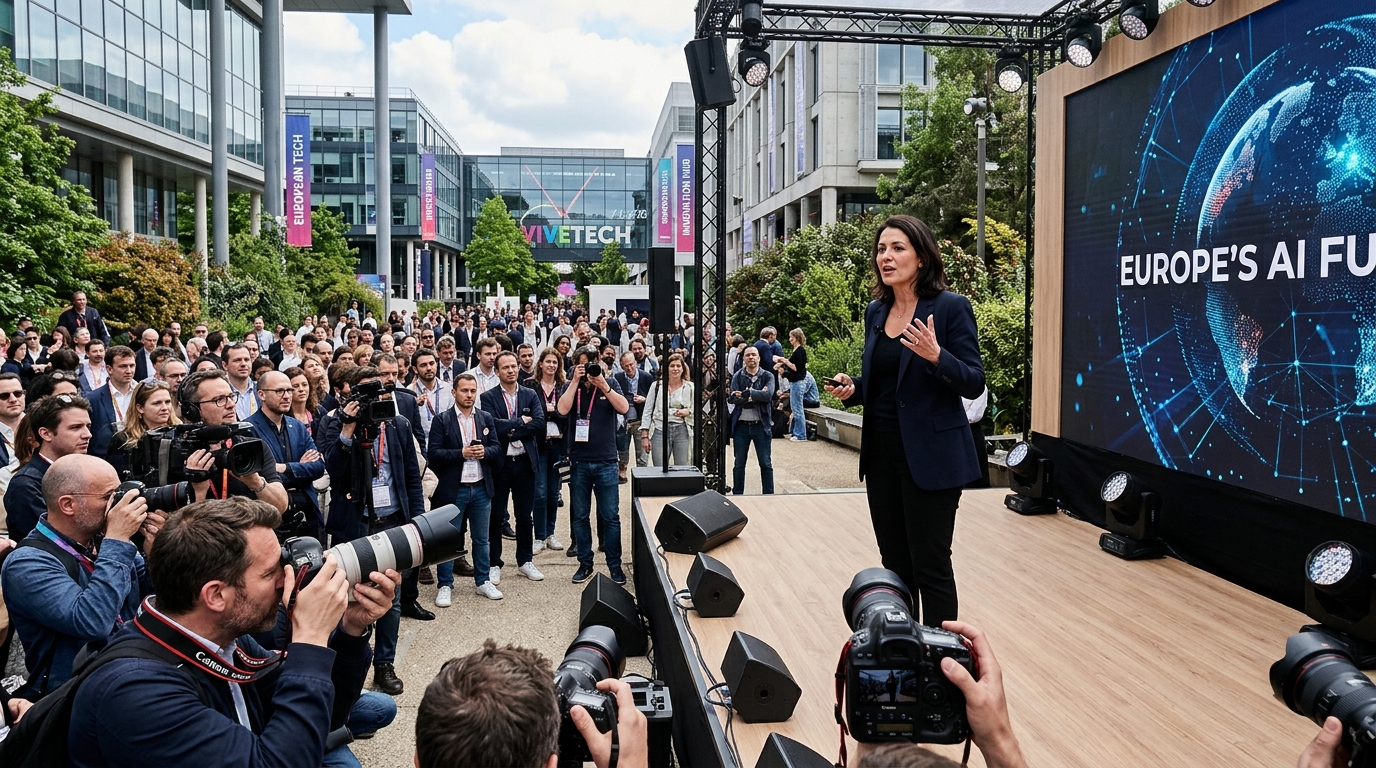
In the heart of Paris, at Porte de Versailles, VivaTech 2026 opened its doors at a time when technology is no longer viewed as an isolated sector of the economy, but as the very fabric of social and political reality. As we move through the summer of 2026, this year's event marks a critical turning point: the transition from the excitement of early generative AI to the implementation of robust, industrial-scale applications that are reshaping the face of work and production.
The European Strategy for Digital Sovereignty
The central theme dominating the speeches of EU leaders and tech CEOs was "Digital Sovereignty." After years of reliance on US cloud infrastructure and processing power, Europe presented a united front at VivaTech 2026. France's Mistral AI, now the continent's undisputed champion, unveiled its new model, which promises full compliance with the strictest requirements of the EU AI Act without sacrificing computational prowess.
Analysts point out that 2026 is the year Europe stopped playing defense through regulation and started counter-attacking through investment. The "EuroChip 2" program was officially announced during the conference, aiming to create a domestic supply chain for next-generation semiconductors specifically designed to support quantum computing.
Green Tech and the Energy Challenge
One of the most debated panels concerned the energy footprint of AI. With data centers consuming an ever-increasing percentage of global energy, VivaTech 2026 served as a platform for showcasing "green" algorithms. The concept of "Frugal AI" is at the center, with startups demonstrating models that require one-tenth of the energy of traditional systems to perform the same tasks.
- Presentation of data center cooling systems using recycled water and geothermal energy.
- Integration of next-generation solar panels directly into server chassis.
- Software that optimizes energy consumption in real-time based on the availability of renewable sources on the grid.
Robotics: From Factories to the Streets of Paris
This year's event was not limited to screens. Robotics took center stage, with humanoid robots acting as guides and assistants in the exhibition halls. Unlike in the past, the robots of 2026 possess an unprecedented level of context awareness, thanks to the integration of Multimodal AI models. This means they can "see," "hear," and react naturally to human needs, paving the way for widespread use in elderly care and logistics.
"We are no longer building machines that follow commands, but partners that understand our world," said Hélène Bonnet, head of innovation at one of France's leading robotics firms.
The Future of Work and Reskilling
Finally, VivaTech 2026 raised the critical question of the human factor. With automation now touching even creative professions, the discussion shifted from job loss to "upskilling." Major educational organizations presented learning platforms that use AI to create personalized curricula, allowing workers to adapt to new data in months rather than years.
In conclusion, VivaTech 2026 confirmed that Paris remains the heartbeat of European technology. The challenge for the future remains the balance between rapid innovation and the preservation of the humanistic values that form the core of the European project.