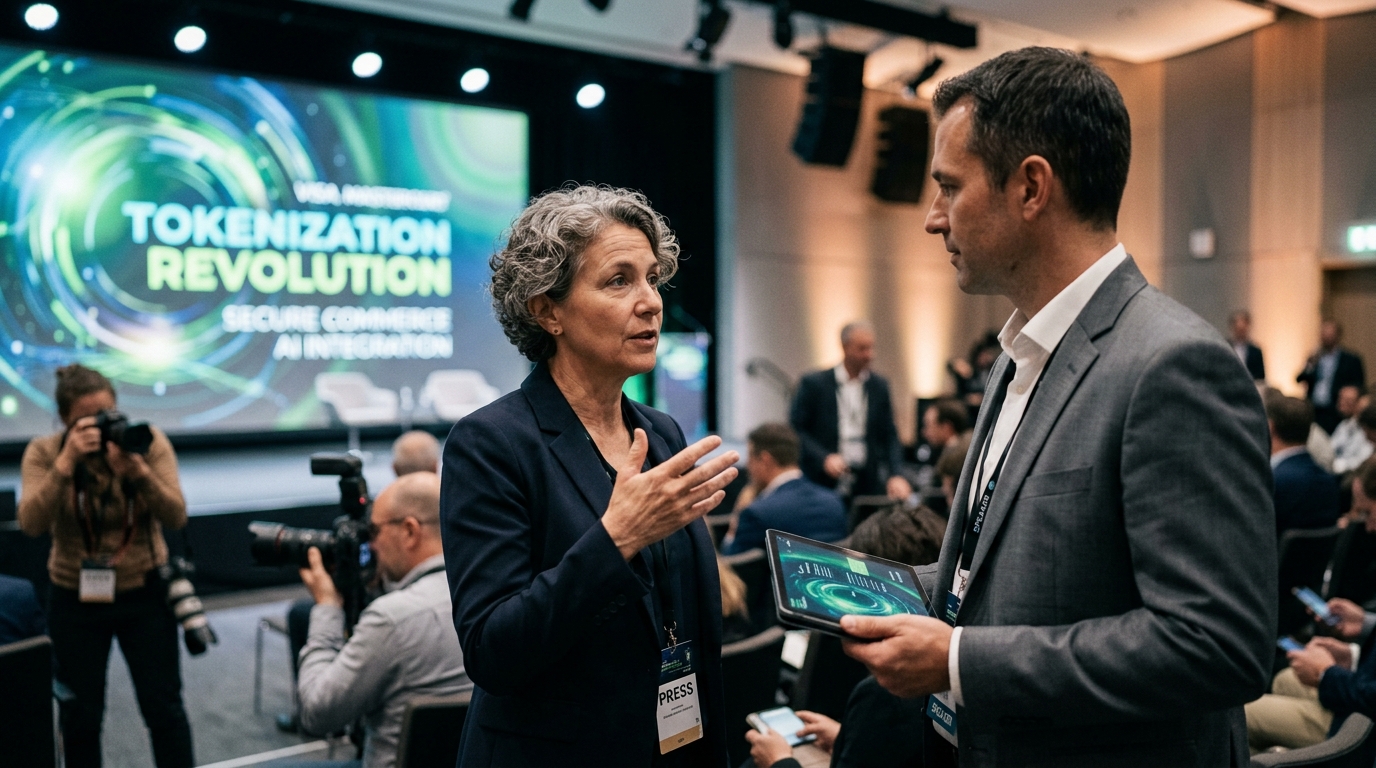
At the dawn of 2026, the world of payments is undergoing one of its most radical transformations since the introduction of plastic cards. The two giants of the industry, Visa and Mastercard, have announced a strategic shift that places "tokens" at the heart of AI-driven commerce (AI Commerce). This move is not merely a technical upgrade; it is a fundamental reappraisal of what a "transaction" means in a world where purchasing decisions are increasingly made by algorithms rather than humans.
The Death of the 16-Digit Number and the Rise of Tokens
For decades, the 16-digit number on the front of a credit or debit card was the "key" to the global economy. However, in the age of Generative AI, this static system is now considered obsolete and dangerous. Tokenization replaces this sensitive data with a unique, encrypted digital identifier (token) that holds no value if intercepted. Most importantly, these tokens can be restricted to specific uses, merchants, or devices.
According to recent announcements, Visa and Mastercard aim to completely replace traditional card numbers with tokens for all online transactions by the end of the decade. This allows an AI assistant—such as Siri, Gemini, or a specialized shopping agent—to execute a payment without ever having access to the user's actual banking details. Security is no longer an afterthought but is embedded within the very code of the transaction.
Agentic Commerce: When AI Holds the Wallet
The concept of "Agentic Commerce" is the driving force behind this shift. Imagine a digital agent that monitors your refrigerator's inventory, compares prices across different supermarkets, and proceeds to purchase necessary goods at the right time. To do this safely, the agent needs a "digital wallet" that operates with constraints: "You can spend up to $50 for milk and eggs at Vendor X, but you have no access to the rest of my account."
Tokens allow exactly this level of control. Visa and Mastercard are building infrastructures where users can issue temporary, specialized tokens for their AI assistants. This eliminates the need for manual OTP (One-Time Password) entry or biometric confirmation for every micro-purchase, as trust is pre-established within the token. The resulting ease of use is expected to provide a massive boost to e-commerce, reducing the cart abandonment rates that currently plague merchants.
A Strategic Response to Fintech and Blockchain
The shift toward tokens is not just about technological progress; it is about survival. Traditional payment companies are facing increasing pressure from alternative payment systems, such as Central Bank Digital Currencies (CBDCs) and Decentralized Finance (DeFi) protocols. By adopting tokenization at scale, Visa and Mastercard are attempting to make their own network the indispensable "bridge" between the traditional banking system and the new AI economy.
Furthermore, the use of tokens allows for the integration of more sophisticated anti-fraud systems. The payment networks' own AI algorithms can now analyze transaction patterns in real-time with much greater precision, as each token carries rich metadata about the transaction's context. This reduces false declines, which cost billions in lost revenue annually.
Challenges and the Future of Privacy
Despite the obvious benefits, the dominance of tokens raises questions about privacy and data concentration. As Visa and Mastercard transform from simple intermediaries into identity and data managers, the amount of information they hold regarding citizens' consumption habits increases exponentially. In a world where AI knows what you want to buy before you even think of it, ensuring that this data is not used for manipulation is the next major challenge for regulatory bodies.
In conclusion, the move by Visa and Mastercard to put tokens at the center of AI Commerce marks the beginning of a new era of "invisible" payments. The transaction ceases to be a conscious act of typing numbers and becomes a continuous, secure flow of value managed by intelligent agents. The remaining question is whether consumers are ready to grant such a degree of autonomy to their machines.