Tesla’s first-quarter 2026 financial earnings release was more than just a presentation of figures; it was a manifesto of intent. With revenue reaching $22.4 billion, Elon Musk’s company appears to be rebounding from the pressures of the previous year. However, the net income of $477 million highlights the staggering cost of transitioning from a 'traditional' automaker into an Artificial Intelligence (AI) and robotics powerhouse.
For investors, the question is no longer how many Model 3s or Model Ys were delivered, but how close Tesla is to achieving full autonomy and mass-producing the Optimus humanoid robot. Musk, true to his vision, seems to be betting everything on the idea that Tesla is, at its core, a software and AI company that happens to manufacture hardware.
The Strategic Pivot: From Wheels to Brains
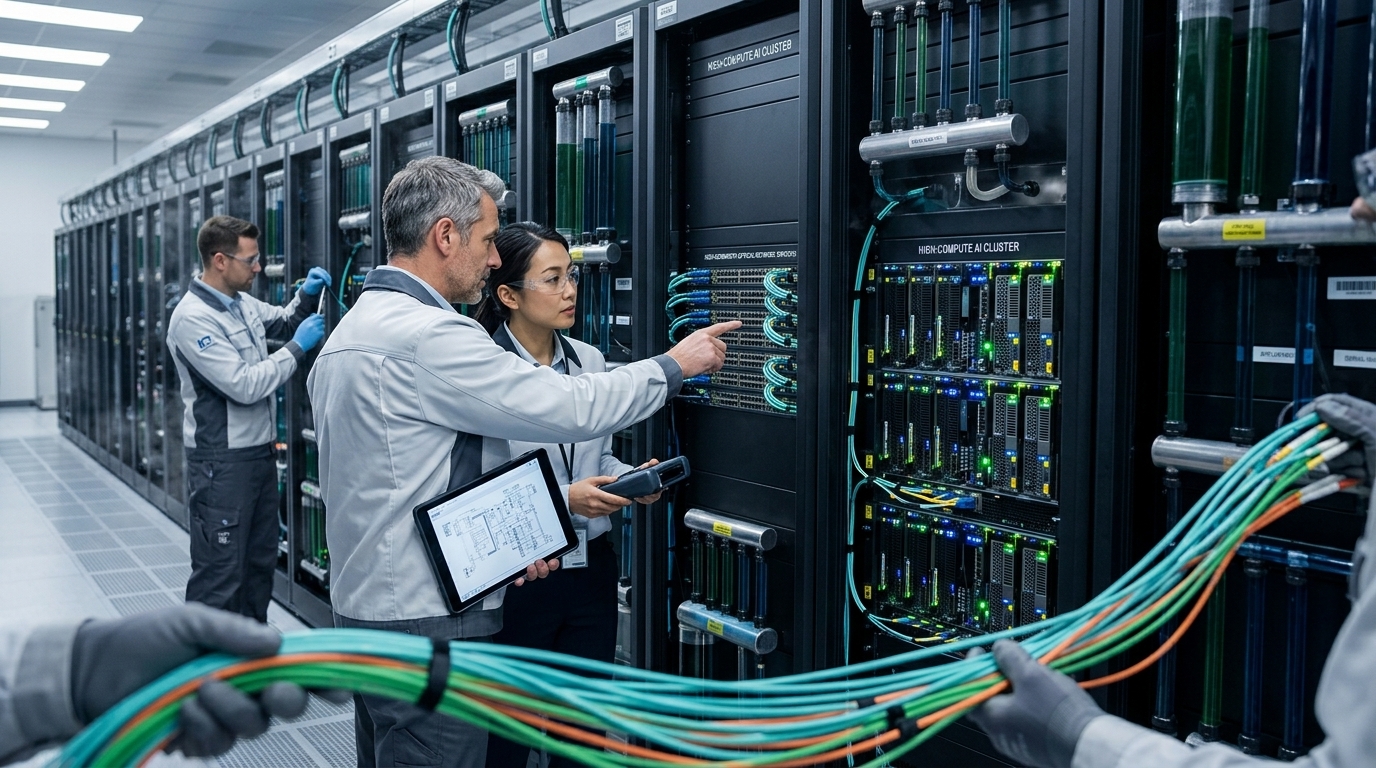
The rise in revenue is partly due to the stabilization of electric vehicle (EV) prices globally and a surge in demand within Asian markets. Yet, the real story lies in the Research and Development (R&D) spending. Tesla is funneling billions into the Dojo supercomputer and the training of neural networks that power Full Self-Driving (FSD). According to the report, FSD version 14 has already begun showing signs of 'human-like' driving behavior, drastically reducing the need for driver intervention.
Tesla’s management made it clear that profitability at this stage is secondary to achieving 'general artificial intelligence for the physical world.' This approach has polarized Wall Street: on one side are those who envision a future robotaxi empire, and on the other are those concerned about the burn rate of cash on projects that still feel like science fiction.
Optimus: Tesla’s New Workforce
The Optimus humanoid robot is no longer a prototype merely shuffling across a stage. In the Q1 report, Tesla revealed that over 1,000 Optimus units are already deployed within its factories, performing repetitive tasks on battery production lines. The progress in kinematics and the ability to learn via visual data is nothing short of remarkable.
- Automated assembly with millimeter precision.
- Integration of Tesla’s internal LLM (Large Language Model) for voice commands.
- Production cost reduction per unit to under $30,000.
Musk argued that the market for humanoid robots could eventually eclipse that of cars, as labor demand in aging societies makes Optimus an essential tool. However, analysts point out that regulatory hurdles and safety concerns remain significant barriers to wide-scale deployment outside controlled factory environments.
Competition and the Geopolitical Chessboard
While Tesla focuses on the future, relentless competition from China persists. Companies like BYD and Xiaomi have begun integrating advanced AI features into their own vehicles, often at a lower cost. Tesla is responding by expanding its Supercharger network and establishing new data centers in Europe and Asia, seeking to control the entire energy and data ecosystem.
"We are not just a car company. If someone doesn't believe we're going to solve autonomy, they shouldn't be a shareholder," Musk stated during the earnings call.
This statement reflects the company's 2026 policy: absolute dedication to innovation, even if it means short-term volatility. Tesla is betting that AI dominance will provide a moat that no legacy manufacturer can cross, transforming the car from a mode of transport into a mobile service platform.
Conclusion: The Risk of the Promise
The first quarter of 2026 finds Tesla at a critical juncture. The revenue growth provides a necessary breather, but the pressure for results in robotics is higher than ever. If Optimus and FSD can become commercially viable products within the next two years, the $1 trillion valuation will look like a bargain. But if the promises are delayed yet again, Tesla risks being caught between a brutal EV price war and an unfulfilled technological dream.