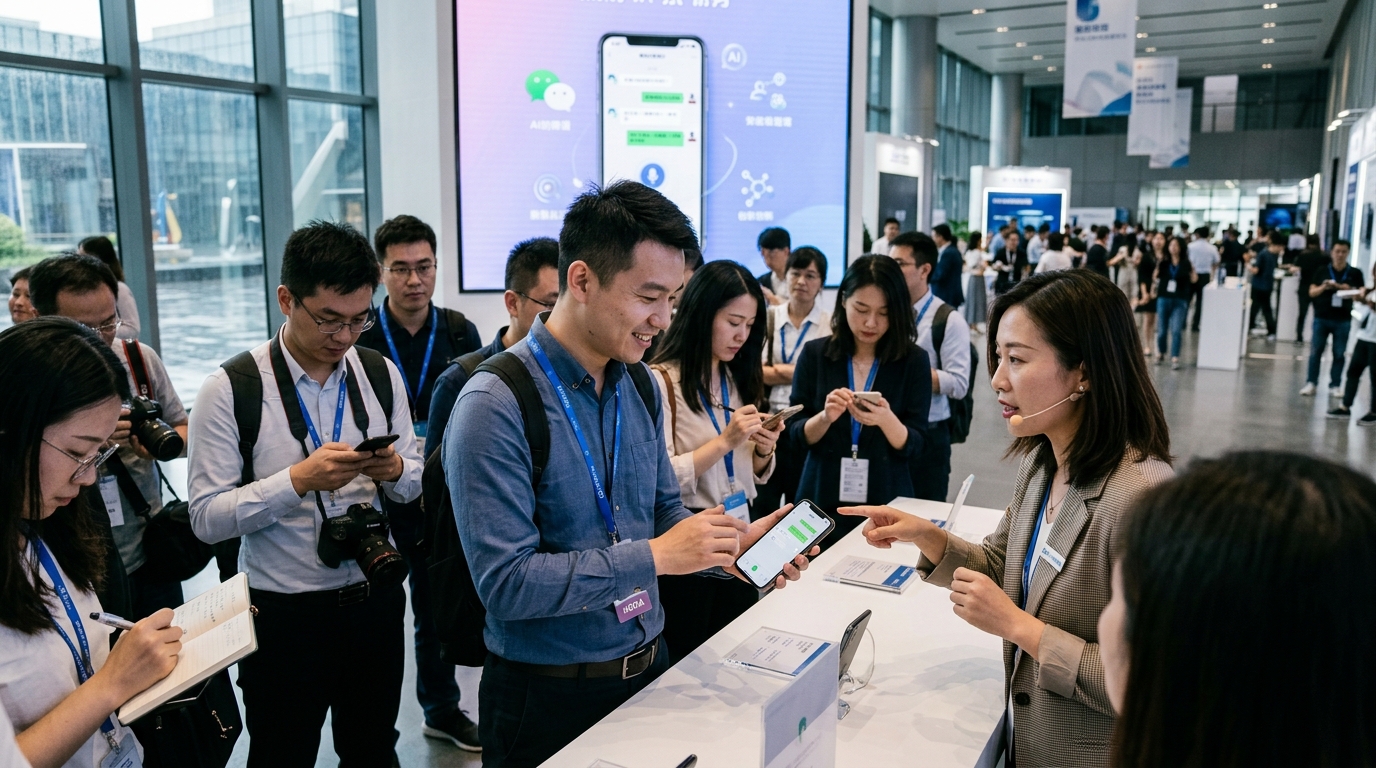
In a move poised to reshape China's digital landscape, Tencent Holdings Ltd. has officially begun testing an advanced artificial intelligence (AI) assistant integrated within its flagship super-app, WeChat (known domestically as Weixin). This development, first reported by Bloomberg on June 22, 2026, marks the tech giant's most aggressive push to leverage its proprietary large language model (LLM), Hunyuan, across a platform boasting over 1.3 billion monthly active users.
WeChat is far more than a messaging app; it is the central nervous system of daily life in China, facilitating everything from mobile payments and grocery deliveries to government services and social networking. The introduction of an intelligent AI assistant is not merely a feature update—it is a strategic pivot for Tencent, which has been playing catch-up with rivals like Baidu and Alibaba in the generative AI race.
The Strategic Weight of Hunyuan
The new assistant, currently in closed testing, is powered by Tencent’s Hunyuan model, which the company debuted last year as its answer to OpenAI’s ChatGPT. Integrating it directly into WeChat allows users to interact with the AI for drafting messages, generating images, scheduling tasks, and navigating the vast ecosystem of "Mini Programs" within the app.
Analysts emphasize that Tencent’s competitive edge lies in its data. WeChat possesses the world’s most diverse and high-frequency social interaction dataset. By training Hunyuan on this data—while adhering to Beijing’s stringent regulations—Tencent can offer a user experience that is significantly more personalized and context-aware than any standalone AI bot.
"Tencent isn't just building a chatbot. They are attempting to redefine how people interact with the internet, making AI the central hub for all digital services," said a Shenzhen-based industry executive.
Competition and the Regulatory Tightrope
This move comes at a time when the Chinese AI market is fiercely contested. Baidu has already integrated its Ernie Bot into a wide array of services, while ByteDance (the parent of TikTok) has seen massive success with Doubao, which has quickly become one of China’s most downloaded AI applications. Tencent, historically known for a more cautious "wait-and-see" approach, is now clearly accelerating its timeline.
However, the challenge is not only technical but political. Beijing has implemented some of the world's strictest rules for generative AI, requiring companies to ensure that AI-generated content aligns with "core socialist values" and does not undermine state authority. For Tencent, managing an AI assistant on a platform with over a billion users means their moderation and filtering systems must be flawless. Any slip-up could lead to severe regulatory backlash, potentially stifling the AI's creative capabilities or response speed.
Economic Implications and Future Growth
From a financial perspective, the success of an AI-powered WeChat could unlock massive new revenue streams. Tencent could offer premium AI features to the millions of businesses that use WeChat for customer service or significantly enhance its advertising platform through hyper-precise targeting. Furthermore, integrating AI into Mini Programs could revitalize the developer ecosystem, enabling the creation of more sophisticated and utility-driven applications within the WeChat framework.
In conclusion, testing the AI assistant in WeChat is a defining moment for Tencent. If the company can successfully balance innovation with regulatory compliance, it stands to solidify its position as the undisputed leader of China's digital economy for the next decade. Yet, the path remains fraught with obstacles, ranging from high-end chip shortages due to U.S. sanctions to the relentless pressure of domestic competitors.