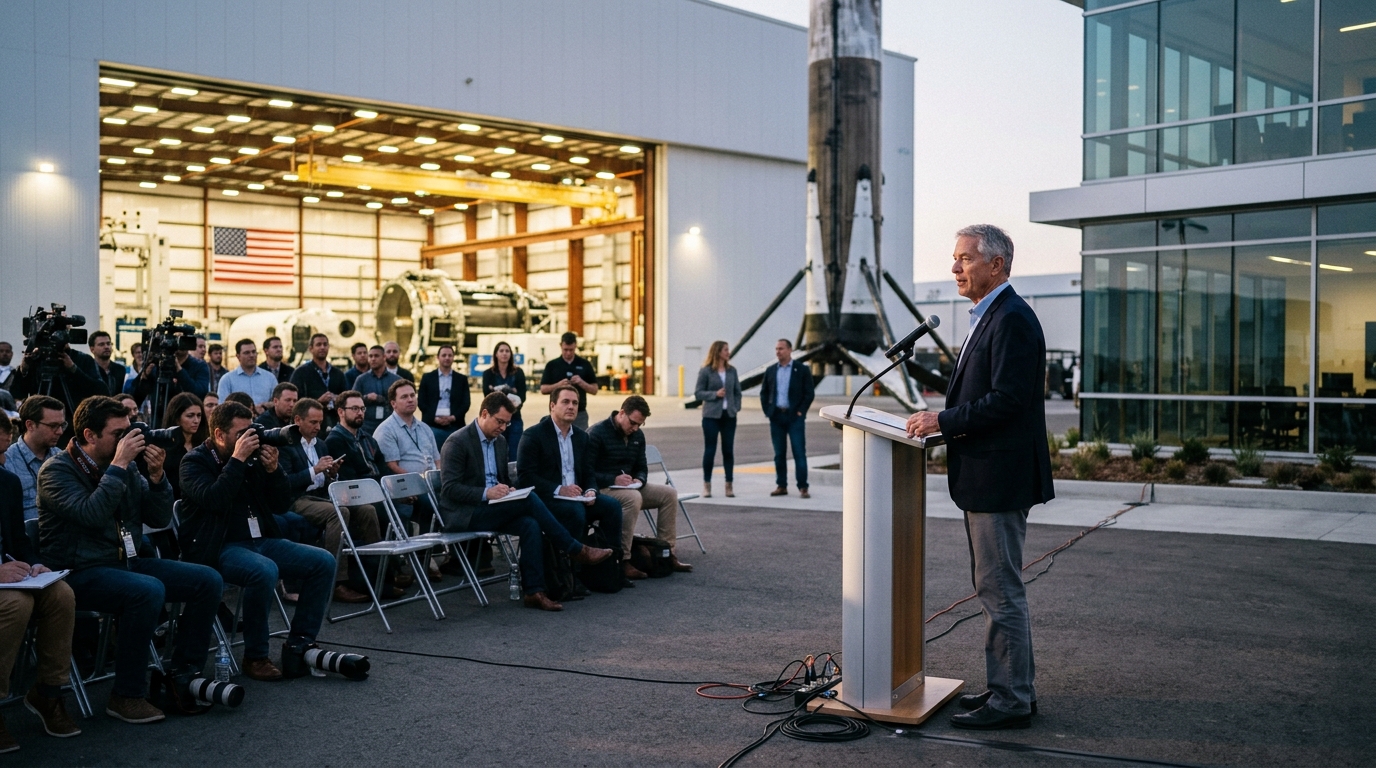
When Elon Musk founded SpaceX in 2002, the world viewed it as an ambitious, perhaps reckless, venture to conquer space. Today, in 2026, the narrative is shifting fundamentally. SpaceX is no longer just the company that sends astronauts to the International Space Station or attempts to colonize Mars. It has emerged as a critical player in the Artificial Intelligence (AI) race—a market analysts estimate will contribute up to $26.5 trillion to the global economy by the end of the decade.
The Data Fortress: Starlink and AI
The key to SpaceX's entry into AI is not the rockets themselves, but the Starlink network. With thousands of satellites in Low Earth Orbit (LEO), SpaceX controls the most extensive data transmission infrastructure on the planet. Artificial Intelligence requires two things to flourish: massive computing power and an uninterrupted flow of data. Starlink provides the latter, connecting remote areas, industrial plants, and military bases, essentially functioning as the "nervous system" of a global AI infrastructure.
SpaceX's ability to process data at the "edge" directly on its satellites reduces latency and allows for the execution of complex AI algorithms in real-time. This is vital for autonomous vehicles, drones, and surveillance systems that require split-second decisions without relying on terrestrial data centers. The constellation is becoming a distributed supercomputer in the sky.
Starship: The Ultimate Robotic Achievement
If Starlink is the nervous system, Starship is the body. The development of the largest rocket in history relies on unprecedented levels of automation and AI. From the design of Raptor engines using generative AI to the fully autonomous landing and reuse process, SpaceX has created a robotics laboratory on a scale no other company can match.
Analysts point out that the expertise SpaceX gains in autonomous navigation in extreme environments is directly transferable to other sectors. The synergy with xAI, Musk’s AI company, and Tesla creates an ecosystem where SpaceX provides the infrastructure, Tesla provides the hardware, and xAI provides the "brain." This vertical integration allows SpaceX to claim a massive slice of the $26.5 trillion AI pie. The learning loops between these companies are creating a feedback mechanism that accelerates development faster than traditional competitors.
Geopolitical and Economic Dominance
SpaceX’s foray into AI is not just a business move; it is a geopolitical one. In a world where AI dominance equates to national power, possessing a space-based AI network gives the U.S. and Musk’s companies a strategic advantage. The ability to provide AI services from space bypasses national borders and the limitations of terrestrial cables, making SpaceX a de facto regulator of the global digital economy.
However, this concentration of power raises concerns. Regulators in the EU and the U.S. are already examining whether SpaceX operates as a monopoly. The link between satellite technology and AI raises new questions about data protection and cybersecurity. If a rocket can be guided by AI, what prevents that AI from becoming a target of a cyberattack with catastrophic consequences? Furthermore, the reliance of the Pentagon on SpaceX infrastructure intertwines corporate interests with national security in ways that are historically unprecedented.
The Future: A Convergence of Worlds
As we move toward 2030, the distinction between a "space company" and a "technology company" will vanish. SpaceX is positioning itself as the cornerstone of a new economy. Investing in AI is no longer optional for Musk’s company; it is the necessary condition for the sustainability of his vision. With the company's valuation soaring and its capabilities expanding, SpaceX is no longer just aiming for the stars, but for the very essence of the intelligence that will take us there. The $26.5 trillion race is not just about software; it is about who controls the physical and digital pathways of the future.