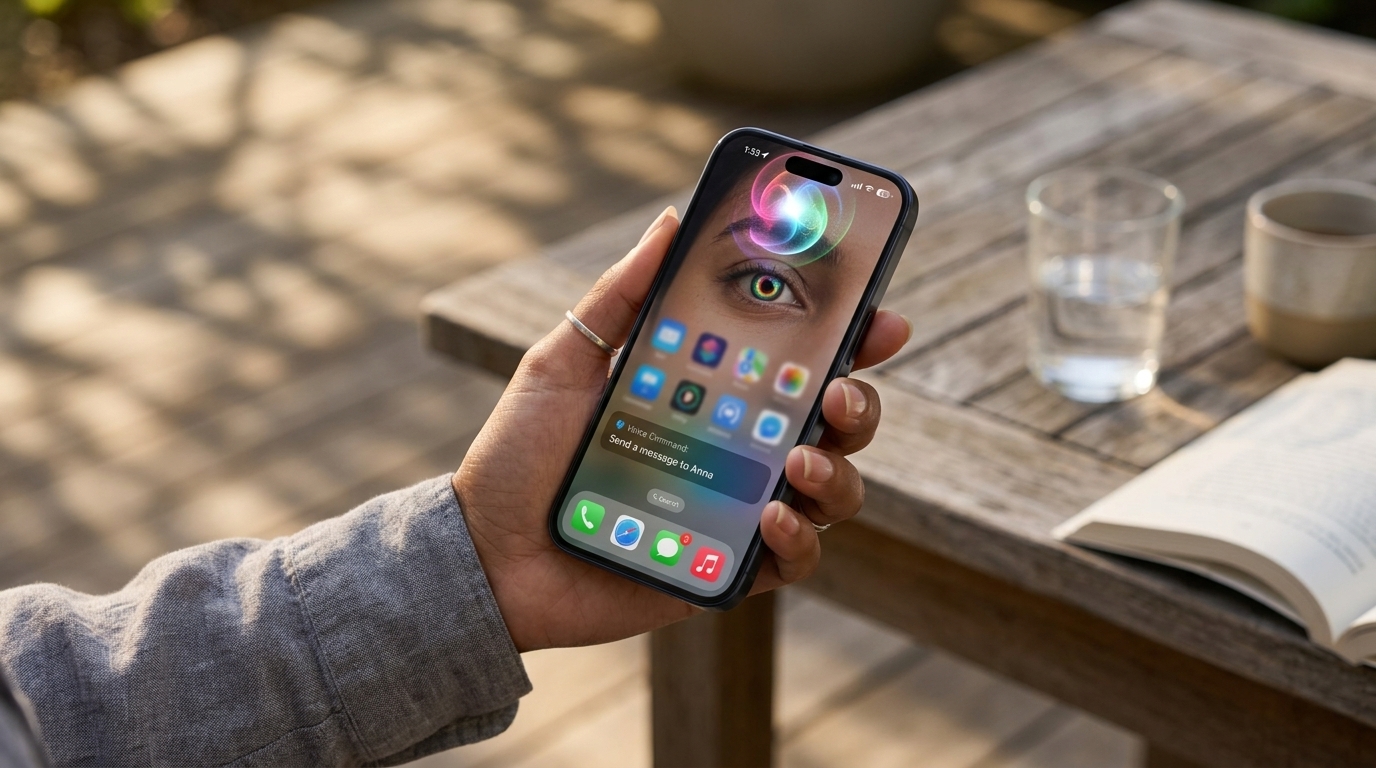
The public beta of iOS 27 escaped the developer world today, bringing Apple’s latest operating system to a wider audience. While the update is described as a "Snow Leopard" release—focusing on speed, bug fixes, and refinements to features like AirDrop and the Liquid Glass interface—the most significant change is the arrival of the revamped Siri AI.
From Apps to Intents
The core promise of the new Siri AI is to fundamentally alter how users interact with their devices. Instead of navigating to a specific app to perform a task, users can now state their intent first, leaving Siri to parse available data and handle the execution. Early testing shows the AI successfully retrieving concert schedules from web pages and automatically scheduling calendar events by parsing email data.
"Onscreen awareness" has emerged as a standout feature, allowing Siri to understand the context of what a user is currently viewing. This capability has the potential to replace traditional browser searches for many tasks, though the experience remains a work in progress. Some linguistic quirks persist, where specific phrasing like "direct me" works better than "route me."
The Developer Challenge
Currently, Siri AI’s most advanced capabilities are confined to Apple’s native ecosystem. Expanding this to third-party apps requires developers to implement two key frameworks: entities (representing data types like photos or notes) and intents (defining actions like saving or deleting). This is a massive undertaking for developers, who must map out their apps' functions to be accessible by Siri’s semantic layer.
Strategic questions also loom over industry giants like Google. If Siri can surface information from Gmail without a user ever opening the app, Google risks losing ad revenue. However, the industry-wide shift toward AI-generated overviews suggests that even major players are preparing for a future where traditional interface engagement is no longer the primary metric.