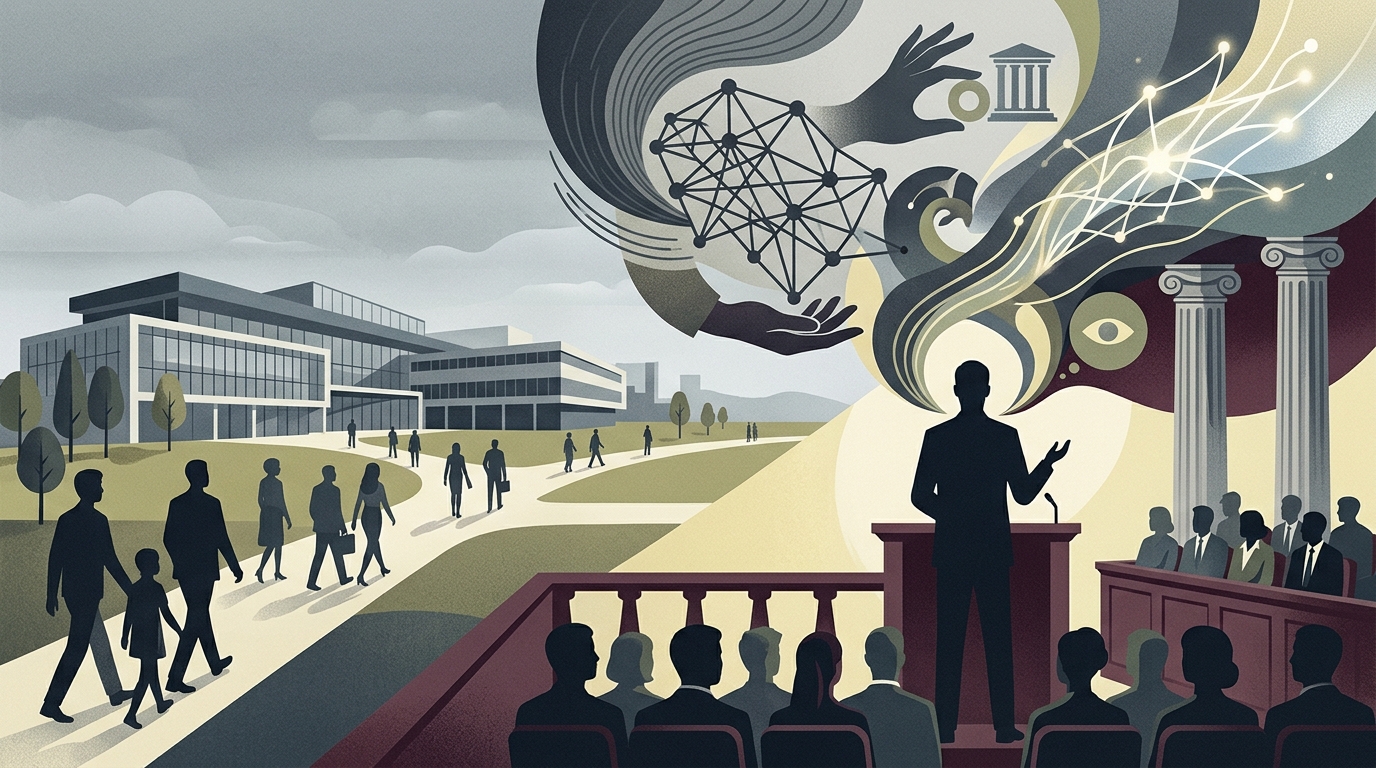
Today, May 12, 2026, the heart of Silicon Valley is beating inside a San Francisco federal courtroom. Sam Altman, the man who became the face of the generative AI revolution, took the witness stand to provide answers that could redefine the future of the tech industry. The trial, stemming from years of disputes over OpenAI’s governance structure and its departure from its original mission, has become ground zero for the legal status of Artificial General Intelligence (AGI).
A Conflict of Visions: From Altruism to Profit
The case centers on whether OpenAI breached its "founding agreement"—an informal but morally binding promise to develop AI for the benefit of humanity, unencumbered by commercial interests. Plaintiffs, including former board members, argue that the close alliance with Microsoft turned the organization into a de facto subsidiary of the Redmond tech giant. During the first hour of his testimony, Altman appeared composed, wearing his signature dark suit, and answered questions with precision regarding the company's transition to a "capped-profit" model.
"Our mission never changed," Altman stated under the gaze of the judges. "What changed was the scale of resources required for safety. You cannot protect the world from a technology that you don't have the resources to develop first." Altman’s defense hinges on the argument that AGI requires billions of dollars in investment for compute power—something a purely non-profit entity could never secure.
The Ghost of November 2023
A significant portion of the hearing focused on the events of November 2023, when Altman was fired and rehired within five days. Opposing counsel presented internal messages suggesting that the crisis back then wasn't just a "lack of candor," as previously reported, but a deep rift over whether OpenAI should release models like GPT-5 and Sora without sufficient safety guardrails.
"The pressure for commercial dominance clouded the leadership's judgment," the plaintiffs' attorney argued, presenting documents showing the speed at which OpenAI pursued data licensing deals with publishing giants.
Altman, however, countered these claims, emphasizing that safety remains the core of his strategy. He pointed to the creation of the new Safety and Security Committee, arguing that the company’s structure still allows oversight by the non-profit arm despite the massive revenues. The criticism Altman faces is that OpenAI has become "closed," with its code and methodologies guarded as trade secrets, contrary to its name and initial declarations.
Implications for the AI Ecosystem
The outcome of this trial will set a legal precedent for all technology companies. If the court rules that OpenAI must return to a stricter non-profit structure, it could blow up its partnership with Microsoft and cause tremors in the stock markets. Furthermore, the question arises: Who defines what is "for the benefit of humanity"? Is it free access to AI tools, or ensuring that the technology is not concentrated in the hands of a few?
- The decision is expected to influence future investments in startups that begin with altruistic goals.
- The European Union is closely monitoring the trial, as regulators examine whether OpenAI's structure violates competition rules.
- Altman's testimony reveals the gap between "idealistic" Silicon Valley and the harsh reality of massive data centers.
As the day drew to a close, Altman was asked if he regretted the path the company took. His response was laconic: "History will judge us by whether AGI is the last tool humanity ever needs to invent. Everything else is noise." The trial continues tomorrow with testimony from Microsoft executives, and global interest remains high.