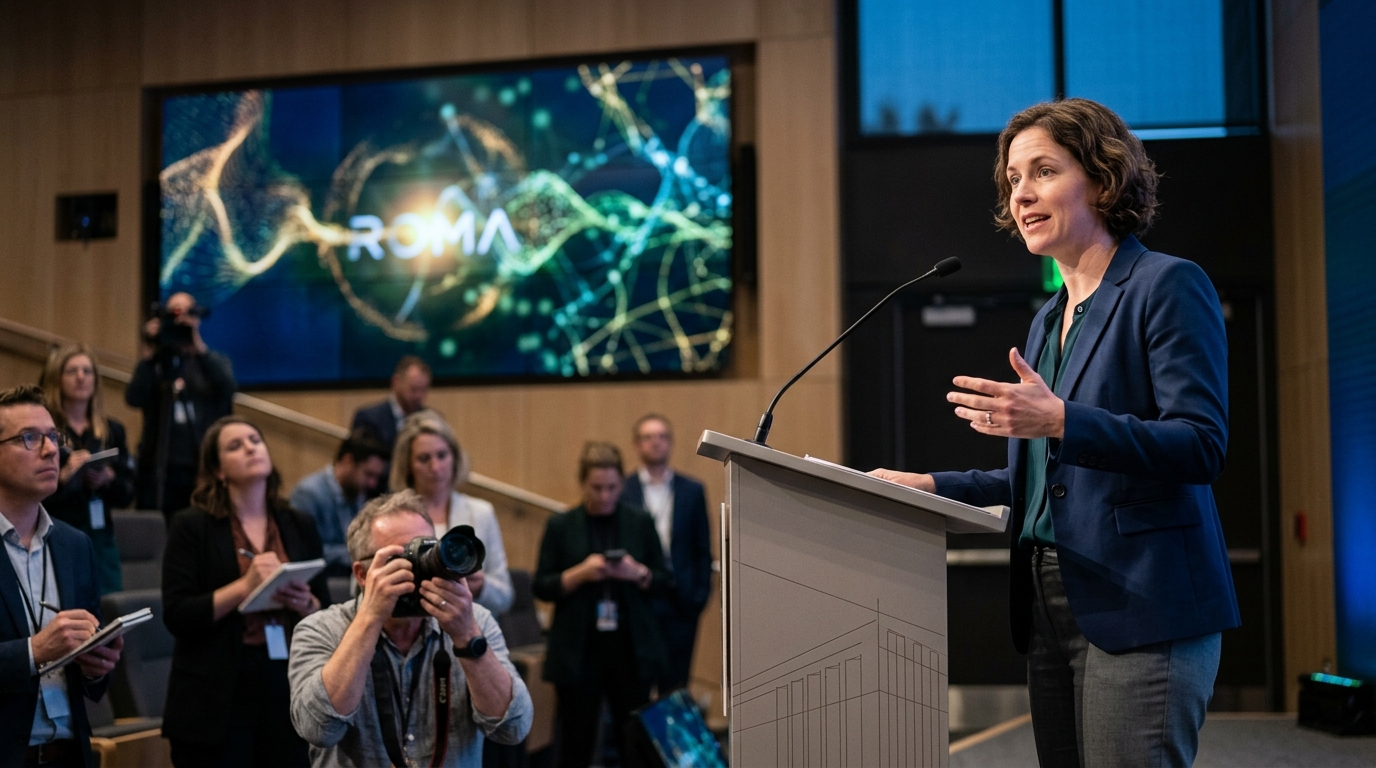
In the current landscape of the technological revolution, 2026 marks a definitive turning point: the focus has permanently shifted from algorithms to infrastructure. ROMA’s recent announcement regarding its targeting of energy-efficient AI computing assets with on-site power is not merely a corporate maneuver; it is a strategic response to the decade's greatest challenge: the insatiable energy hunger of Artificial Intelligence.
The Energy Crisis of Digital Intelligence
As Large Language Models (LLMs) and generative AI applications grow in complexity, the demand for electricity has surged to levels that traditional power grids struggle to sustain. ROMA’s approach recognizes that owning raw compute (GPUs) is no longer sufficient if it is not coupled with ownership of the power source itself. The "behind-the-meter" strategy—generating power on the same site as the data centers—allows companies to bypass public grid congestion and drastically reduce operational overhead.
ROMA is focusing on assets that combine high computational density with extreme energy efficiency. This includes utilizing advanced liquid cooling systems and, crucially, linking these facilities to power plants capable of providing steady baseload power, such as natural gas with carbon capture or even Small Modular Reactors (SMRs), which have begun to dominate investment discourse in 2026.
Economic Implications and Investment Strategy
For investors, ROMA’s move represents a pivot toward the "real economy" of technology. While Silicon Valley remains the hub of software innovation, tangible value is migrating toward those who control physical assets. Integrating power generation with computing power creates a significant competitive moat, insulating the business from energy price volatility and regulatory pressures regarding public grid usage.
- Reduction in service latency through optimized local network architectures.
- Increased reliability, as on-site generation eliminates the risk of public grid outages.
- Improved ESG metrics through the use of cleaner, dedicated energy sources.
"Energy is the new oil for the AI economy, and ROMA is positioning itself right at the wellhead," market analysts suggest.
The Future of Data Centers as Energy Hubs
The evolution of ROMA suggests that the data centers of the future will not just be buildings filled with servers, but autonomous energy hubs. This model allows for faster scalability, as the company does not have to wait years for grid interconnection approvals—a process that in many jurisdictions has become the primary bottleneck for AI expansion. ROMA’s strategy for energy-efficient assets serves as a blueprint for how tech entities will survive in a resource-constrained world, turning an energy challenge into a formidable competitive advantage.