At the recent Computex 2026 keynote, Jensen Huang, the iconic leader of Nvidia, didn’t just launch a new product; he declared the end of the personal computer era as we’ve known it for four decades. With the unveiling of the RTX Spark Superchip, Nvidia is no longer just targeting gamers or data centers; it is aiming for the heart of daily productivity. This move marks a frontal assault on Apple, Intel, AMD, and Qualcomm, positioning Nvidia as the ultimate architect of the "AI PC" epoch.
The Spark Architecture: From Processing to Generation
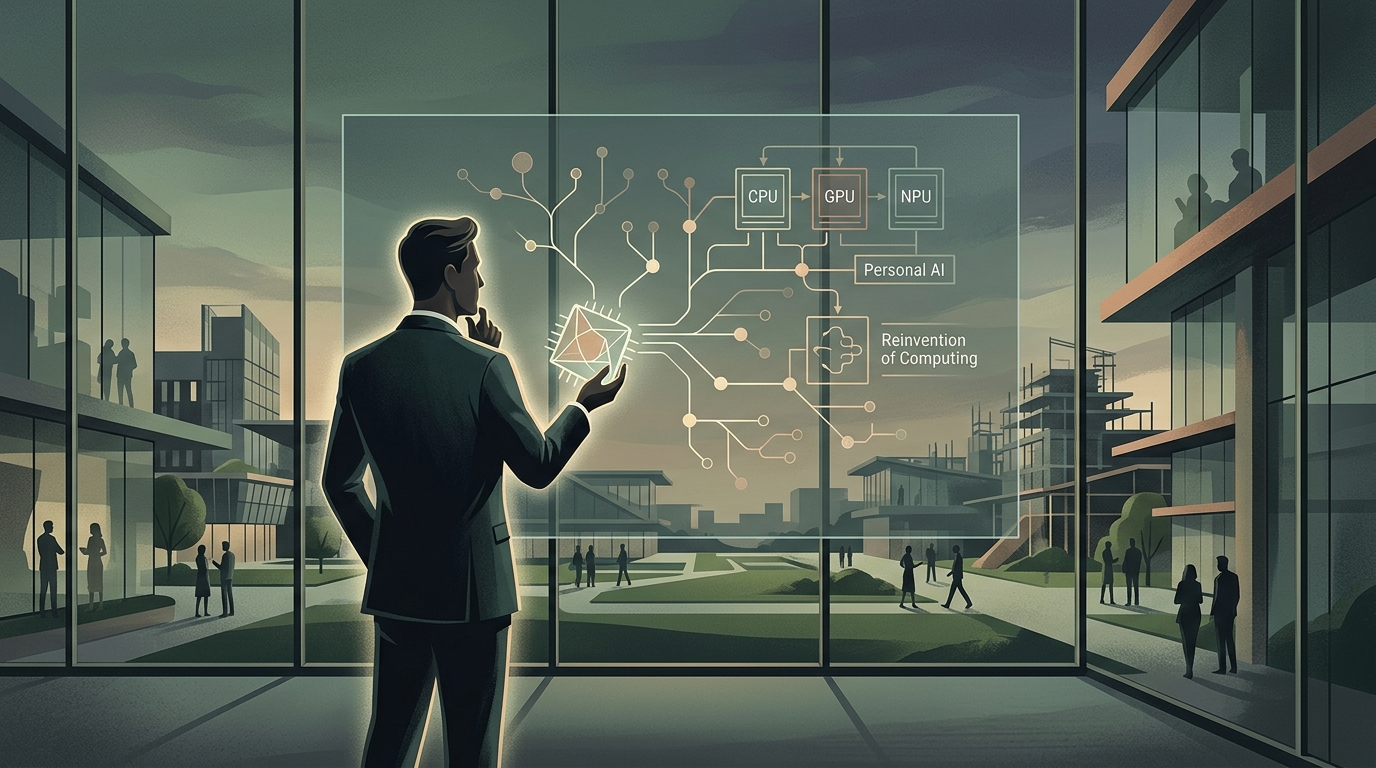
The RTX Spark Superchip is the culmination of Nvidia’s multi-year effort to fuse ARM-based architecture with next-generation Graphics Processing Units (GPUs). Unlike traditional x86 processors from Intel and AMD, the Spark is designed from the ground up to run massive Large Language Models (LLMs) and Generative AI locally—on-device—without the constant need for a cloud connection. Its Unified Memory architecture allows for instantaneous data transfer between the CPU and GPU, eliminating the bottlenecks that plague current systems.
Huang argued that the computer of the future will not be a tool waiting for commands, but a "digital partner." The Spark Superchip features dedicated "Tensor" cores capable of running digital twins of the user, automating tasks ranging from email management to code writing and real-time 3D content creation. Nvidia promises performance that exceeds Apple’s current M-series chips by five times in AI workloads, while maintaining power efficiency that allows for deployment in thin-and-light laptops.
The War of Ecosystems: Nvidia vs. Everyone
Nvidia’s strategy extends far beyond hardware. The plan includes RTX OS, a software layer that will sit atop Windows 11 (or future operating systems), offering an interface based entirely on natural language. This places the company in a complex relationship with Microsoft. While the two giants collaborate closely, Nvidia appears keen to control the entire "stack" of the user experience, reducing reliance on the traditional Intel-led ecosystem.
For Intel and AMD, the threat is existential. For years, the GPU was a mere supplement to the CPU. Now, Huang is flipping the script: the GPU is the brain, and the CPU is merely a traffic controller. Apple, which has long held the crown for efficiency and integrated AI with its silicon, now faces a rival with the world's largest AI developer ecosystem (CUDA). The battle for dominance in the high-end laptop market for creators and enterprises has officially escalated.
Socio-Economic Implications
Nvidia’s "reinvention" of the PC could lead to further "premiumization" of the market. As the cost of Superchips remains high, the gap between average users and those with "AI-ready" machines could widen. However, Nvidia argues that the productivity gains will offset the costs almost immediately. Furthermore, the emphasis on Edge AI (local processing) offers a solution to the persistent issue of privacy: user data won't need to travel to OpenAI or Google servers; it will remain locked within Nvidia’s silicon.
The 2026 Vision: From PC to PI (Personal Intelligence)
Closing his presentation, Huang coined a new term: Personal Intelligence (PI). The PC is no longer a Personal Computer, but a Personal Intelligence. Nvidia envisions a world where every professional has their own local AI model, trained on their personal data, acting as an extension of their memory and creativity. If this plan succeeds, Nvidia will not just be a semiconductor company, but the gatekeeper of the personal intelligence of billions. The challenge is immense, but if history has taught us anything, it’s that you should never bet against the man in the leather jacket.