In the fast-paced world of autonomous driving, history is usually written by the pioneers. Waymo, a subsidiary of Alphabet, has already established its dominance, operating a fleet of thousands of driverless vehicles across major American cities. However, Nuro, the company best known for its diminutive delivery bots for groceries and pizza, is now attempting a bold strategic pivot. Co-founder Dave Ferguson argues that being a 'second mover' in the robotaxi market is not just a matter of survival, but a strategic advantage that could reshape the industry's future.
The Pivot from Delivery to Passenger Transportation
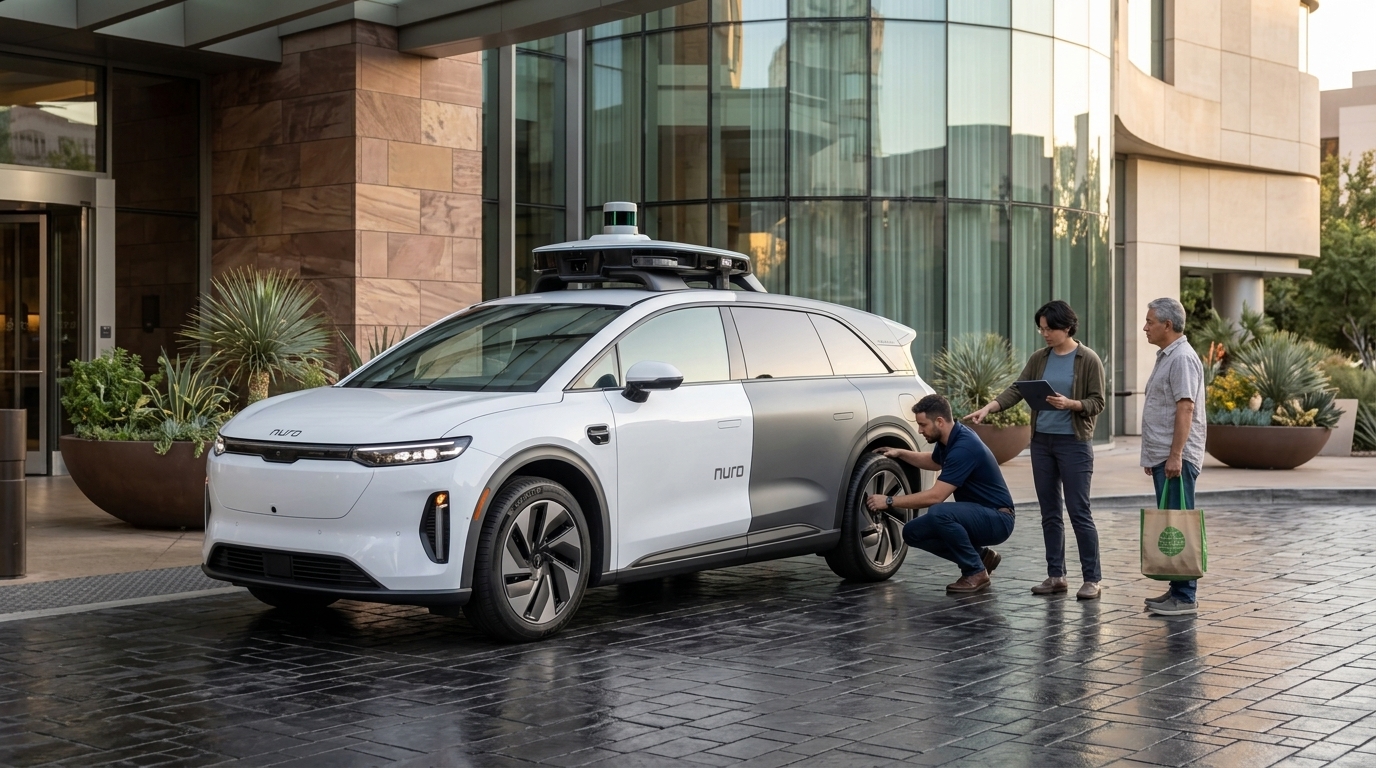
For years, Nuro focused exclusively on the "last mile" logistics chain. Its vehicles, such as the R2 and the newer R3, were designed to carry goods, not people. This choice shielded the company from the stringent safety requirements needed to protect a human occupant in the event of a crash. However, the robotaxi market is proving to be far more lucrative and mature than previously anticipated. Nuro's recent announcement that it will license its software stack—the "Nuro Driver"—to third-party manufacturers like Lucid, combined with its deep partnership with Uber, signals that the company is now aiming for the heart of urban mobility.
This strategy is built on the belief that Waymo has already done the "heavy lifting" of educating the public and regulatory bodies. Nuro is now stepping onto a paved road, avoiding the costly mistakes of the first generation of autonomous vehicles. The Nuro Driver technology is now a platform-agnostic system, capable of being integrated into Level 4 (L4) passenger cars, allowing the company to scale much faster than if it had to build its own cars from scratch.
The Cost Advantage and the Evolution of AI
One of Ferguson’s primary arguments is the dramatic reduction in the cost of sensors and computing hardware. When Waymo began its journey, Lidar sensors cost as much as a small apartment. Today, the technology has matured, mass production has kicked in, and costs have plummeted by over 90%. Nuro can now equip a fleet for a fraction of what the pioneers spent five years ago. This capital efficiency is critical for reaching profitability—the industry’s long-sought "holy grail."
Furthermore, advancements in Artificial Intelligence, particularly Transformer-based models and end-to-end learning, allow Nuro to develop driving systems that are more flexible and less dependent on hyper-detailed high-definition (HD) maps. While Waymo relies on a highly controlled and pre-mapped approach, newer players are betting on AI that "understands" the environment in real-time, reducing the need for extensive support infrastructure and allowing for quicker deployment in new cities.
Partnerships: The Key to Market Penetration
Nuro isn't trying to compete with Uber; it's making Uber an ally. Integrating the Nuro Driver into the Uber platform gives the company immediate access to millions of users without the need to develop its own consumer-facing ride-hailing app. Meanwhile, the partnership with Lucid Motors provides the ideal "body" for Nuro’s "brain." Lucid’s vehicles, renowned for their energy efficiency and advanced electrical architecture, serve as the perfect foundation for an electric robotaxi that needs to operate nearly 24/7.
This "asset-light" approach differentiates Nuro from both Tesla and Waymo. While Tesla attempts to solve autonomy via vision-only systems on millions of consumer cars, and Waymo operates as a fully vertically integrated service provider, Nuro positions itself as the technology partner providing the intelligence. This allows others to handle the heavy lifting of vehicle manufacturing and fleet maintenance.
Challenges and the Future of Autonomy
Despite the optimism, the road ahead is not without obstacles. Public trust has been shaken by high-profile accidents from other players (such as GM’s Cruise), and regulators are now far more skeptical. Nuro must prove that its system is not only cheaper but also at least as safe as Waymo’s, which has already logged millions of miles without significant incident.
In conclusion, Nuro is betting that the robotaxi market is not a sprint, but a marathon of endurance and economic strategy. If the "second mover" can provide a reliable solution with a lower barrier to entry, Waymo’s dominance may prove to be temporary. 2026 is set to be the year these theories are tested on the asphalt, as the first passenger vehicles powered by Nuro technology begin to hit the streets.