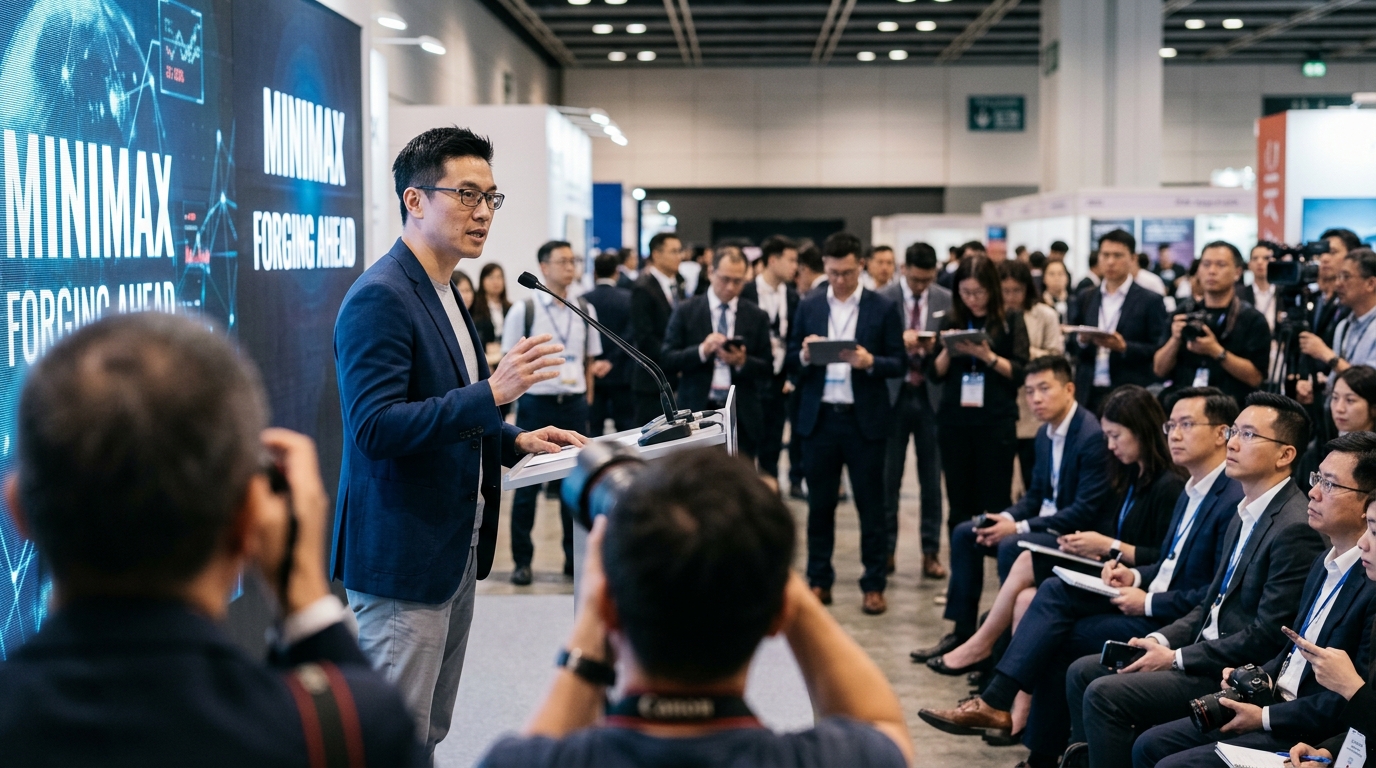
In the rapidly evolving landscape of Chinese technology, MiniMax, one of the nation's most promising artificial intelligence startups, is reportedly shifting its sights toward public markets. According to sources close to the matter, MiniMax is seriously considering an initial public offering (IPO), a move that could reshape the domestic industry and provide the necessary capital to sustain its fierce rivalry with competitors like DeepSeek and Zhipu AI.
The Rise of China's 'AI Tigers'
MiniMax is not just another software firm; it is part of what analysts have dubbed the 'Four AI Tigers' of China, alongside Moonshot AI, Zhipu AI, and StepFun. Founded by Yan Junjie, a former vice president at SenseTime, the company has captured the attention of giants like Alibaba and Tencent, securing funding that values it at over $2.5 billion. MiniMax's strategy differs from its rivals through a multimodal approach, focusing not only on text but also on voice and video. Its flagship applications, such as Talkie, have seen significant success in international markets, showcasing a rare ability for Chinese AI to resonate globally.
The DeepSeek Rivalry and the Token Price War
The primary driver behind the potential IPO is the grueling nature of the current competition. DeepSeek, which has gained international acclaim for its high-efficiency models and open-weights philosophy, has forced the market into a 'price war' regarding API costs. MiniMax must now balance the need for immense computational power—which costs billions—with the pressure to offer lower prices to attract developers. A public listing, whether in Hong Kong or mainland China, would provide the liquidity required to secure advanced hardware and sustain research and development despite ongoing US export restrictions.
Geopolitical Hurdles and Regulatory Oversight
The path to an IPO is fraught with challenges. MiniMax operates within a strict regulatory framework overseen by the Cyberspace Administration of China (CAC), which mandates rigorous content filtering for AI-generated outputs. Furthermore, the reliance on high-end Nvidia chips, which are subject to stringent US export controls, remains a strategic vulnerability. However, the Chinese government appears to be encouraging domestic listings for tech firms to bolster the country's technological self-reliance. MiniMax's success could serve as a blueprint for how Chinese unicorns navigate a climate of intense geopolitical friction.
MiniMax’s Future and Global Ambitions
Despite these hurdles, MiniMax possesses an advantage many of its domestic peers lack: the ability to build consumer products that appeal to users outside of China. Talkie, an app that allows users to interact with AI-driven avatars, has garnered millions of downloads in the US and Southeast Asia. This international footprint makes the company particularly attractive to investors, as it demonstrates that its technology can compete on par with OpenAI and Anthropic in terms of user engagement and product-market fit.