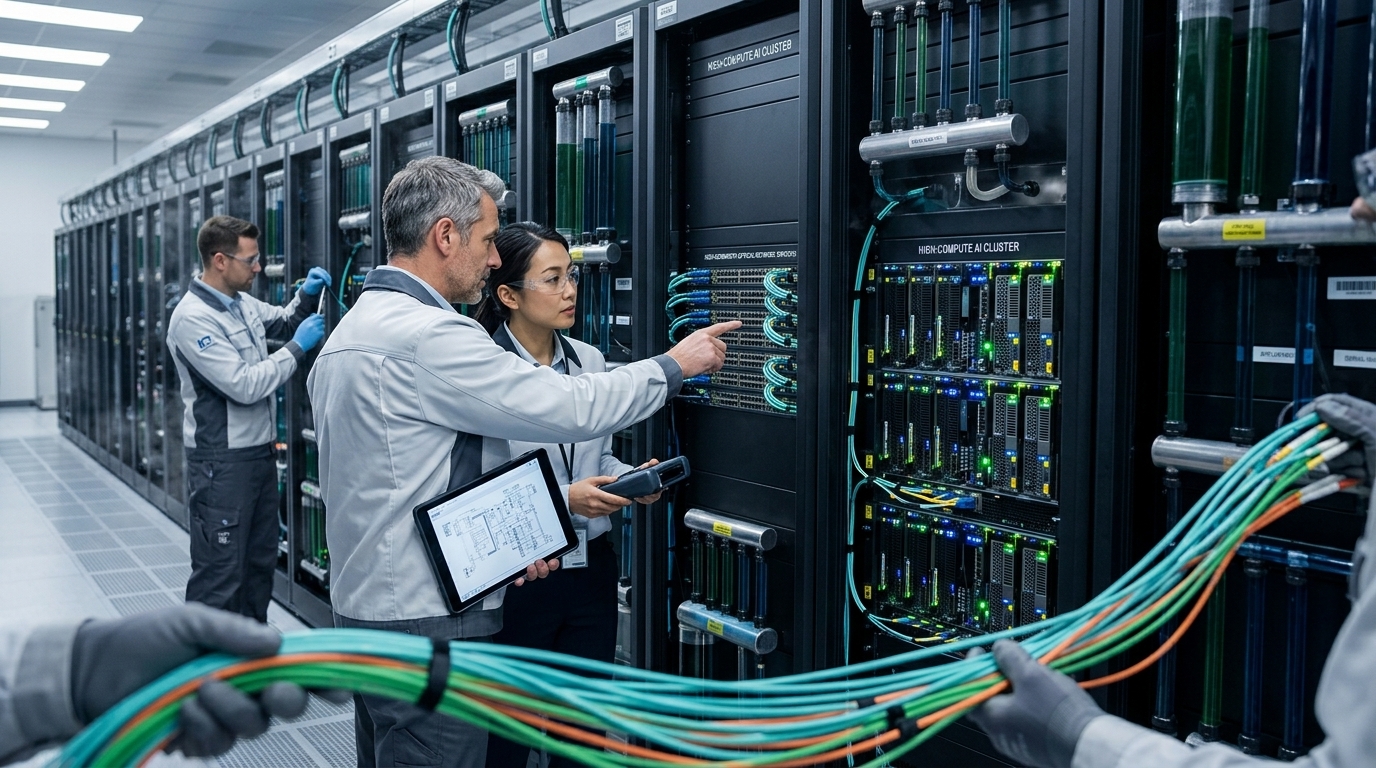
In the current AI gold rush, Nvidia has established itself as the premier purveyor of picks and shovels. Yet, one titan refuses to pay the toll: Google. With the unveiling of its sixth-generation Tensor Processing Units (TPUs), codenamed 'Trillium,' the Mountain View giant is making a definitive statement. Vertical integration isn't just a luxury; it's the only viable strategy for survival and dominance in the race toward Artificial General Intelligence (AGI).
The Strategy of Independence
For over a decade, Google has been quietly and methodically building its own silicon stack. While industry peers like Microsoft, Meta, and OpenAI are forced to wait in line for Nvidia’s H100 and B200 shipments—paying steep gross margins that often exceed 80%—Google trains its state-of-the-art Gemini models on its own proprietary hardware. This 'Nvidia tax' is a cost Google has successfully circumvented, giving it a unique structural advantage in the AI landscape.
The new Trillium TPUs represent a massive leap in raw performance. According to Google, these chips offer a 4.7x increase in peak compute performance per chip compared to the previous TPU v5e. This isn't merely a marginal gain; it's the difference between training a foundational model in months versus weeks, while significantly slashing energy consumption.
Why TPUs Win in Specialized Workloads
The fundamental distinction between a general-purpose GPU and a Google TPU lies in their architecture. GPUs were originally designed for graphics rendering and later adapted for parallel processing. In contrast, TPUs are ASICs (Application-Specific Integrated Circuits) designed from the ground up for one specific task: tensor processing and matrix multiplication, which form the mathematical backbone of neural networks.
- Memory Architecture: Trillium features double the HBM (High Bandwidth Memory) capacity and bandwidth, allowing data to move into the processing units without the bottlenecks common in general-purpose hardware.
- Energy Efficiency: In an era where electricity is the new scarcity, Google claims Trillium is 67% more energy-efficient than previous iterations, a critical factor for massive-scale data centers.
- Inter-Chip Connectivity: Utilizing advanced ICI (Inter-Chip Interconnect) technology, Google can cluster tens of thousands of TPUs into a single, cohesive supercomputing fabric.
Economic and Strategic Implications
Google’s move is as much about economics as it is about engineering. By offering TPUs through Google Cloud, the company can provide AI compute services at price points that Microsoft Azure and AWS struggle to match, given their reliance on Nvidia’s high-margin hardware. Furthermore, Google is insulated from the supply chain shocks and geopolitical tensions that have historically plagued the semiconductor industry.
"The ability to design your own silicon is the ultimate competitive moat in the AI era. He who controls the hardware, controls the future of intelligence," industry analysts suggest.
However, the battle isn't won on hardware alone. Nvidia’s greatest strength is CUDA, its proprietary software stack that has become the industry standard. Google is countering with JAX, PyTorch, and TensorFlow optimizations, aiming to prove that the performance gains of TPUs outweigh the friction of switching environments. By integrating Trillium into the Google Kubernetes Engine (GKE), they are lowering the barrier to entry for enterprises.
Conclusion
Google isn't just building better chips; it's rewriting the economic rules of the AI industry. If TPUs continue to evolve at this trajectory, the 'Nvidia tax' may soon become an optional expense for those with the capital and expertise to forge their own path. For Google, silicon autonomy is the cornerstone of its quest to lead the AI revolution, ensuring that its destiny remains in its own hands.