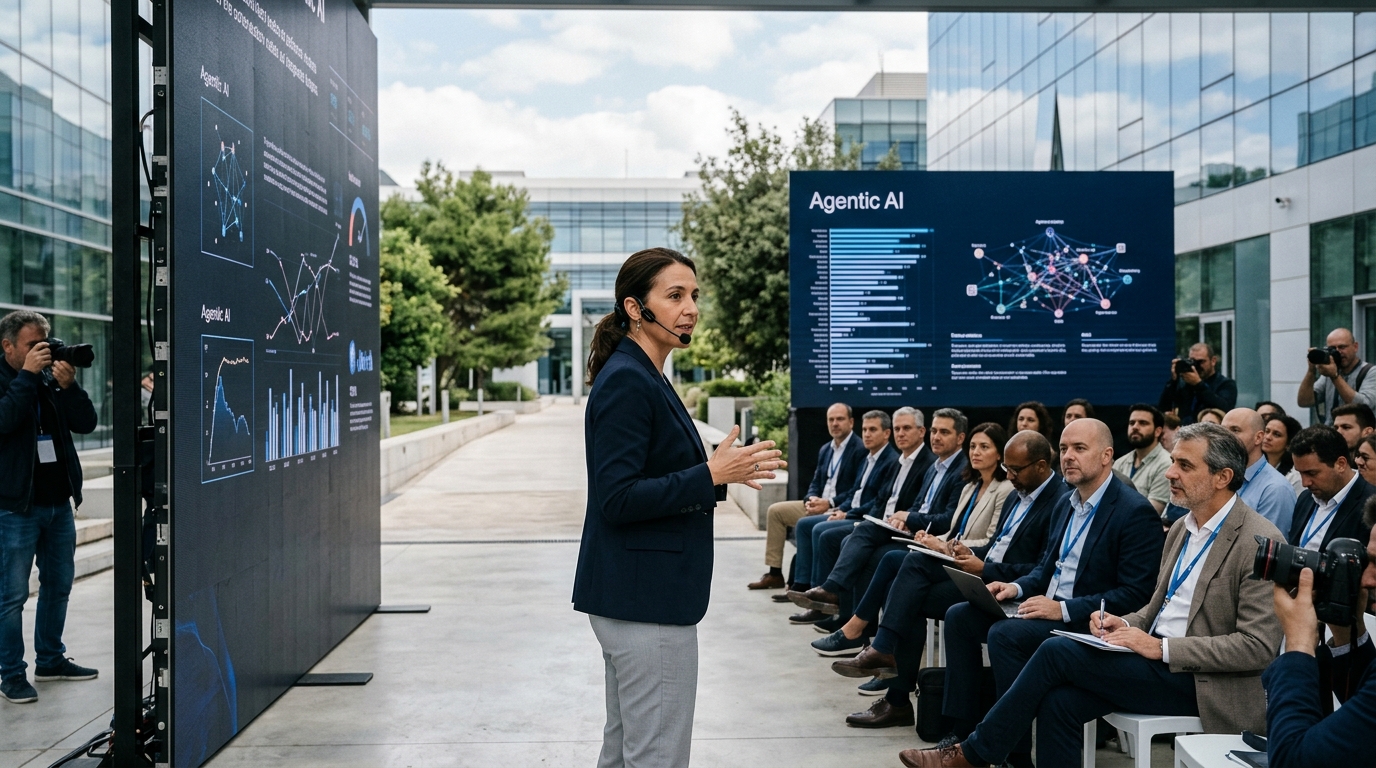
The era where Artificial Intelligence functioned merely as a sophisticated tool for searching or drafting text is giving way to something far more radical: Agentic AI. EY (Ernst & Young), a global leader in assurance and consulting services, has announced a sweeping initiative to integrate "autonomous agents" into its auditing processes on a global scale. This move is not just a technological upgrade; it is a structural shift in how businesses are audited, risks are identified, and transparency is maintained in international markets.
The Shift from Passive to Agentic AI
Until recently, the use of AI in the auditing industry focused on big data analysis and identifying anomalies that would then need to be examined by human auditors. Agentic AI changes this paradigm. These "agents" do not wait for step-by-step instructions. They possess the ability to set sub-goals, select appropriate tools, interact with other systems, and make real-time decisions about which data points require further investigation.
According to EY executives, the deployment of Agentic AI enables "always-on auditing." Instead of the traditional annual audit that examines samples of past transactions, AI agents can monitor 100% of a company’s transactions in real-time, catching fraud or accounting errors as they occur. This dramatically reduces response times and increases the reliability of financial statements.
Ethical and Regulatory Challenges
However, the adoption of such autonomous systems is not without risks. The primary question facing regulators is accountability. If an AI agent fails to detect systemic fraud, who is responsible? EY is investing billions of dollars not only in the technology itself but also in creating "Ethical AI" frameworks and "AI-on-AI" monitoring systems to oversee the agents' performance.
- Algorithmic Transparency: The need for Explainable AI (XAI) is critical so that auditors can understand the reasoning behind every decision made by an agent.
- Data Protection: Handling sensitive financial data via autonomous systems requires unprecedented levels of cybersecurity and encryption.
- Human Oversight: The "Human-in-the-loop" model remains central, with humans validating the agents' judgments at critical junctures.
The Future of the Auditing Profession
EY's move also sparks debates about the future of jobs in the sector. While many fear the displacement of junior auditors, the firm argues that the technology will liberate professionals from repetitive, low-value tasks, allowing them to focus on complex judgments and strategic advisory. In reality, the auditor of 2026 must be as proficient in data science as they are in accounting.
"We are not just automating a process; we are redefining the concept of trust in the digital economy," states EY Global leadership.
In conclusion, the global scale of EY’s Agentic AI implementation marks the beginning of a new era. Capital markets now demand speed and precision that the human factor alone cannot provide. The success of this venture will be judged by the balance between technological autonomy and human wisdom in an increasingly complex world.