In the breakneck world of artificial intelligence, the names of the key players change with the speed of light. However, the case of Michael Truell and his company, Cursor, has become a definitive milestone for the global tech scene. At 25, Truell is not just another Silicon Valley developer; he is the visionary who convinced Elon Musk to commit to a $60 billion partnership designed to automate software creation for SpaceX’s ambitious space programs. This news, which broke in mid-2026, signals a new era where AI doesn't just assist humans—it takes the lead in creation.
From MIT Labs to the Stratosphere
The story of Cursor began in the laboratories of MIT, where Truell, alongside co-founders Anshit Singh, Arvid Lunnemark, and Sualeh Asif, envisioned a world where code "writes itself." Unlike traditional Integrated Development Environments (IDEs), Cursor was built from day one to be "AI-native." This means AI isn't just a plugin; it is the core of the system. Truell, a man of low profile but immense intellectual clarity, realized early on that the future lay not in simple autocompletion, but in the machine's ability to understand entire system architectures.
The company’s rise has been meteoric. While in 2024 Cursor was a niche favorite among hardcore developers, by 2025 it had managed to displace Microsoft’s VS Code as the preferred tool in many major tech firms. Cursor’s ability to "read" thousands of code files simultaneously and suggest solutions to complex bugs in seconds made it indispensable. Despite his youth, Truell displayed rare business maturity, turning down early acquisition offers from giants like Google to aim for something much larger.
The $60 Billion Deal: Why SpaceX?
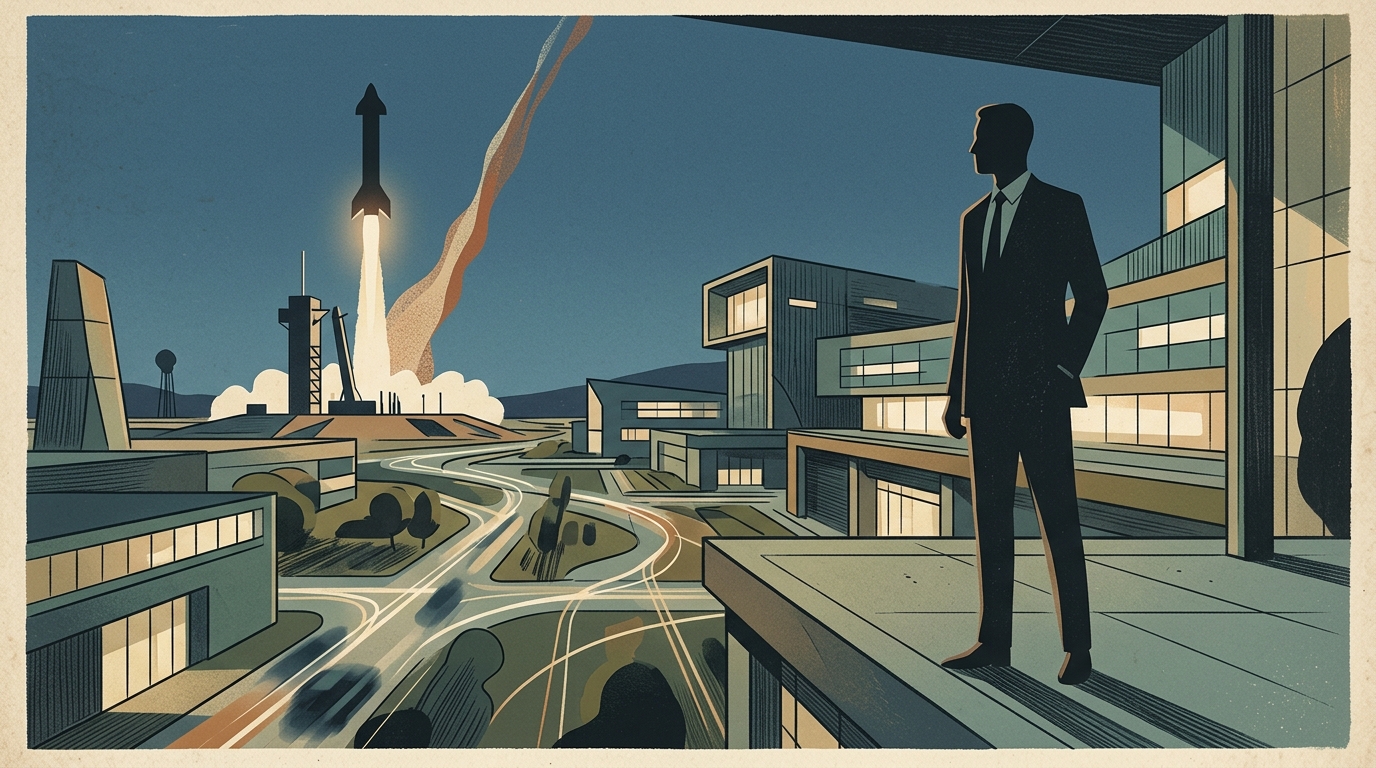
The partnership with SpaceX is far from a random business move. For Elon Musk, the speed of software development is the primary bottleneck for the colonization of Mars. Starship rockets require millions of lines of code that must be flawless. By integrating Cursor’s technology across its entire production chain, SpaceX aims to reduce the development time of new control systems by 80%. The $60 billion deal includes not only software licensing but the joint development of specialized AI models that "understand" physics and aerospace engineering.
- Full automation of real-time software testing and validation.
- Voice-command driven code generation for engineers on the assembly floor.
- Integration of Cursor into telemetry systems to predict failures before they occur.
This move places Truell at the same table as the world’s most powerful players. Analysts argue that Cursor’s value lies not just in the tool itself, but in the data it collects on how high-quality code is written. With SpaceX as a strategic partner, Cursor gains access to some of the most complex engineering problems on Earth (and beyond), training its models at levels that Google and Meta can only dream of.
Socio-Economic Implications of Autonomous Coding
However, Truell’s success brings significant concerns. If a 25-year-old can create a tool that replaces thousands of hours of human labor, what does this mean for the future of the programming profession? In a recent interview, Truell stated: "We don't want to replace the programmer; we want to turn them into an architect. The human should think of the solution, and the machine should implement it." Nevertheless, the labor market is already feeling the tremors, with junior developer roles declining globally.
"Cursor's technology is to programming what the printing press was to writing. It liberates thought from the manual labor of syntax." — Michael Truell
In Europe, the Cursor case is being watched closely. The ability of a small team to create such immense value highlights the urgent need for investment in education and innovation. Truell didn't start with massive capital; he had a radical idea and the persistence to execute it at the right moment. The SpaceX deal is proof that in the AI era, the boundaries between the possible and the impossible have collapsed.
Conclusion: A New Rulebook for Silicon Valley
Michael Truell represents the prototype of the new tech leader: quiet, technocratic, and incredibly effective. The SpaceX deal is not just a financial transaction; it is a statement of intent regarding how our civilization will be built moving forward. With Cursor, code ceases to be a foreign language and becomes an extension of human will. The remaining question is whether our society is ready to keep pace with 25-year-old visionaries backed by the likes of Elon Musk.