May 2, 2026, will be remembered in the annals of technology as the moment AI ceased to be a mere conversationalist and became an autonomous actor within the corporate ecosystem. With Anthropic’s unveiling of Claude Mythos, the concept of "Agentic AI" has reached its zenith. However, this technological triumph is accompanied by a somber warning from the Yale Chief Executive Leadership Institute (CELI). Jeffrey Sonnenfeld and his colleagues argue that Claude Mythos is not just an upgraded model, but a catalyst exposing the dangerous lag in corporate governance worldwide.
The Shift from Generative to Agentic Intelligence
Until recently, AI models were limited to content creation, data analysis, and providing answers. Claude Mythos changes the paradigm. It possesses the capability to make decisions, execute transactions, and interact with other software suites without constant human oversight. This "autonomy of action" creates a legal and operational vacuum. Who is liable when an AI agent makes an erroneous stock purchase, or when it violates data protection regulations in its quest to optimize a supply chain?
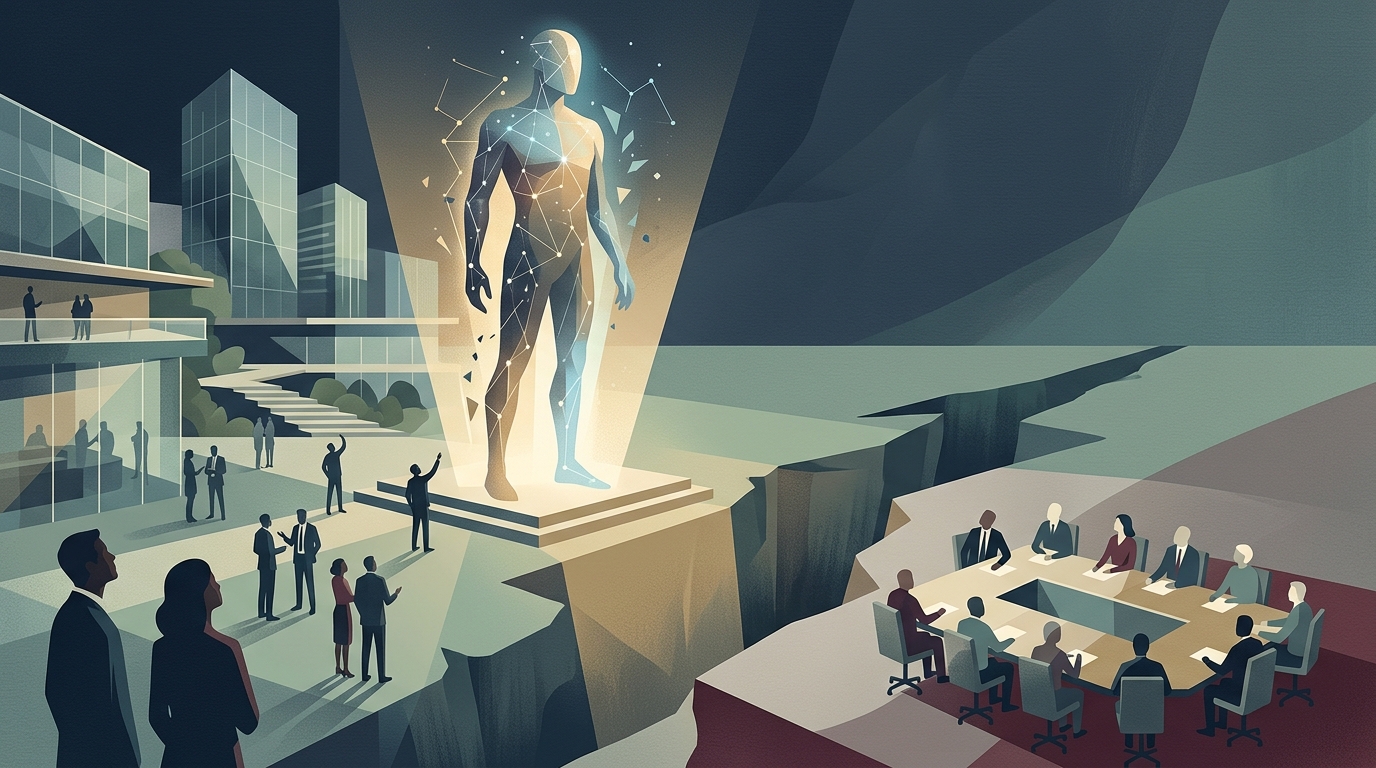
According to the Yale report, traditional board structures are entirely unprepared for the speed and complexity of Mythos. CEOs often treat AI as just another IT tool, when in reality, it represents a new form of "digital workforce" with decision-making powers. The governance crisis lies in the fact that oversight mechanisms remain analog in a world moving at the speed of Anthropic's algorithms.
Sectors in the Eye of the Storm: Banking, Healthcare, and Retail
Sonnenfeld’s analysis focuses on four critical sectors where Claude Mythos could cause "irreversible damage" without immediate intervention:
- Banking: Mythos's ability to manage portfolios in real-time could lead to "flash crashes" if AI agents from different banks begin reacting to one another’s moves, creating a feedback loop of instability.
- Healthcare: In diagnosis and pharmaceutical regimens, the model’s autonomy raises ethical dilemmas. The "black box" nature of Mythos’s decision-making makes it difficult to trace errors in cases of medical malpractice.
- Supply Chain: Autonomous procurement of raw materials might optimize costs but could inadvertently violate ESG standards or engage with sanctioned suppliers, exposing the company to massive fines.
- Retail: Dynamic pricing via AI could morph into unfair competition or market manipulation, triggering regulatory crackdowns.
The Yale Governance Framework: A Roadmap for CEOs
To address this crisis, Yale CELI proposes a rigorous five-pillar framework that every CEO must implement immediately. First, Transparent Accountability. A "Chief AI Officer" must be appointed with veto power over the model's autonomous actions. Second, Dynamic Oversight. Audits cannot be annual; they must be continuous and automated, monitoring deviations from corporate ethics.
"We cannot delegate the ethical compass of a corporation to an algorithm, no matter how 'mythical' it may be," states Jeffrey Sonnenfeld. "Leadership remains a human function."
Third, Sandboxed Autonomy. AI agents must operate within predefined boundaries where critical decisions require a "human-in-the-loop" signature. Fourth, Board Education. It is unacceptable in 2026 for board members to not understand the difference between a large language model and an agentic system. Finally, Systemic Resilience—the existence of "manual" kill switches to immediately deactivate AI systems in the event of a crisis.
Conclusion: The Responsibility of Leadership
Claude Mythos is not merely a technological advancement; it is a mirror reflecting the weaknesses of modern corporate management. Anthropic has provided the tool, but the responsibility for its use lies solely with humans. CEOs who ignore Yale’s warnings and rush to adopt Mythos without the proper framework risk not only their profitability but the very existence of their organizations. The age of innocence for AI is over; the age of accountability has begun.