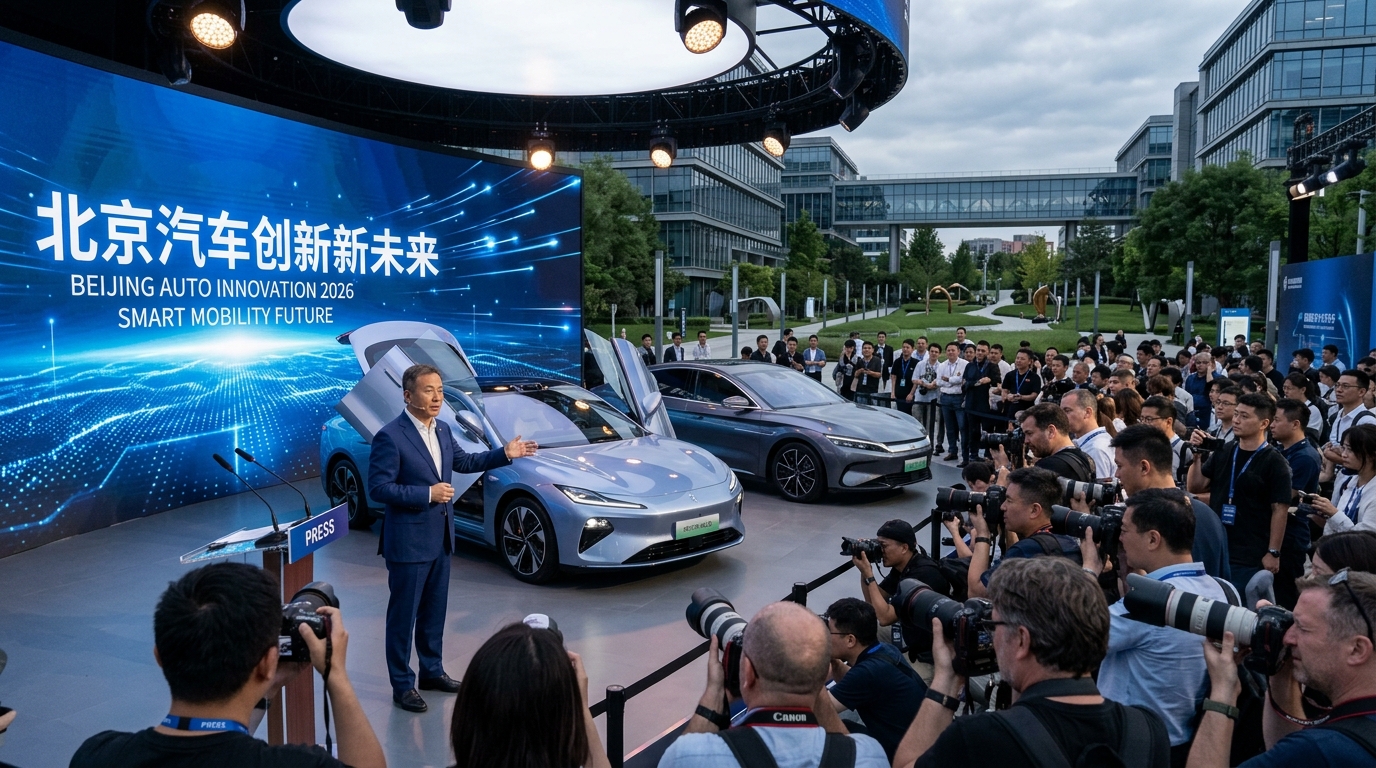
The 2026 Beijing Auto Show is not merely a trade fair; it is a profound declaration of industrial dominance. Where European and American automakers once dictated the standards of luxury and mechanical engineering, today, Chinese giants like BYD, Xiaomi, and Huawei are rewriting the rules of the road. The central theme of this year’s event is undeniable: software has superseded hardware as the primary value driver. The electric vehicles (EVs) flooding the exhibition floors do not just promise emission-free travel; they offer an integrated digital existence that makes legacy models appear like relics of a bygone era.
The Transformation into a 'Smartphone on Wheels'
The entry of tech titans like Xiaomi and Huawei into the automotive sector has fundamentally disrupted the industry. At the 2026 show, the spotlight has shifted away from traditional metrics like horsepower or 0-100 km/h acceleration. Instead, the focus is on the teraflops of computing power housed within the vehicle's central nervous system. Xiaomi, with its new SU8 model, showcased a seamless ecosystem where the car communicates flawlessly with smart home devices, allowing drivers to manage everything from home climate control to pre-ordering their morning coffee directly from the dashboard interface.
Chinese manufacturers have embraced the concept of the 'third living space.' Vehicles now feature built-in cinemas with 50-inch OLED screens, zero-gravity massage seats, and even high-tech wellness units and refrigerators. These innovations are far from mere gimmicks; they are a direct response to the needs of a new generation of Chinese consumers who spend increasing amounts of time in their vehicles due to urban congestion. The car is no longer a tool for transit; it is a mobile sanctuary.
Artificial Intelligence and the Autonomy Race
2026 marks the year Artificial Intelligence (AI) becomes the true co-pilot. In Beijing, we are witnessing the widespread implementation of Large Language Models (LLMs) embedded within voice command systems. Drivers can now engage in complex, multi-turn dialogues with their cars, asking the AI to plan routes based on culinary preferences or to summarize long documents and emails during the commute. This level of integration represents a leap forward in the human-machine interface.
Level 3 and Level 4 autonomous driving features have become standard for Chinese premium models. Companies like XPeng and Li Auto demonstrated systems capable of navigating the chaotic streets of China's megacities with minimal human intervention, utilizing a sophisticated suite of LiDAR sensors, high-definition cameras, and advanced computer vision. The speed at which these technologies are moving from prototype to mass production is what truly unnerves Western competitors, who are often bogged down by longer R&D cycles and regulatory hurdles.
The Challenge for the West: Price and Velocity
The most significant shock for international observers at the Beijing show is the price-to-performance ratio. While European and American automakers struggle to bring down the production costs of their EVs, Chinese firms are offering cutting-edge technology at prices 30% to 40% lower than their Western counterparts. This competitive edge is the result of deep vertical integration, with China controlling the lion's share of battery production and the supply chain for critical raw materials.
Legacy players like Volkswagen and Mercedes-Benz are attempting to pivot by forming strategic alliances with Chinese tech firms, effectively admitting that they can no longer develop software at the necessary speed in-house. However, the power dynamic has shifted: Western companies are no longer the mentors but the students in a market that moves at breakneck speed. The 2026 Beijing Auto Show confirms that the future of the automotive industry is no longer being written in Stuttgart or Detroit, but in the tech hubs of the East.