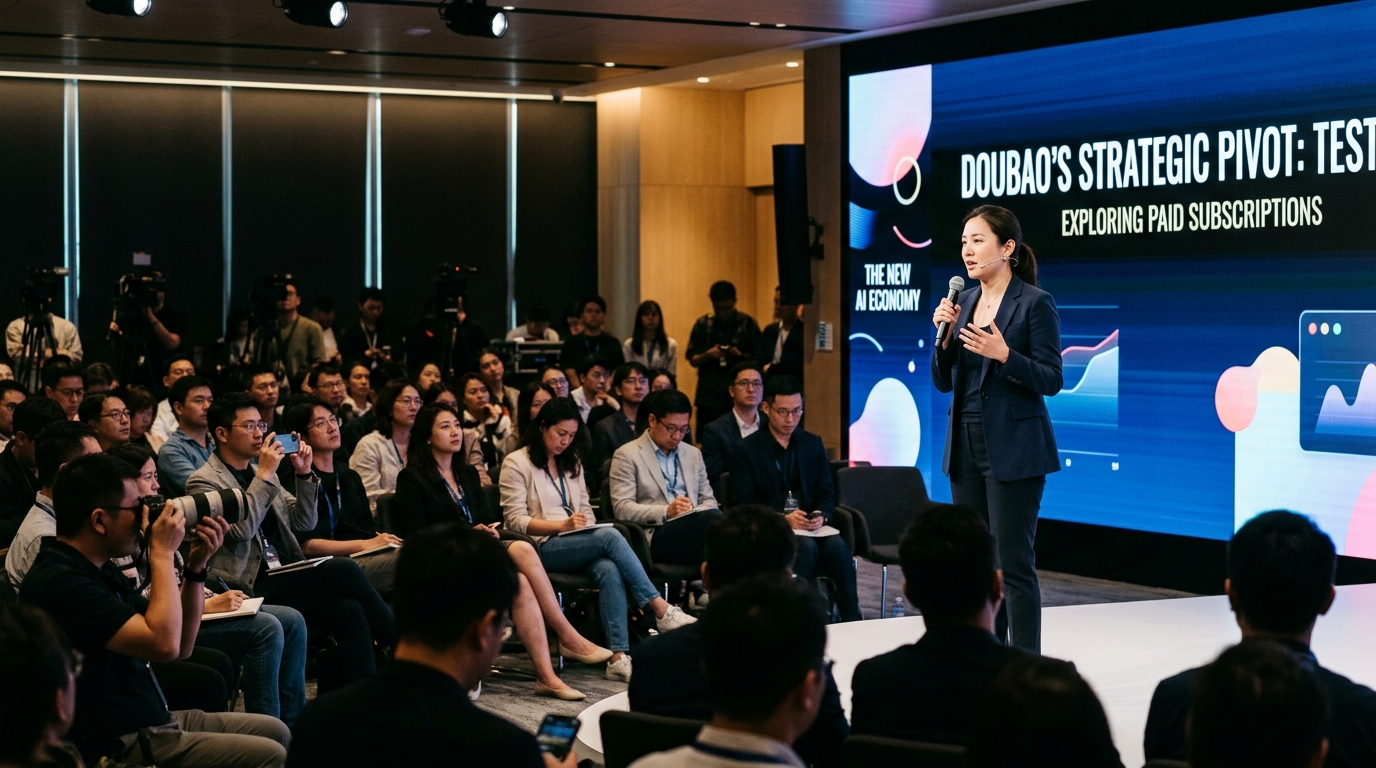
In the high-stakes theater of Chinese technology, ByteDance is no longer content with just dominating short-form video through TikTok and Douyin. With its AI application, Doubao, the company has successfully scaled the summit of the Generative AI landscape in China. However, the era of "free-for-all" AI is drawing to a close. Recent reports indicate that ByteDance has begun testing subscription models for Doubao, a move that signals a pivot toward sustainability in an industry that consumes billions in computational overhead.
The Dominance of Doubao
Doubao is far more than a mere chatbot. Since its launch, it has consistently outperformed rivals like Baidu’s Ernie Bot in terms of downloads and monthly active users. Its success is rooted in its user-centric design: seamless voice interaction, a plethora of specialized AI personas ranging from educational tutors to role-playing characters, and deep integration within the ByteDance ecosystem. ByteDance leveraged its unparalleled marketing prowess to make Doubao the de facto AI tool for the Chinese masses.
The transition to a paid model is a critical experiment. Until now, the company’s strategy mirrored the early days of social media: rapid expansion via free access. But AI is fundamentally different. Every user query incurs a direct cost in GPU cycles and electricity. ByteDance must now prove that its product offers enough tangible value to compel users to pay, transitioning from a novelty to a necessity.
The Economic Imperative: Why Monetize Now?
The timing of this move is not accidental. Running Large Language Models (LLMs) is an incredibly capital-intensive endeavor. While ByteDance is flush with cash, investor pressure for AI profitability is mounting globally. Furthermore, US export restrictions on high-end semiconductors, such as Nvidia’s H100s, have made compute power a scarce and expensive commodity in China. Monetization is not just a choice; it is a strategic requirement for survival.
- Rising operational costs as the user base expands into the hundreds of millions.
- The need to fund R&D for next-generation models to compete with the likes of GPT-5 and Claude 3.
- Diversifying revenue streams beyond the volatile digital advertising market.
The proposed subscription tiers are expected to offer faster response times, access to more sophisticated iterations (such as a 'Pro' version of the underlying model), and exclusive features for image and video generation. This follows the global precedent set by OpenAI’s ChatGPT Plus, effectively creating a two-tiered market for digital intelligence.
Geopolitical Context and the Pricing War
ByteDance’s move occurs amidst a broader "price war" in the Chinese AI sector. Giants like Alibaba and Tencent have recently slashed prices for their AI APIs to attract developers. However, ByteDance is focusing its monetization efforts on the consumer (B2C) side. This is a bold bet on brand loyalty and the quality of the user experience. If Doubao can maintain its lead while charging a premium, it will validate ByteDance’s position as a software powerhouse capable of pivoting from entertainment to utility.
"Artificial Intelligence is transitioning from a shiny toy to an essential utility. And like electricity, intelligence is about to get a meter," note Beijing-based market analysts.
In conclusion, testing paid subscriptions for Doubao marks the beginning of the end for the subsidized AI honeymoon. As ByteDance navigates this transition, the results will serve as a bellwether for the entire industry. Success would mean a sustainable future for AI services; failure could lead to a consolidation of the market where only the most well-funded giants survive. For ByteDance, the goal is clear: to own the platform where the world—or at least China—thinks, creates, and pays.