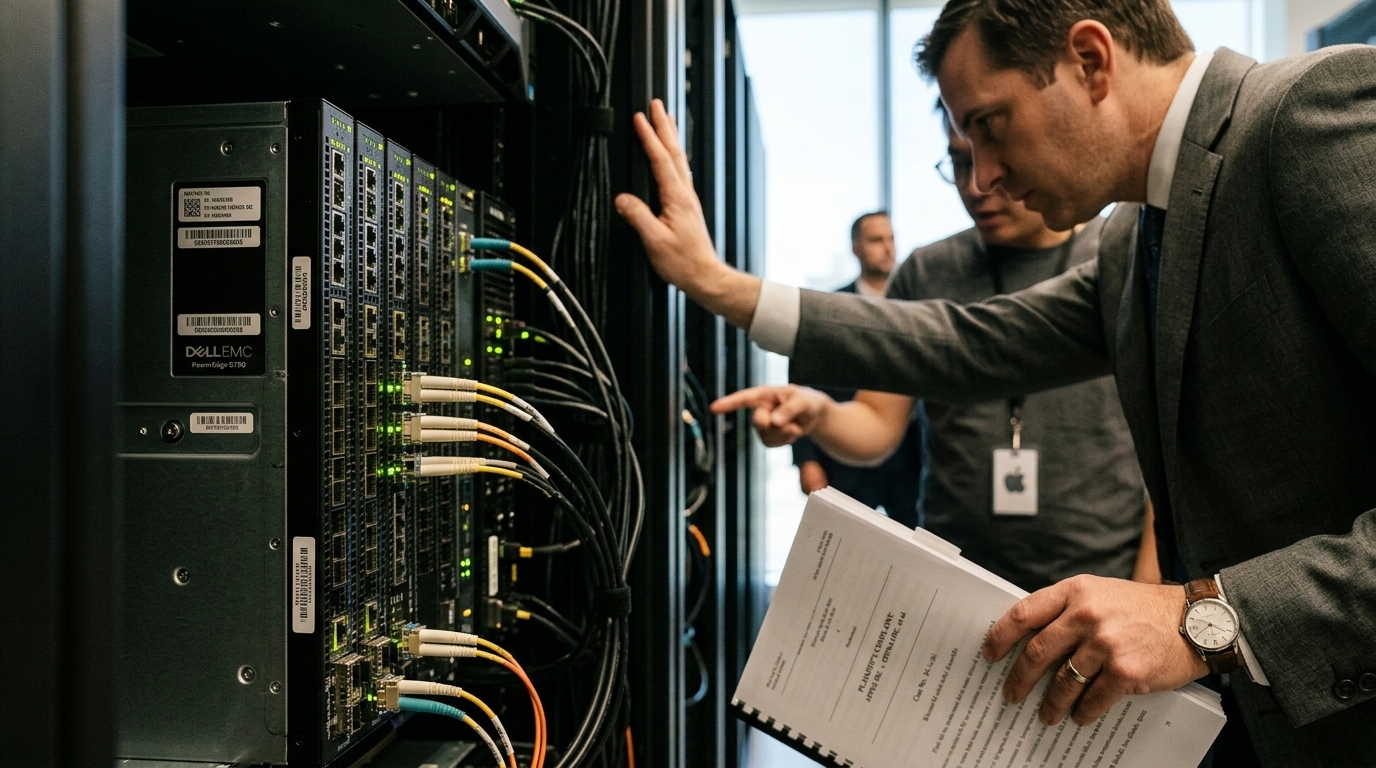
Silicon Valley is reeling after Apple Inc. filed a massive, multi-billion dollar lawsuit against OpenAI. The complaint, filed in a California federal court, is more than just a corporate dispute; it is a frontal assault on the future of personal computing. According to the filing, OpenAI allegedly leveraged the privileged access it gained during partnership negotiations for 'Apple Intelligence' to siphon critical insights into chip design, power management, and hardware-software integration.
The Chronicle of a Betrayal
The relationship between the two giants began with the promise of a new era for the iPhone. Throughout 2024 and 2025, both companies worked closely to integrate ChatGPT into Apple's ecosystem. However, Apple now claims that OpenAI acted as a 'Trojan Horse.' At the heart of the lawsuit is the allegation that OpenAI, under Sam Altman’s direction, systematically poached top Apple engineers who were working on the secretive 'Project Titan' and the development of A-series and M-series silicon.
Apple contends that these engineers brought gigabytes of proprietary data regarding Apple's Neural Engine architecture with them. "This is not a simple case of employee mobility," Apple's legal team states in the complaint's introduction. "This is an orchestrated industrial espionage operation designed to bypass years of R&D and billions of dollars in investment."
The Threat of the 'Open-Phone'
The most alarming aspect of the case for Cupertino is OpenAI's rumored development of a standalone AI device, reportedly in collaboration with Jony Ive's design firm, LoveFrom. Apple alleges that OpenAI used its trade secrets to solve the complex problems of thermal management and battery efficiency for Large Language Models (LLMs) running locally on-device—an area where Apple is considered the world leader.
- Chip Architecture Theft: Accusations of copying specialized AI processing units (NPUs).
- Breach of Confidentiality: Misuse of data from technical deep-dives held in 2024-2025.
- Unfair Competition: Strategic poaching of executives in exchange for proprietary secrets.
OpenAI responded with a brief statement, dismissing the claims as "meritless" and suggesting that Apple is trying to stifle competition because it fell behind in the generative AI race. "Progress cannot be constrained by antiquated legal tactics," a spokesperson said.
Implications for the Apple Ecosystem
This legal warfare puts the functionality of Apple Intelligence for millions of users at immediate risk. Analysts suggest Apple might cut off OpenAI's access to its servers, which would mean the immediate removal of ChatGPT from Siri. This would leave a massive void that Apple would have to fill either with its own models—which are rumored to still be lagging—or a rushed deal with Google's Gemini.
"This lawsuit marks the end of the age of innocence for AI partnerships. From now on, every exchange of code will be treated as a potential existential threat," says a leading Silicon Valley legal analyst.
The market is watching closely, as Apple is seeking not only billions in damages but also a permanent injunction preventing OpenAI from releasing any hardware device that utilizes the disputed technologies. If Apple prevails, OpenAI faces an existential threat, as its transition from software to hardware is a core pillar of its strategy to achieve AGI (Artificial General Intelligence).
In conclusion, Apple's move is a definitive power play. It reminds the industry that despite the rise of AI models, control over the physical medium—the device in our hands—remains the ultimate prize. While the courtroom battle may last years, the impact on tech's strategic alliances will be immediate and transformative.