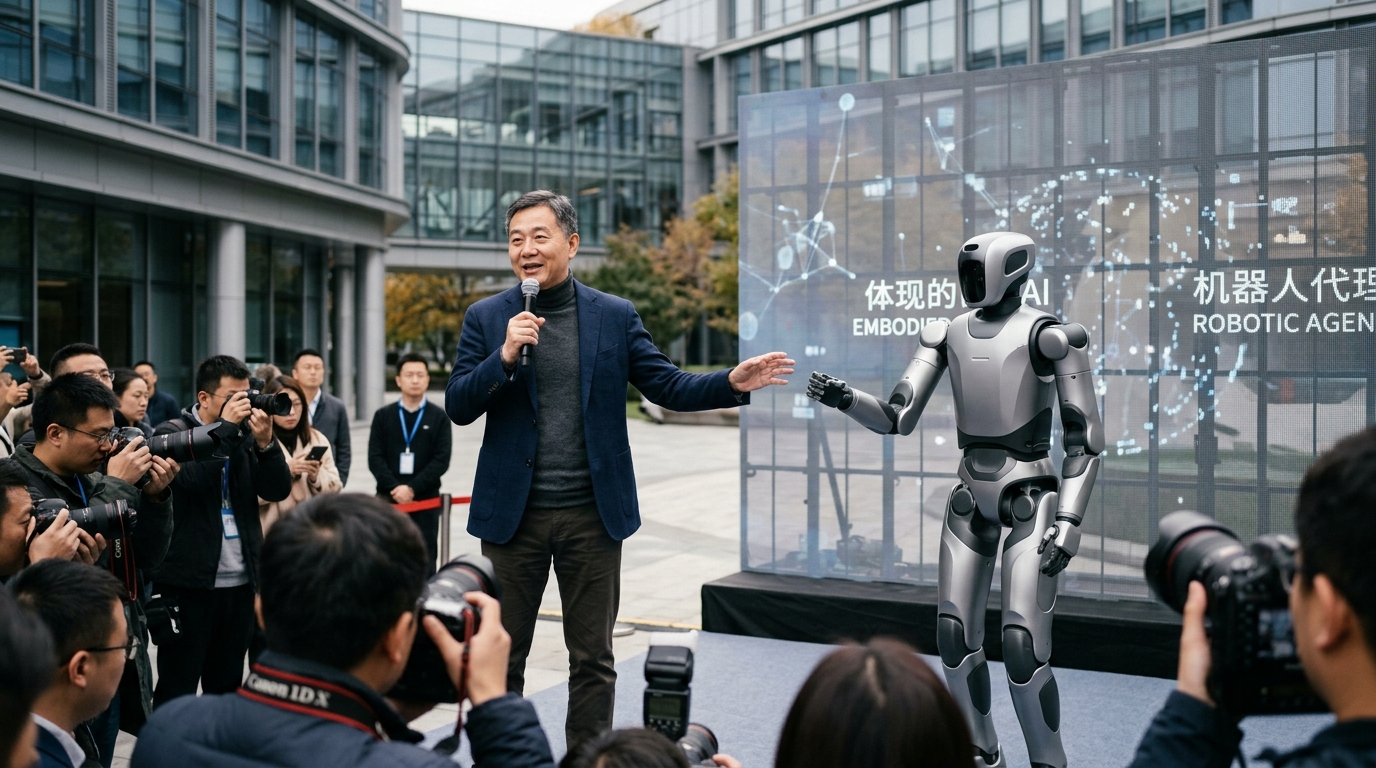
In a watershed moment for the global technology ecosystem, Alibaba Cloud has announced a suite of new Artificial Intelligence (AI) models specifically engineered to power robotic systems. This move is far more than a mere software update; it signals a profound strategic pivot for the Chinese tech giant: the transition from "chatbots" (conversational models) to "agents" (action-oriented models). The era where AI was confined to generating text and images is giving way to "Embodied AI," where digital intelligence gains physical form and the agency to interact with the material world.
From Theory to Action: The Technical Edge of New Models
Alibaba’s new models, part of the expanding Qwen family, have been trained on vast repositories of multimodal data. Unlike traditional Large Language Models (LLMs), these systems can "see" and "interpret" their surroundings via visual sensors, translating visual input into kinetic commands in real-time. What distinguishes Alibaba’s announcement is the intense focus on reducing latency and increasing motor precision—two factors that have historically been the greatest barriers to the mass adoption of AI-driven robotics.
Alibaba Cloud aims to offer these models as a "Model-as-a-Service" (MaaS) platform, enabling robot manufacturers worldwide to integrate advanced capabilities without needing to build their own AI infrastructure from scratch. This spans from industrial arms in manufacturing plants to humanoid robots destined for domestic use or service roles in hospitals and hotels.
The "Agent" Paradigm and the Competitive Landscape
The concept of an "AI Agent" refers to a system that doesn't just wait for a prompt to respond, but has the capacity to set goals, plan steps, and execute tasks autonomously. Alibaba recognizes that the chatbot market has reached a point of saturation, and the real value now lies in automating complex physical processes. With this move, the company positions itself against titans like Tesla, with its Optimus program, and OpenAI, which has been systematically investing in robotics firms like Figure AI.
- Autonomy: Models can handle unpredictable situations without human intervention.
- Multimodality: Integration of vision, hearing, and touch for deep contextual understanding.
- Democratization: Providing tools to smaller robotics firms through cloud infrastructure.
Competition within China is equally fierce, with Baidu and Tencent accelerating their own research. However, Alibaba’s advantage lies in its massive logistics chain and e-commerce ecosystem, where robotic agents can be tested in real-world warehousing and distribution scenarios.
Geopolitical and Socio-Economic Implications
The shift toward robotic AI is not only technological but also deeply political. China faces a shrinking workforce due to demographic shifts. Automation through "intelligent agents" is viewed by Beijing as the primary solution to maintaining the country's manufacturing prowess. Simultaneously, US export restrictions on advanced semiconductors are forcing Alibaba to optimize its models to run efficiently on less powerful hardware—a challenge that may ultimately lead to more efficient and cost-effective solutions.
"We are not just building machines that talk; we are building machines that understand physical reality," an Alibaba Cloud executive stated during the unveiling.
In conclusion, Alibaba’s move marks the end of AI’s "infancy." We are moving from experimental chatbots that wrote poetry to a phase where artificial intelligence will grasp objects, assemble products, and navigate among us. While the safety and ethical challenges remain immense, the path toward embodied intelligence now appears irreversible.