

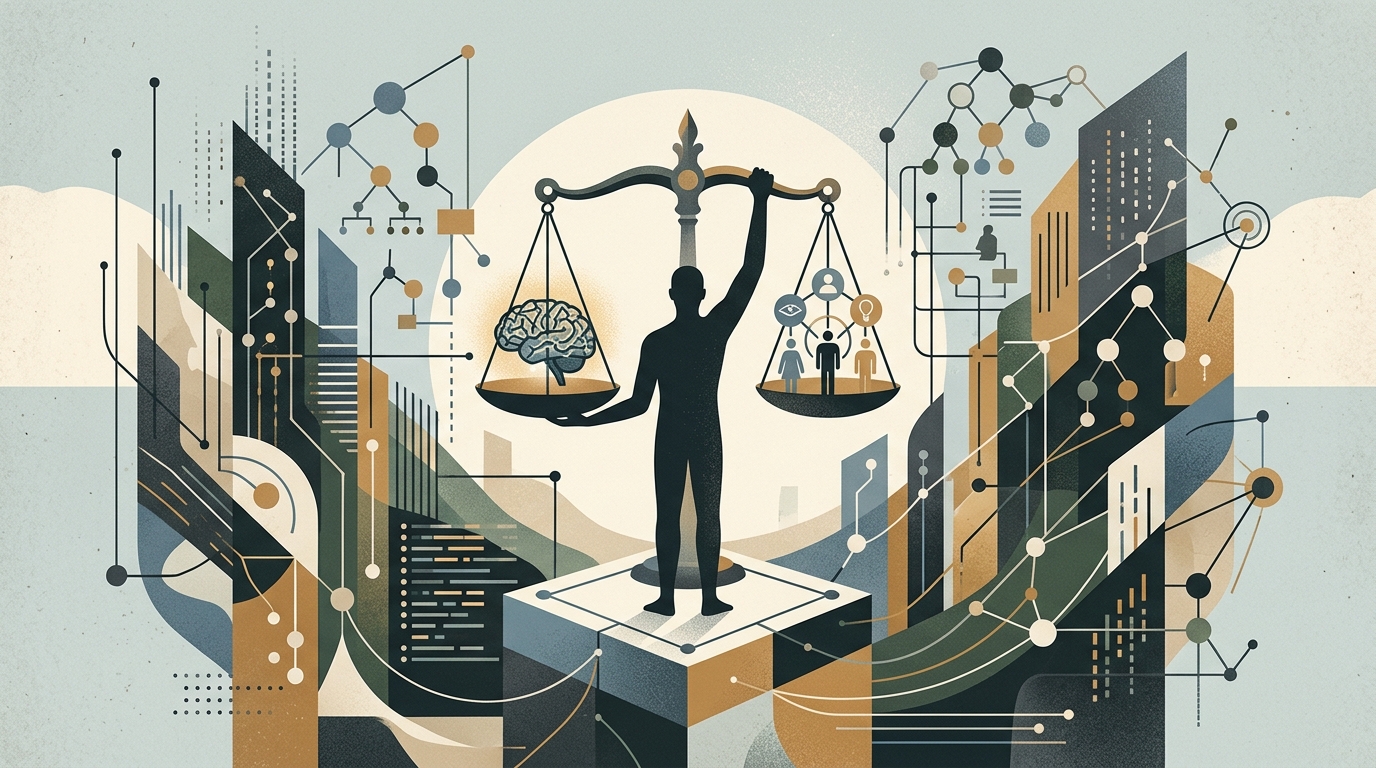
It is June 2026, and here in the Mediterranean, the sun has a way of exposing what is real and what is merely a mirage. For the past three years, we have lived through a fever dream of AI promises. But this week, as I look at the reports coming across my desk, I sense a shift. The 'Great Calibration' has begun.
Wells Fargo recently issued a wake-up call, suggesting the AI market rally might be hitting its ceiling. For many, this is cause for panic. For me? It is a relief. We are finally moving past the era of 'AI for the sake of AI' and entering the era of 'AI for the sake of humanity.' As the ancient Greeks believed, 'Metron ariston'—moderation is best. We are finding our measure.
The Renaissance of the Soul
I was particularly struck by the concept of the 'Human Capital Renaissance.' While we’ve spent years fearing that machines would make us obsolete, the reality in 2026 is different. In global business, the premium is no longer on who can process data fastest—the AI does that—but on who can navigate the transition with empathy, ethics, and creative vision. We are rediscovering that the most valuable 'capital' isn't silicon; it's the human spirit.
"The machine can calculate the trajectory of a star, but it cannot feel the awe of the night sky."
However, this renaissance is under threat by what I call the 'Profiteer Problem.' Even Pope Francis has had to weigh in, warning against those who prioritize digital dividends over human dignity. Whether it’s the struggle against AI-driven cheating in Vietnamese high schools or the aggressive scaling of data centers in India by titans like Meta and Reliance, we are seeing a tension between progress and integrity. Are we building tools to elevate our children, or just better ways for them to bypass the hard work of learning?
The New Geography of Growth
Perhaps the most fascinating development is the geopolitical pivot. While the West debates market bubbles and interest rates, the East is building. From the strategic AI alliance between Vietnam and Thailand to the digital transformation of agriculture, we are seeing a practical, grounded application of technology. They aren't just trading stocks; they are sowing digital seeds in actual soil. This is where the 'Smart Hospital' and the 'Digital Farm' move from science fiction to social necessity.
I find myself wondering: have we in the West become too obsessed with the cost of AI (as seen in the rise of low-cost ETFs) while the rest of the world focuses on its utility? In Greece, we know that a tool is only as good as the house it helps build.
A Call for Phronesis
As we navigate the remainder of 2026, my hope is that we embrace Phronesis—practical wisdom. We see it in the doctors using AI to save lives in smart hospitals and the farmers in Vietnam using algorithms to protect their crops. These are the true victors of the AI era, not the speculators or the profiteers.
I ask you, my friends: In your own work and life, are you using AI to expand your humanity, or to replace it? The market may pivot, but our values must remain the anchor. Let us not be the generation that traded its soul for a more efficient spreadsheet.