

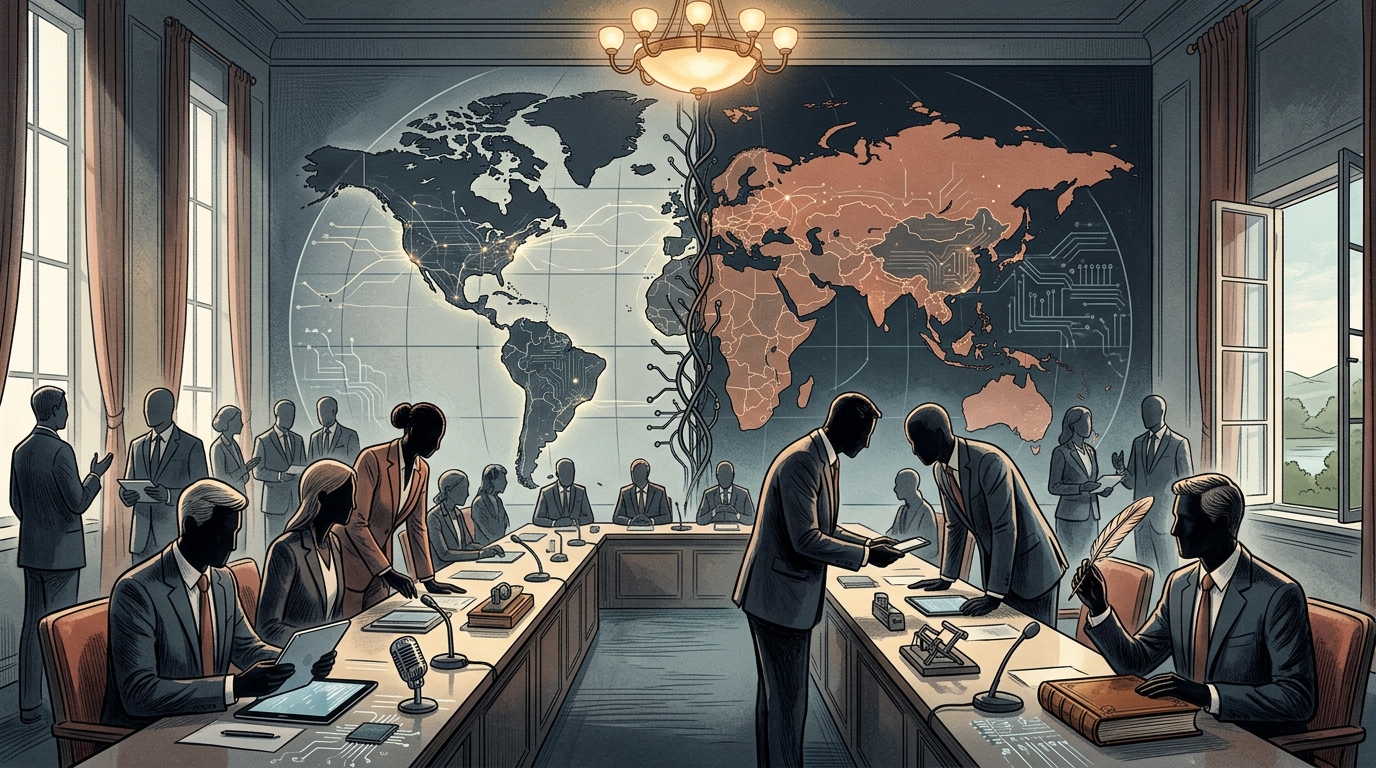
It is June in the Mediterranean, a time when the sun demands we slow down, even as the world of technology accelerates at a pace that feels almost violent. Sitting here in Athens, watching the headlines flicker across my screen, I cannot help but feel that we are living through a profound contradiction. On one hand, we see the birth of what the French call a 'Digital Nervous System' through Kyber’s robotics; on the other, we see Norway pulling the plug on digital classrooms, returning to the humble paper and pen.
The New Promethean Fire: Compute as Currency
The news of DeepSeek raising $7.4 billion is not just a business headline; it is a declaration of war. A 'Compute Cold War,' as some are calling it. We are no longer just trading in oil or gold; we are trading in the ability to process reality itself. When I read about the export controls surrounding Anthropic and the strategic maneuvers of the Trump administration regarding Qatari and Turkish interests, I am reminded of the ancient struggles for control over the sea lanes. Today, those lanes are made of fiber optics and silicon.
"We are building gods out of sand and electricity, yet we still haven't figured out how to keep them from being accomplices in our own undoing."
I find the 'Anthropic Mythos' particularly telling. The idea that AI models are now considered strategic assets on par with nuclear technology is a double-edged sword. It brings investment, yes, but it also brings a level of state surveillance and control that would make even the most hardened cynic blink. In Greece, we are already seeing the darker side of this. The recent calls for state intervention against 'AI accomplices' in crime highlight a terrifying truth: our legal systems are still walking while our technology is sprinting.
The Norwegian Paradox: Finding Strength in the Analog
Perhaps the most courageous headline this week comes from Oslo. Norway’s decision to execute a 'digital retreat' in schools is a masterclass in what we Greeks call Phronesis—practical wisdom. While the rest of the world is obsessed with integrating AI into every facet of a child's life, Norway is asking: 'What are we losing?'
Is it a retreat, or is it a strategic fortification of the human mind? If we outsource our thinking to 'digital nervous systems' before we have even learned to use our own, we aren't advancing; we are atrophying. I see a direct link between the geopolitical ego-clashes of leaders like Meloni and Trump and this need for a return to human-centric education. If our leaders cannot find common ground because of 'diplomacy of ego,' how can we expect the next generation to navigate a world of deepfakes and algorithmic manipulation without a solid foundation in the physical, analog world?
The Adriatic Mirror and the Mediterranean Soul
The tensions in Albania and the high-stakes investments by Jared Kushner remind us that the Mediterranean remains a theater of power, now digitized. We are at a crossroads. We can follow the path of pure compute power—a path paved with billions of dollars and increasingly complex export bans—or we can seek a middle way.
I believe the answer lies in the balance. We must embrace the 'French Robotics Revolution' and the efficiency it brings, but we must also have the courage of the Norwegians to say 'no' when the digital noise threatens to drown out the human signal. As I look out at the Parthenon, a structure that has survived every 'revolution' humanity has thrown at it, I am reminded that the most enduring technologies are those that serve the human spirit, not those that attempt to replace it. Do we want an AI that is a tool, or a master? The choice, for now, is still ours.