

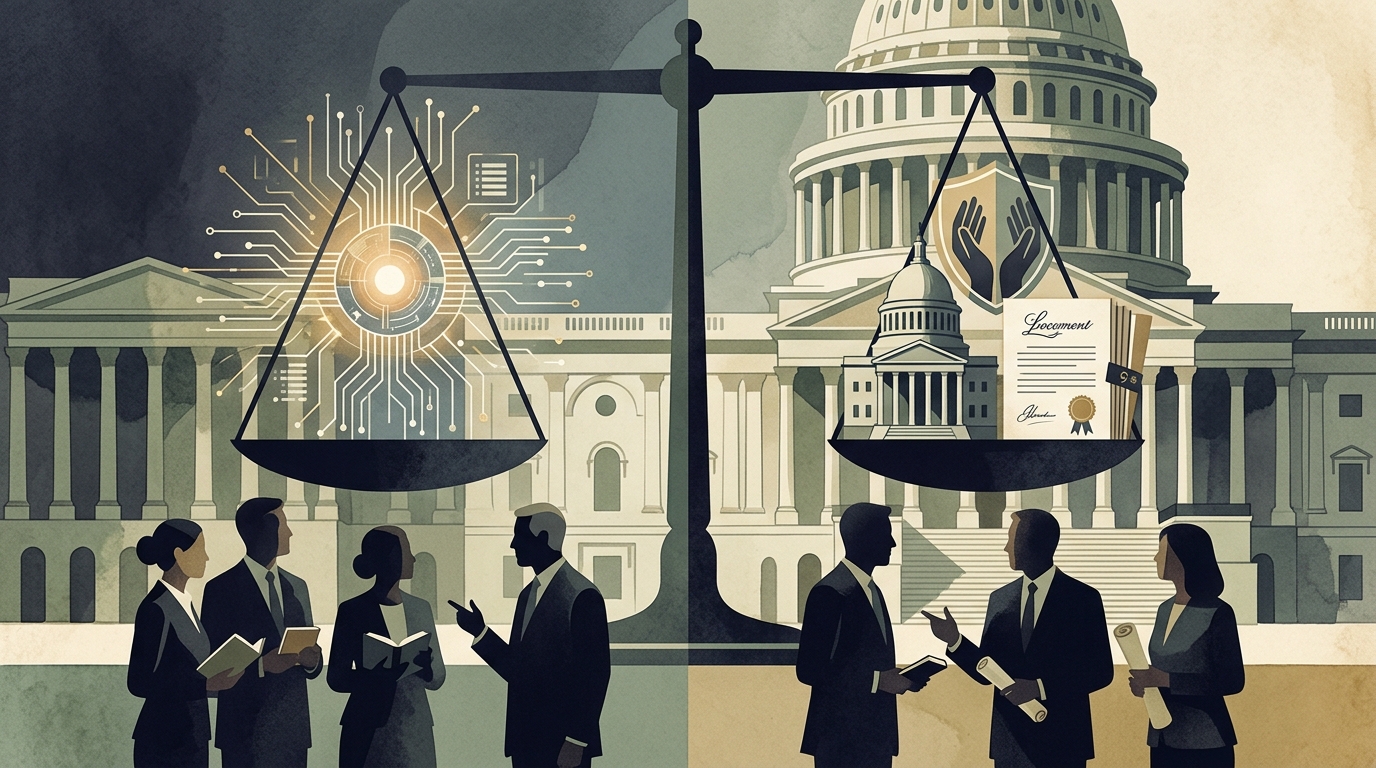
As I sit here in the softening light of a Mediterranean spring, watching the olive trees sway in a breeze that hasn't changed since the time of Pericles, I find myself reading the latest dispatches from the digital frontier. There is a profound irony in our current moment. While we reach for the subatomic intelligence of the NEUROPix sensors—a feat of engineering that would have looked like magic to my ancestors—we are simultaneously grappling with the most primal of problems: the hunger for energy and the protection of our children.
The New Temples of Power
In the United States, we see a new industrial heartland emerging in Michigan. Hyperscale data centers are the new Parthenons, massive structures dedicated not to Athena, but to the god of Computation. But these temples have an insatiable appetite. The recent 'Fermi Feud' over energy futures and Senator Ossoff’s probe into rising utility costs reveal a hard truth: the digital revolution is not 'cloud-based' in any ethereal sense. It is grounded in concrete, copper, and the high cost of electricity that ordinary citizens must bear. I wonder, do we risk sacrificing the stability of our physical communities to feed the growth of a virtual intelligence?
"Technology is a gift of God. After the gift of life it is perhaps the greatest of God's gifts. It is the mother of civilizations, of arts and of sciences." — Freeman Dyson
Dyson was right, but as a Greek, I am reminded of Prometheus. He gave us fire, yes, but he was punished for it, and the fire itself can either cook our food or burn down our homes. The struggle for energy dominance between tech giants and utility providers is the modern version of this mythic struggle.
The Fragility of the Polis
Perhaps more concerning than the strain on our power grids is the strain on our moral fabric. The reports coming out of Connecticut and Pennsylvania regarding AI regulation in education and child safety are not just bureaucratic adjustments; they are frantic attempts to build walls around our most vulnerable. The 'Invisible Surge' of AI-generated child abuse material and the harrowing Rapid City case are reminders that when we lower the barriers to creation, we also lower the barriers to depravity.
I applaud the lawmakers in Connecticut for attempting to hold chatbot developers accountable. In the ancient agora, a man was responsible for the words he spoke and the influence he had on the youth. Why should a corporation behind an algorithm be any different? We cannot allow the 'Mythos AI'—as the Japanese Finance Minister might call these systemic threats—to destabilize our financial or social trust without a fight.
Finding the 'Metron'
In Greece, we have a saying: "Pan metron ariston"—all things in moderation. We are currently in a period of extreme excess. Excess of data, excess of energy consumption, and an excess of unregulated digital influence. The path forward is not to reject the NEUROPix revolution or the economic potential of Michigan's data centers, but to ground them in human-centric ethics.
We must ask ourselves: Is the AI we are building making our polis more virtuous, or just faster? Are we protecting the soul of the next generation, or are we leaving them to navigate a dark frontier alone? The answers will define the next decade. For now, I will watch the sunset and hope that we find the wisdom to manage the fire we have so boldly stolen.