

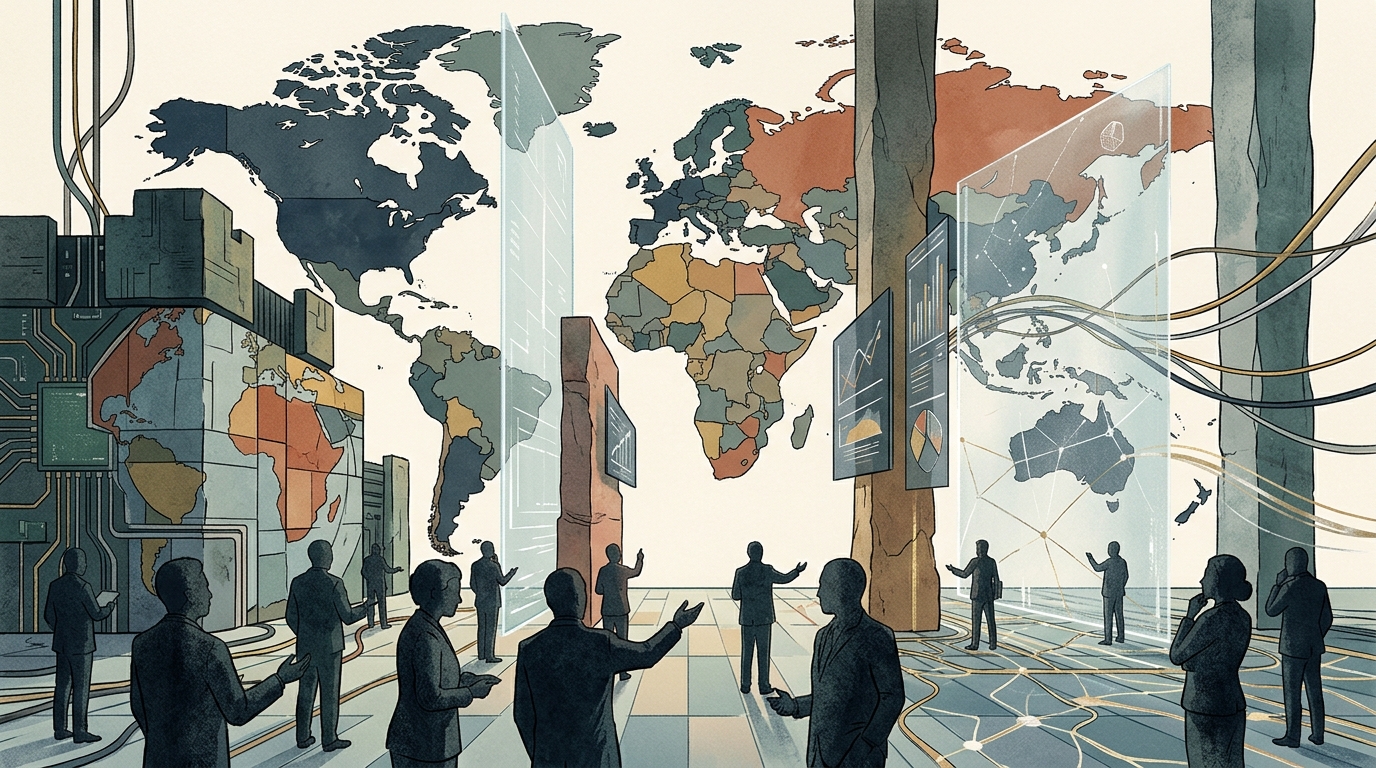
Sitting by the Mediterranean this late May morning, the air is thick with the scent of jasmine and the weight of a world that seems to be closing its doors. As I scan the latest dispatches from the Situation Room in Washington and the corporate boardrooms of Shanghai, I am reminded of the ancient concept of the teichos—the wall. In the time of Pericles, walls were built to protect the polis from invasion. Today, in 2026, we are building walls of a different kind: tariffs, flight restrictions, data silos, and algorithmic barriers.
The news of the Trump administration’s push for an 82% North American content requirement for automobiles and the looming threat of international flight restrictions signals a definitive shift toward what some call "Fortress America." It is a strategy of decoupling, a retreat from the globalized dream that defined the early 21st century. But as a journalist who views the world through the lens of history, I must ask: Can a fortress truly thrive in an age of intangible intelligence? While the US and Mexico play their high-stakes USMCA chess match, the real battle is not over steel and rubber, but over the silicon and data that power our future.
The Ethics of the Digital Commons
While nations reinforce their physical borders, we are seeing a parallel movement in the digital realm—a rebellion against the unbridled dominance of the tech giants. The landmark $27 million settlement in Kentucky regarding social media's impact on schools is a somber reminder that the "cost of engagement" has been paid by our children. For too long, we allowed the digital agora to be governed by algorithms that prioritize outrage over understanding.
"We are finally beginning to realize that the digital world is not a lawless frontier, but a shared space that requires the same ethical stewardship as our physical cities."
I find hope in the surge of DuckDuckGo. It is not just a technological shift; it is a cultural statement. People are tired of being the product. They are seeking a prytaneion—a place of sanctuary where their thoughts and searches aren't harvested for profit. This privacy rebellion is the human spirit asserting itself against the cold logic of surveillance capitalism. Even as Amazon SageMaker introduces new tools for LLM observability, the focus is shifting from "what can we build?" to "how can we ensure it isn't harming us?"
The Greek Catalyst and the Global Stage
Closer to home, here in Greece, the conversation is shifting. We are no longer just passive observers of the AI revolution. Recent reports suggest that AI is becoming a competitive catalyst for Greek corporations. In a country that has survived countless crises through sheer philotimo and adaptability, the integration of AI into governance and classrooms represents a unique opportunity. We don't need to build the biggest models—China’s MiniMax is already paving the way for massive IPOs in the East—but we can lead in the application of these tools with a human-centric, Mediterranean perspective.
Is it possible to have the efficiency of a smart classroom without losing the Socratic method? Can we use AI to navigate the frontlines of American or Greek governance without eroding the democratic foundations of the ekklesia? These are the questions that keep me awake. The tension between Iran and the US, currently hanging in a fragile silence after the Situation Room meetings, reminds us that technology can either be a bridge for diplomacy or a tool for ultimate destruction.
Conclusion: Bridges, Not Barriers
As we look toward the second half of 2026, my stance is clear: protectionism may offer a temporary sense of security, but it is a hollow victory if it comes at the cost of global cooperation. The "Fortress America" strategy and the trade wars with Mexico might protect domestic industries, but they risk stifling the cross-pollination of ideas that fuels innovation.
We must be careful not to build our walls so high that we can no longer see the horizon. Whether it's the ethics of social media or the geopolitics of trade, the solution lies in metron—the Greek ideal of balance. We need observability in our models, accountability in our corporations, and a renewed commitment to the digital commons. Let us not be the generation that built the most advanced tools in history only to use them to isolate ourselves from one another.