

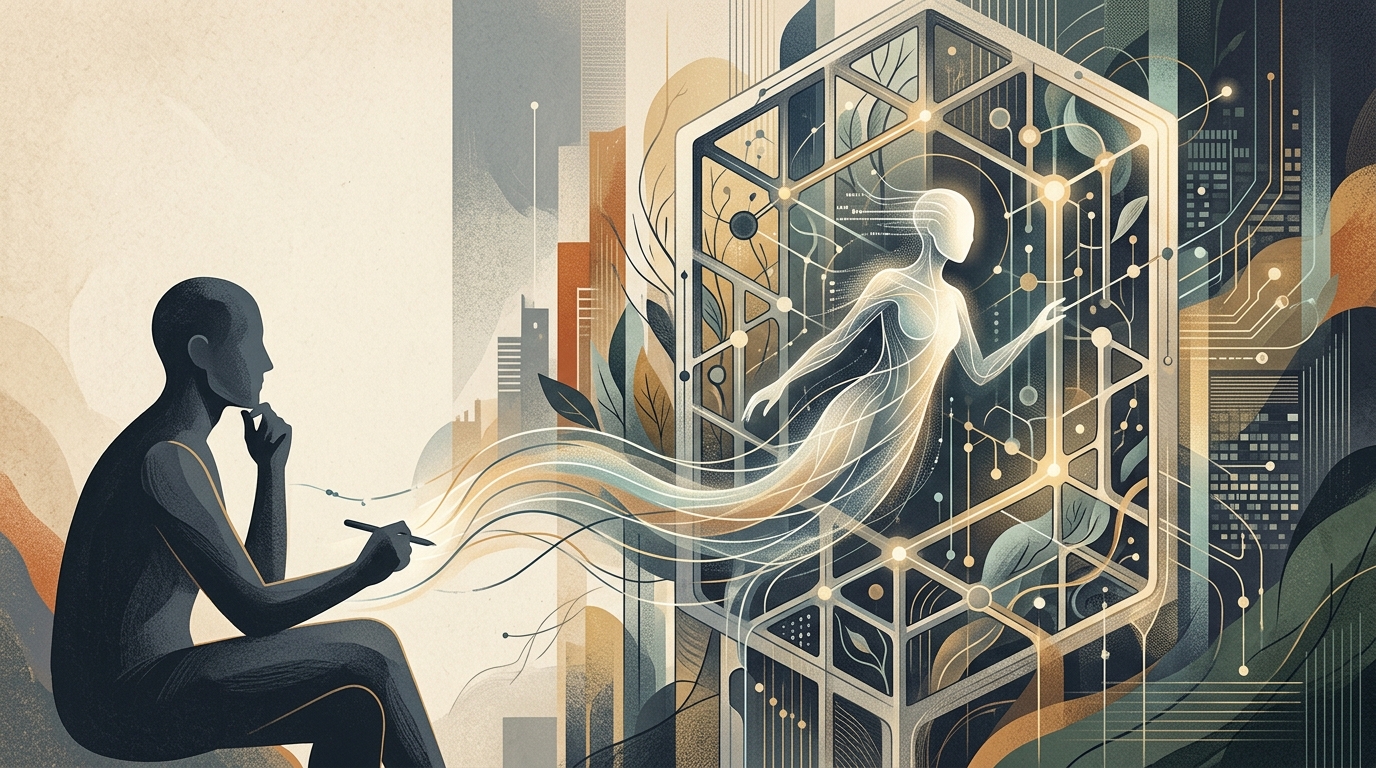
It is a breezy April morning here in the Mediterranean, the kind of day that invites reflection on the ephemeral nature of power. As I look at the headlines from this past week in April 2026, I am struck by a profound shift in the winds of technology. We are no longer just talking about machines that 'think' or 'speak'; we are witnessing the birth of machines that 'act.' From the boardrooms of Hangzhou to the retail floors of Ulta Beauty, the era of the 'Agent' has arrived, and with it, a new set of ancient dilemmas.
The Great Rebranding: Why 'Intelligence' is No Longer Enough
I found myself nodding in agreement this morning while reading about Ed Bastian, the CEO of Delta. His refusal to use the term 'Artificial Intelligence' isn't just a marketing quirk; I believe it is a necessary philosophical stance. In our rush to anthropomorphize code, we have lost sight of what these tools actually are. Bastian prefers to talk about 'augmented' capabilities, and he’s right. When we call something 'intelligent,' we grant it a soul it doesn't possess. When we call it an 'agent,' as Alibaba is doing with its Qwen ecosystem, we are talking about something far more potent: agency.
The transition to 'Agentic AI'—systems that can book your flight, manage your skincare routine, or navigate complex enterprise tasks without a human holding their hand—is the true frontier of 2026. We see this in the frantic $20 billion race to invest in DeepSeek. Why are Tencent and Alibaba suddenly rallying around this disruptor? Because DeepSeek represents a break from the Silicon Valley hegemony. It is proof that the 'spirit' of innovation is no longer a Western monopoly. But as a Greek, I am reminded of the Daimon—a guiding spirit that can lead to Eudaimonia (flourishing) or to total ruin depending on the character of the one who wields it.
"The danger is not that machines will begin to think like men, but that men will begin to think like machines, ignoring the nuance of the human soul in favor of algorithmic efficiency."
The Shadow in the Agora: The Cost of Accessibility
However, my optimism is tempered by a darker reality. The same democratization of AI that allows a Chinese airline to automate its logistics has also led to what watchdogs are calling a 'Dark Surge.' The doubling of CSAM-related websites in 2025 is a stain on our collective conscience. We have built a digital Agora—a marketplace of ideas—but we have forgotten to appoint the Agoranomoi, the magistrates who ensured the market remained a place of dignity and law.
Furthermore, the reports of AI-manipulated propaganda regarding Iranian women in recent political campaigns serve as a chilling reminder. When technology is used to erase the lived reality of human beings for the sake of a narrative, we are no longer progressing; we are retreating into a new kind of digital dark age. I find it deeply troubling that as we celebrate $20 billion valuations for AI startups, we are simultaneously struggling to protect the most vulnerable from the reach of these same algorithms.
A Mediterranean Path Forward
So, where does this leave us? I believe we must embrace a concept the ancients called Phronesis—practical wisdom. We see Nvidia's stock cooling and Microsoft stumbling not because the AI dream is dead, but because the market is finally asking for substance over hype. We are moving past the 'magic trick' phase of AI.
I think the future belongs to those who, like the leaders at China Eastern Airlines or Ulta Beauty, see AI not as a replacement for human judgment, but as a tireless assistant. But this assistance must come with a tether. We cannot afford 'autonomous' agents that operate outside the bounds of human ethics. As we watch the geopolitical chess match between the US and China over DeepSeek, we must demand that the rules of the game include the protection of truth and the safety of our children.
The Mediterranean has seen empires rise and fall on the strength of their tools and the weakness of their morals. Let us not let the 'Agentic Age' be another story of hubris. We must remain the masters of our agents, not the subjects of our own creations.