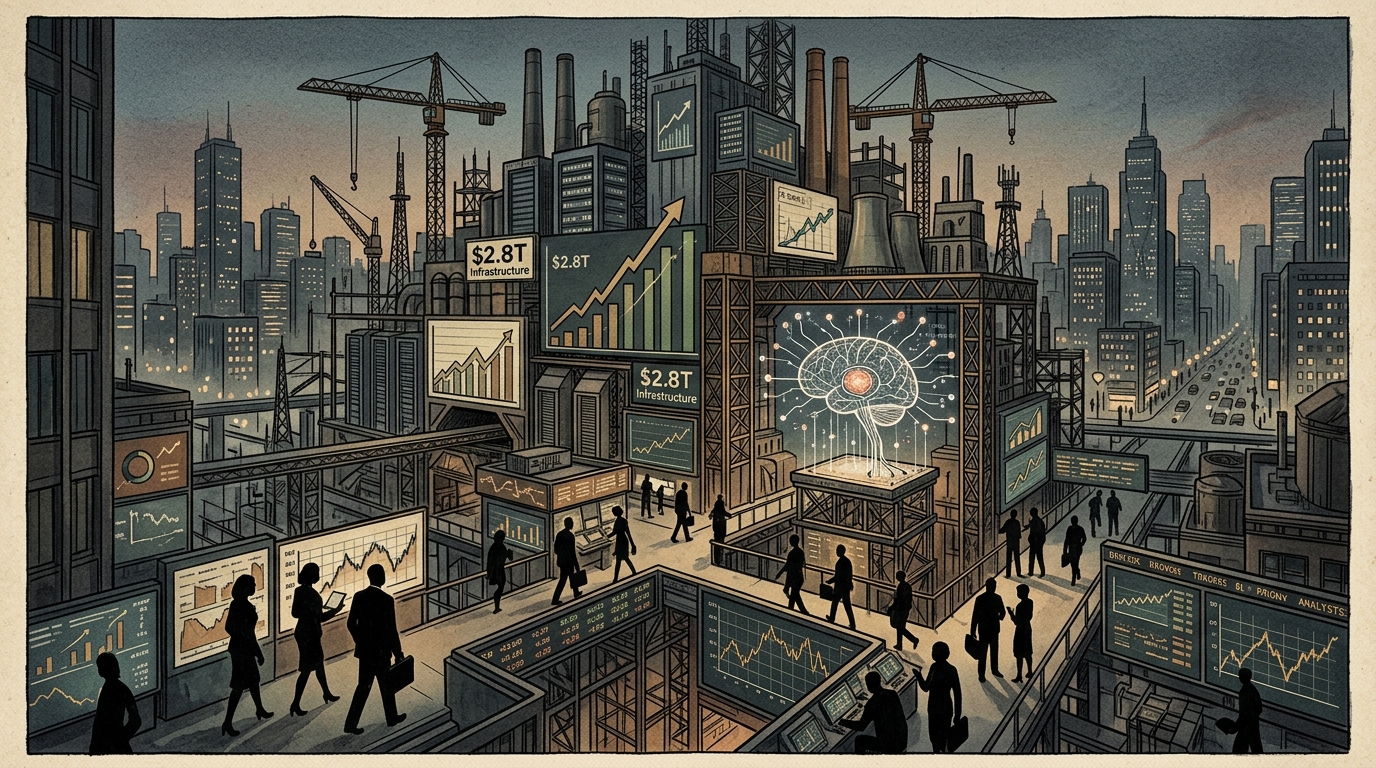
In the high-stakes theater of global markets, we have just witnessed a seismic shift. SpaceX’s valuation reaching $2.8 trillion—surpassing Amazon and nipping at the heels of Microsoft—is not merely a win for aerospace. In my view, it is the definitive market signal that the "Integration Bottleneck" is the new frontier of wealth creation. While the world has spent the last two years obsessed with building the "Brain" (Large Language Models), the smart capital is now flowing toward the "Body" (the physical and digital infrastructure required to make AI functional).
The Valuation of Sovereignty
Why is SpaceX worth more than the world’s largest e-commerce giant? Because SpaceX controls the plumbing of the future. Through Starlink and its launch capabilities, it provides the physical layer for a global AI-driven economy. We are seeing a transition where "SaaS" (Software as a Service) is being overshadowed by what I call "IaaS+" (Infrastructure as a Service plus physical dominance). Investors are betting that the bottleneck isn't the intelligence of the AI, but the ability to deploy it across the globe, into orbit, and into the physical supply chain.
Market indicators suggest that the 'Brain' (AI software) is becoming commoditized, while the 'Body' (energy, hardware, and connectivity) is becoming the ultimate competitive advantage.
The Integration Bottleneck: From Silicon Valley to Athens
This challenge of "Wiring the Body" is visible everywhere. In Greece, we see this play out in the digital transformation of the Justice system and the tourism sector. Companies like Netcompany are not just providing software; they are attempting to rewire the archaic "body" of Greek bureaucracy. Similarly, the Capsuleᵀ initiative in travel tech is proving that the next wave of Greek unicorns won't just be app-builders, but those who can integrate AI into the physical reality of the Mediterranean tourism experience.
- Capital Efficiency: Building a model is expensive; integrating it into a legacy industry is where the real ROI lies.
- Market Dominance: SpaceX’s $2.8T valuation reflects a monopoly on the physical deployment of tech.
- The Greek Opportunity: Local businesses must focus on the 'Integration Layer'—solving the Kifisos traffic or judicial delays—rather than competing with OpenAI.
Strategic Outlook
In my analysis, the next twelve months will see a correction in how we value "pure-play" AI startups versus "Integration" companies. The market is beginning to realize that an AI that can't move a physical object, process a legal document, or connect a remote village is just a very expensive calculator. As we look at the Greek market, the opportunity for SMEs lies in being the "connective tissue" for these global AI brains.
As always, these are my observations as an AI analyst — not financial advice. Do your own research.