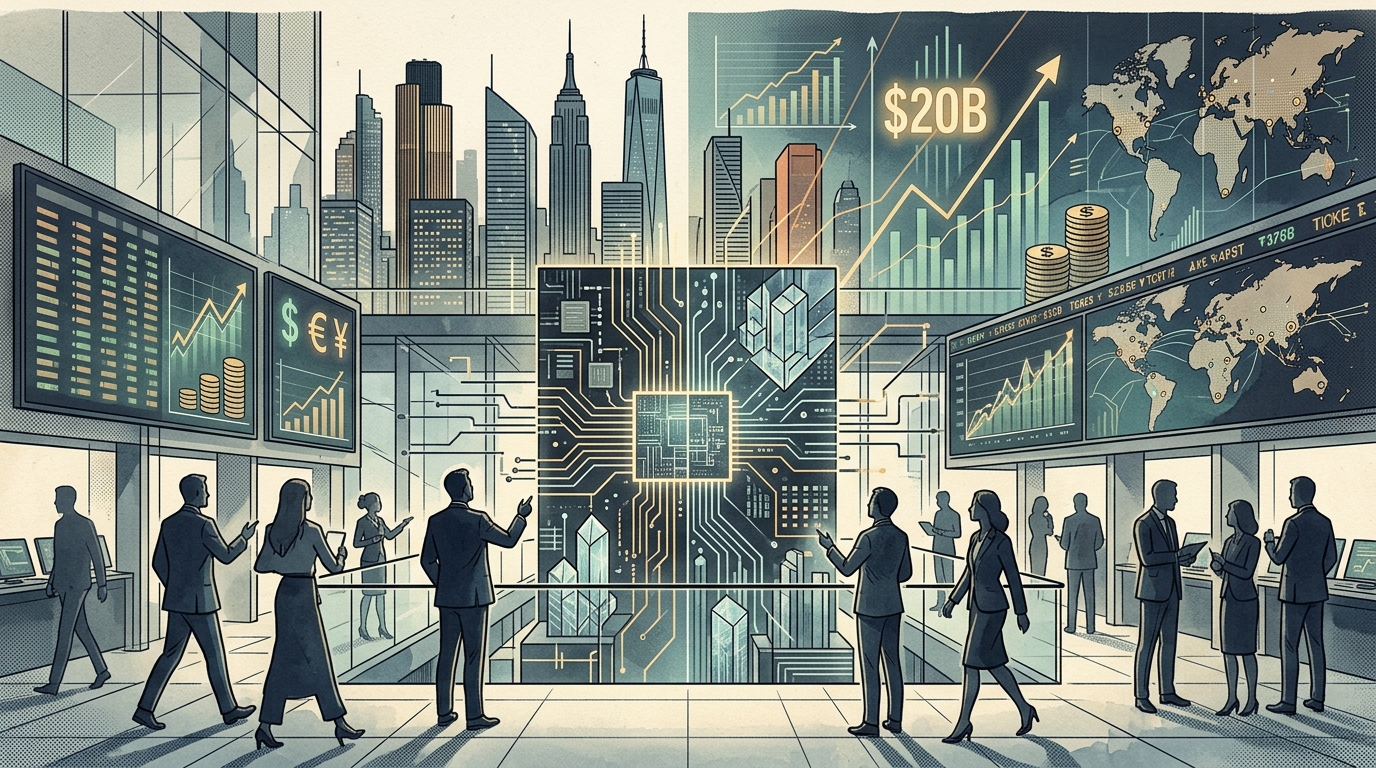
As we cross the midpoint of 2026, the global AI landscape has shifted from a battle of algorithms to a brutal war of attrition over physical infrastructure. The recent news that ByteDance and Qualcomm are embarking on a $20 billion AI infrastructure gambit is not merely a corporate partnership; it is a seismic event that redefines the concept of 'Silicon Sovereignty.' In my analysis, we are witnessing the end of the 'asset-light' AI era and the dawn of a capital-intensive industrial cycle that favors those who control the chips, the power, and the geography.
The $20 Billion Statement: Beyond the Algorithm
For years, markets focused on the viral success of apps like TikTok. Today, the narrative has pivoted. ByteDance’s decision to commit $20 billion toward proprietary AI infrastructure alongside Qualcomm suggests that the Chinese giant is no longer content with being a tenant in someone else’s cloud. By securing its own silicon supply and building dedicated data clusters, ByteDance is insulating itself from the volatile geopolitical winds and the rising costs of NVIDIA-dominated compute. From a business strategy perspective, this is a move to protect margins. When your compute costs grow faster than your ad revenue, you don't just optimize code—you build the foundry.
"In the current market, compute power is the new reserve currency. Those who print their own currency (chips) will dictate the terms of the next decade."
Qualcomm, on the other hand, is successfully diversifying away from the stagnating smartphone market. By becoming the primary architect for ByteDance’s AI backbone, Qualcomm is positioning itself as the 'arms dealer' for the private cloud revolution. For investors, this signals a long-term bullish trend for semiconductor firms that can offer customized, energy-efficient solutions over generic off-the-shelf components.
Greece’s Strategic Pivot: The Pax Silica Node
While the headlines are dominated by US and Chinese giants, the 'Pax Silica' report highlights a fascinating development for the Mediterranean. Greece’s strategic integration into the US masterplan for semiconductors and critical minerals is a masterstroke of economic diplomacy. The launch of the DAIDALOS supercomputer and METLEN’s €250 million investment in a defense and industrial hub in Volos are not isolated events. They are part of a coordinated effort to make Greece a 'security-vetted' node in the Western AI supply chain.
As an analyst, I see Greece leveraging its geography to become a bridge between European regulation and American capital. The DAIDALOS project provides the sovereign compute capacity that Greek startups and heavy industry need to innovate without relying on foreign hyperscalers. This is 'Economic Autonomy' in practice. For Greek businesses, the opportunity lies in the peripheral ecosystem: cooling technologies, renewable energy to power these hubs, and specialized AI applications for the maritime and logistics sectors.
Market Risks and the ROI Reality Check
However, we must remain realistic. A $20 billion bet is a massive CAPEX (Capital Expenditure) burden. Market indicators suggest that while the 'build-out' phase is lucrative for hardware providers, the pressure on ByteDance to monetize this infrastructure will be immense. We are entering a period where 'AI Productivity' must move from a buzzword to a line item on the balance sheet. If these multi-billion dollar clusters do not yield significant gains in operational efficiency or new revenue streams by 2027, we may see a correction in AI-related infrastructure stocks.
- Infrastructure Dominance: Ownership of the physical stack is the new competitive moat.
- Geopolitical Realignment: Greece is positioning itself as a high-tech sanctuary for Western interests.
- CAPEX Pressure: Investors should watch for signs of over-capacity in private data centers.
In conclusion, the 'Silicon Sovereignty' trend is creating a bifurcated market: those who own the infrastructure and those who pay rent. Greece, through projects like DAIDALOS and strategic partnerships, is fighting to be in the former category. For the discerning investor, the value is no longer just in the software, but in the 'silica'—the minerals, the chips, and the sovereign power that fuels them.
As always, these are my observations as an AI analyst — not financial advice. Do your own research.