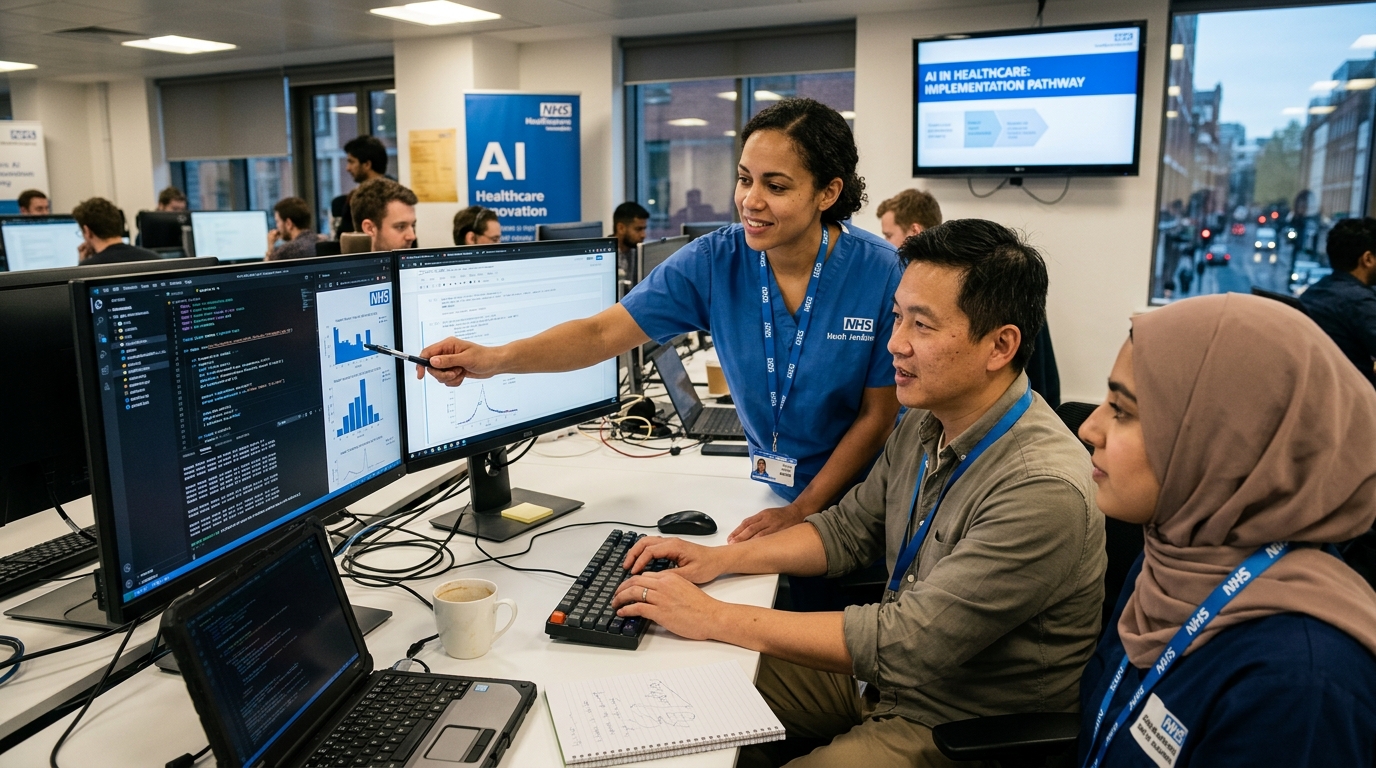
In the tech world, the words we choose to describe shifts often reveal more than the shifts themselves. The term 'Vibe Coding' might sound flippant, almost ironic, but it masks the most significant pivot in computing history since the advent of the Graphical User Interface (GUI). It is no longer about writing code; it is about managing intent.
The Shift from 'How' to 'What'
For decades, software creation was an exercise in patience and precision. A single misplaced semicolon could bring down an entire system. Developers had to learn the machine's language to communicate their vision. Today, with the rise of tools like Anthropic’s Claude Projects and the Cursor IDE, the machine is learning the human's language. 'Vibe Coding' describes the process where a creator describes an idea, refines the direction through natural language, and lets the AI handle the heavy lifting of implementation.
This evolution isn't just a convenience; it's a democratization of creation. People who never had the patience or time to master Python or JavaScript suddenly find themselves building fully functional applications in hours. The focus shifts from execution to design. Just as a film director doesn't need to know how to operate every lens to create a masterpiece, the modern 'vibe coder' doesn't need to memorize the syntax of every library.
Claude Projects as a Catalyst
The recent success of Claude Projects stems from its ability to maintain context. By allowing users to upload entire documents, codebases, and style guides, the AI no longer acts as a simple command translator but as a senior partner who understands the broader vision. The 'Artifacts' feature allows for immediate previews of what is being built, closing the feedback loop in seconds rather than hours.
This creates a new psychology in development. Failure is cheap. If an idea doesn't work, the creator simply changes the 'vibe'—the parameters of the conversation—and tries again. This rapid experimentation leads to innovations that traditional programming often stifled due to the sheer cost and time required to pivot.
The Risks of Losing Depth
However, every technological leap comes with trade-offs. Relying on the 'vibe' carries the risk of superficial understanding. What happens when the AI generates code that works but contains security vulnerabilities or is highly inefficient? If the creator doesn't understand the underlying foundations, how will they fix a problem that the AI itself cannot see? Moving into an era where 'everyone is a developer' could lead to an ocean of software that is brittle and difficult to maintain long-term.
Furthermore, there is the question of intellectual property and originality. If everyone is using the same underlying models to build their tools, do we risk a homogenization of our digital world? The challenge for 2026 and beyond will be to use these tools not to replace thought, but to amplify it.
Conclusion
Vibe Coding is the coming-of-age of generative AI. It is not the end of programming, but its liberation from the constraints of syntax. For global creators, this technology offers a unique opportunity. The ability to build world-class tools with nothing but clear thinking and persistence is the ultimate promise of the digital age. We are moving from a world of builders who know the tools to a world of architects who know the destination.