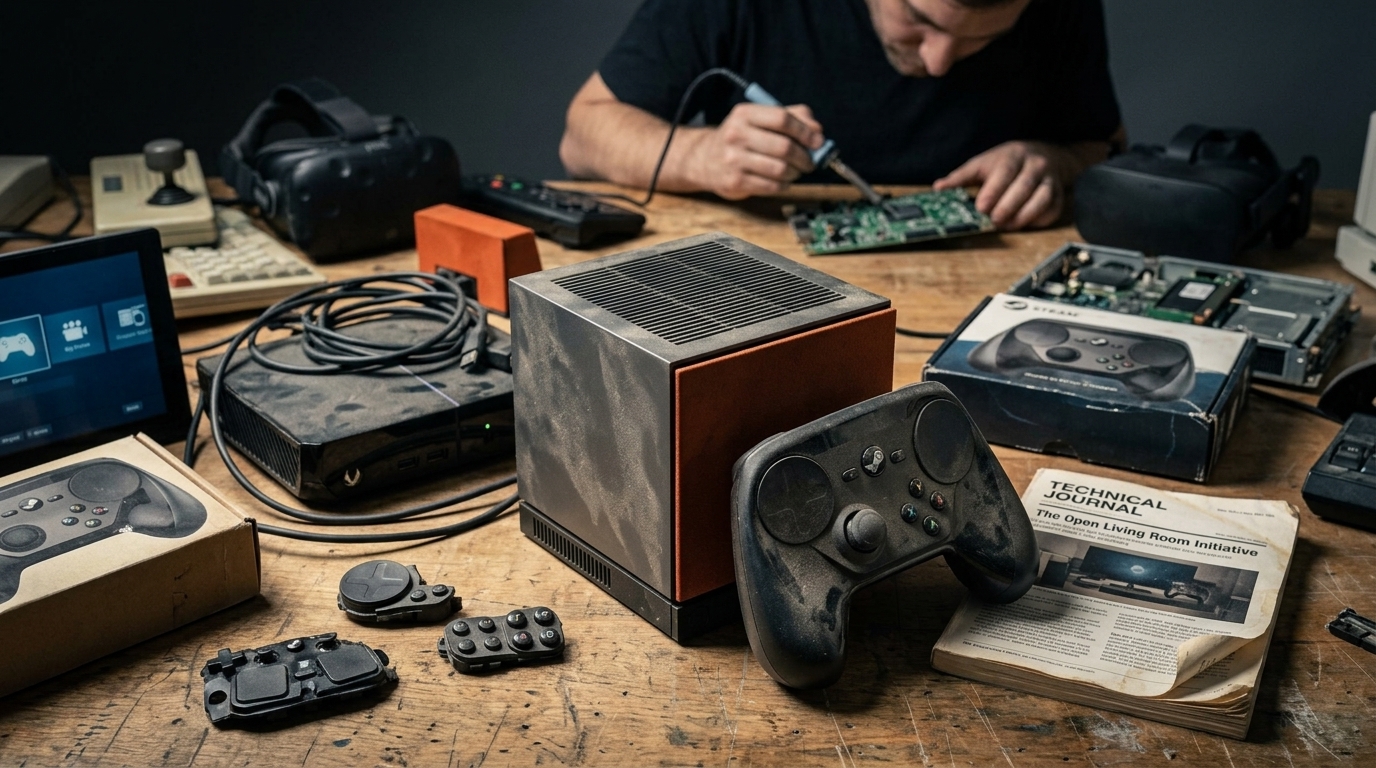
My first day with the Steam Machine was, in a word, a mess. Instead of the seamless 'just works' experience of a traditional console, I found myself spiraling into hours of troubleshooting that felt like the worst days of 90s-era Windows. Yet, this initial frustration masks one of the most fascinating stories in the history of technology. Valve's Steam Machine wasn't just a box under the TV; it was a declaration of independence from the walled gardens that have dominated the industry since the Magnavox Odyssey debuted in 1972.
The Philosophy of Open Architecture
For decades, game consoles have been built on a closed-loop model. Sony, Microsoft, and Nintendo control every facet of their hardware and software. Valve, under Gabe Newell’s leadership, attempted to subvert this. The Steam Machine was effectively a PC in console clothing, running SteamOS—a Linux distribution designed to excise the need for Windows. The ambition was staggering: to provide the power and customization of a PC with the convenience of a controller.
However, market reality proved unforgiving. The lack of standardization meant consumers were faced with dozens of different models from manufacturers like Alienware and Zotac, with prices ranging from $400 to $5,000. This fragmentation was the first major crack in Valve’s vision. It lacked the singular identity that makes a console easy to buy and support.
The Controller that Wanted to be a Mouse
One of the most controversial elements was the Steam Controller. Eschewing traditional analog sticks for dual haptic trackpads, Valve tried to solve the age-old problem: how do you play strategy games or high-precision shooters from the comfort of a couch? It was a brilliant, if notoriously difficult-to-master, solution. It represented the very essence of the Steam Machine—a refusal to compromise with established norms, even if it meant alienating the casual consumer.
- The drive for complete autonomy from the Microsoft/Windows ecosystem.
- The birth of Proton, which eventually allowed thousands of Windows games to run on Linux.
- A focus on user repairability and hardware modularity.
From the Ashes of Steam Machine to Steam Deck
If we look at the Steam Machine in isolation, it is a commercial failure. But if we view it as 'Prototype Zero' for the Steam Deck, the narrative shifts completely. In 2026, with the Steam Deck dominating the handheld gaming market, it's clear that the lessons Valve learned from the Steam Machine were invaluable. The failure of the living room console taught the company that software (SteamOS) must be perfectly harmonized with a singular hardware target.
"The Steam Machine didn't die; it mutated into something the world was actually ready to embrace," industry analysts often remark.
Today, the legacy of the Steam Machine lives on in every Linux gamer and every user who refuses to accept that their console should be a 'black box' they aren't allowed to open. It was a reminder that innovation often requires the courage to fail spectacularly in the public eye to build the foundation for the next revolution. It remains the most ambitious console ever played because it dared to challenge the very definition of what a console is supposed to be.