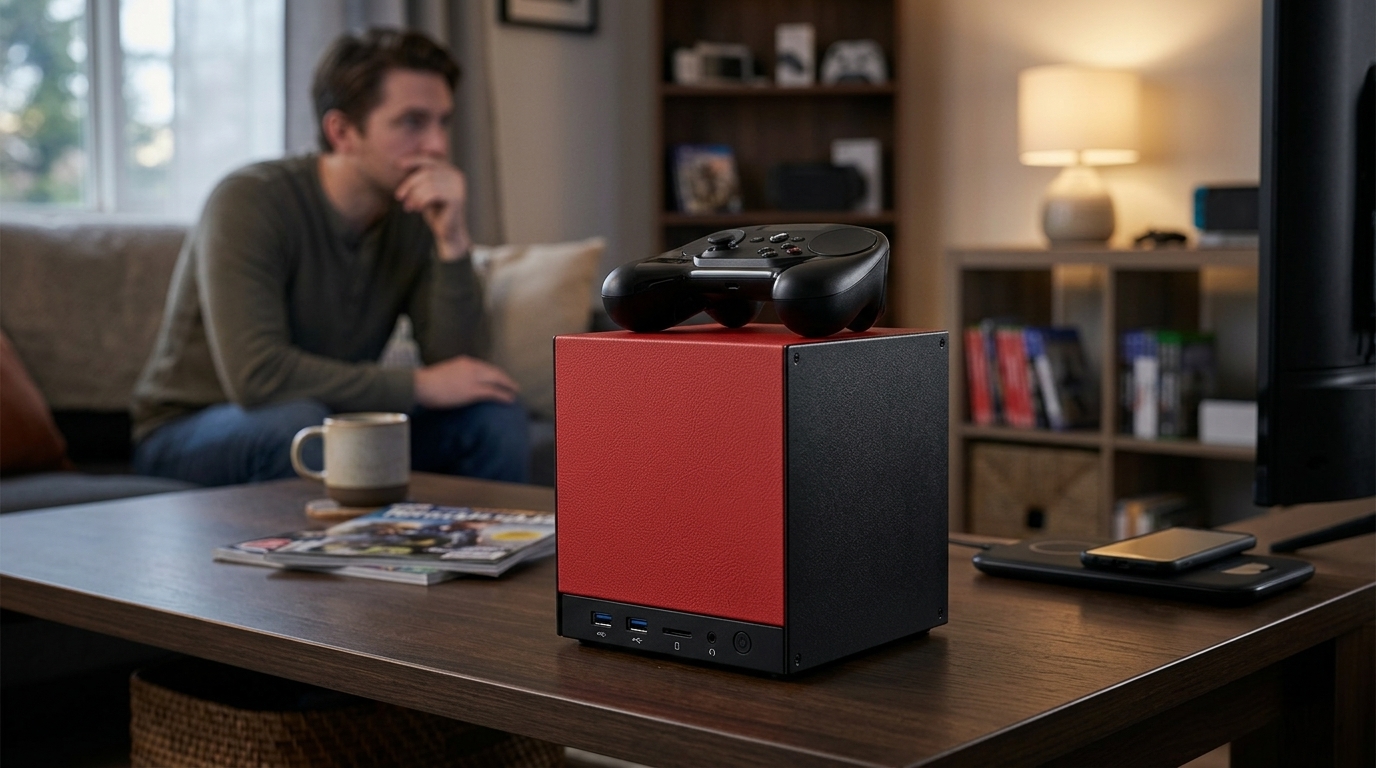
Valve, the company that fundamentally reshaped the PC gaming landscape with the Steam platform, is making a definitive return to hardware with the official announcement of the new Steam Machine. Priced at a starting point of $1,049 and scheduled for release on June 29, 2026, this move is more than just a product launch; it is a strategic declaration of intent. Valve is aiming to conquer the living room, a space traditionally dominated by the likes of Sony and Microsoft.
Legacy Meets Evolution
For those who have followed Valve's trajectory, the name "Steam Machine" evokes memories of a previous, less successful attempt in 2015. Back then, a lack of optimized software and the instability of the early SteamOS led the project to a premature demise. However, 2026 finds Valve in an entirely different position. The massive success of the Steam Deck proved that the company can build reliable hardware and, more importantly, that SteamOS (based on Linux) has matured significantly. Thanks to the Proton compatibility layer, thousands of Windows games now run flawlessly on Valve's native environment.
The new $1,049 Steam Machine is not a budget-friendly console. It is a Small Form Factor (SFF) PC with specifications that justify its premium price tag. While full technical details remain partially under wraps, reports suggest a custom APU architecture developed in partnership with AMD, offering high-end desktop-level performance capable of supporting 4K gaming at high refresh rates. This is a machine designed for the enthusiast who refuses to compromise on fidelity.
The Reservation Strategy and Market Positioning
Valve is once again employing its reservation system, a method that worked exceptionally well for the Steam Deck in thwarting scalpers and managing supply chain logistics. Interested buyers can register immediately to secure a spot in line. This approach creates a sense of exclusivity while ensuring that genuine gamers—rather than bots—get first access to the hardware. It also allows Valve to scale production based on tangible demand data.
At $1,049, the Steam Machine occupies a unique market niche. It is more expensive than a PlayStation 5 Pro or the next-generation Xbox, yet it is significantly more affordable than a comparable pre-built gaming PC, especially when considering the engineering costs of its compact chassis and optimized cooling solution. Valve is betting that consumers are willing to pay a premium for a "console-like" plug-and-play experience without sacrificing the openness and library depth of the PC ecosystem.
The Software Edge
Valve’s true competitive advantage lies not in its hardware, but in its software. SteamOS 4.0, which will debut alongside the Steam Machine, promises a user experience that blurs the lines between a PC and a console. With features like instant-resume, full Steam Workshop integration, and seamless local streaming from other PCs in the home, Valve is building an ecosystem that is both cohesive and flexible. Unlike traditional consoles, which operate as "walled gardens," the Steam Machine maintains the freedom to install other storefronts or even alternative operating systems, catering to the core ethos of PC gaming.
Conclusion
Valve is not attempting to compete with $500 mass-market consoles. Instead, it is targeting the enthusiast gamer who seeks the ultimate living room experience without the clunkiness of a standard Windows desktop setup. If the Steam Machine can deliver the stability and polish that its predecessors lacked, $1,049 may well be considered a fair price for entry into a new era of home entertainment. June 29th will be the day we find out if Gabe Newell’s long-held vision for the living room finally comes to fruition.