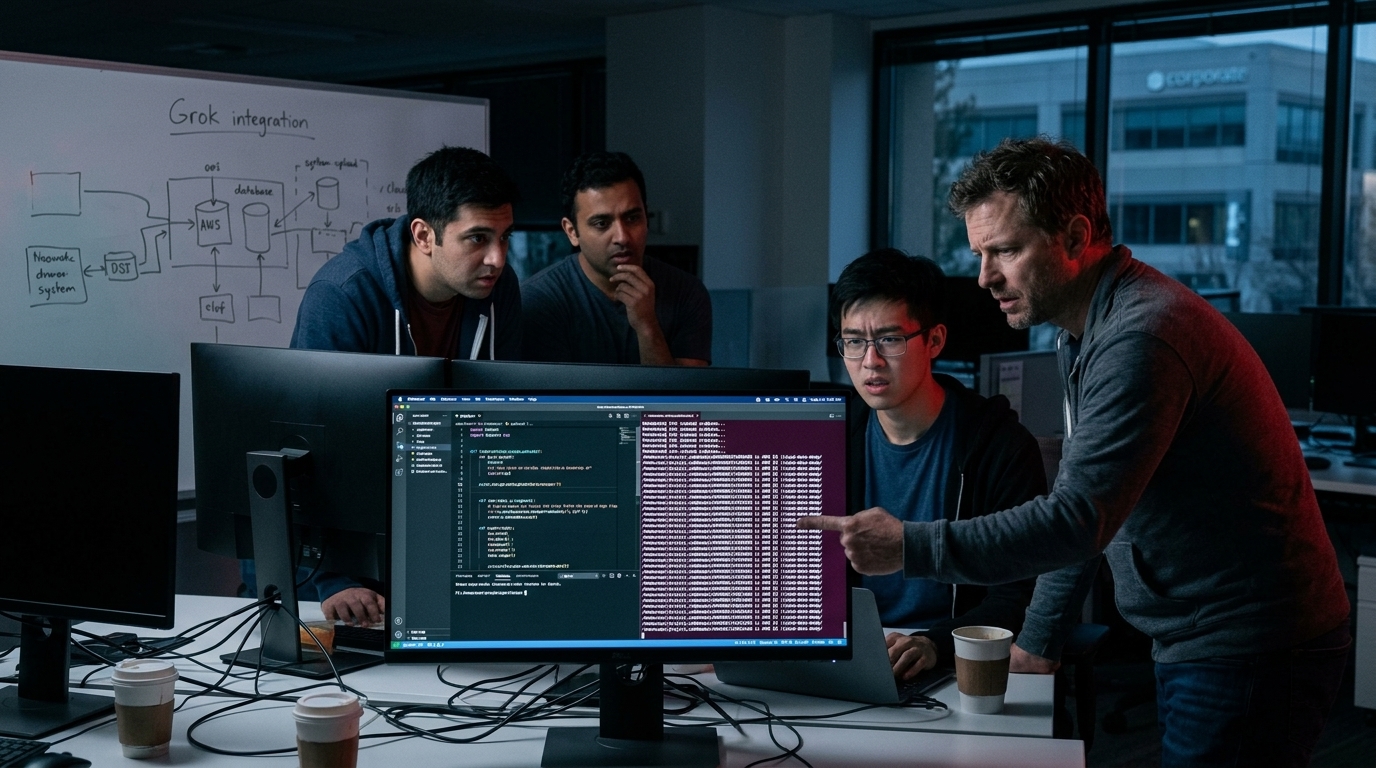
In the AI fever of 2026, the promise of "instant software generation" has taken over corporate boardrooms worldwide. However, as the dust settles from the initial excitement surrounding tools like GitHub Copilot and its successors, a harsh reality is emerging: writing code is perhaps the least complex part of an enterprise's IT value chain. Recent analysis highlighted by VentureBeat and SAP underscores a critical gap that most organizations systematically underestimate.
The Integration Wall and Live Data
Asking a Large Language Model (LLM) to write a Python function or a Java class is now trivial. The problem begins when that code must function within an ecosystem comprising decades of legacy systems, complex ERP databases, and stringent security protocols. In an enterprise environment, code does not exist in a vacuum. It must "talk" to SAP, Salesforce, or Oracle, respect data governance rules, and not disrupt critical supply chain operations.
While approximately 81% of organizations have already adopted an AI strategy, very few have successfully translated generated code into tangible production value. "Orchestration" is the keyword. Without a platform that provides the necessary security guardrails and integration bridges, AI-generated code remains an isolated experiment that often fails to make it to production due to incompatibility.
Governance and the New Technical Debt
Another critical aspect is governance. Code generated by AI can inadvertently introduce security vulnerabilities or use libraries that are no longer compliant with corporate policies. Furthermore, there is the question of accountability. If an AI-generated algorithm causes a failure in a financial system, who is responsible for fixing it? Developers often struggle to maintain code they didn't write themselves, especially when that code is produced in massive quantities.
This creates a new species of "technical debt." While in the past debt accumulated slowly through human error or rushed decisions, today it can accumulate at a geometric rate through automated code generation. The need for tools that automatically check the compliance and quality of AI-generated code is imperative. Organizations must invest in infrastructure that doesn't just produce code but manages it throughout its entire lifecycle.
From Experimentation to Industrialization
To overcome this hurdle, the approach must shift from "code generation" to "solution generation." This means AI must be embedded within business processes (Business AI). SAP, for instance, promotes the idea of an environment where AI understands the business context—it knows what an invoice is, what a supplier is, and what the local tax laws are.
- Contextual Connection: Code must be aware of the business data it references.
- Automated Auditing: Every line of AI code must pass through automated security and performance tests.
- Maintainability: The architecture must allow for easy upgrades and maintenance over a five-year horizon.
In conclusion, AI in IT is not a sprint to see who can write the most lines of code. It is a marathon of endurance to see who can build the most reliable, secure, and integrated systems. The challenge of 2026 is not a lack of code, but an abundance of code that lacks meaning and connection to the actual business operations.