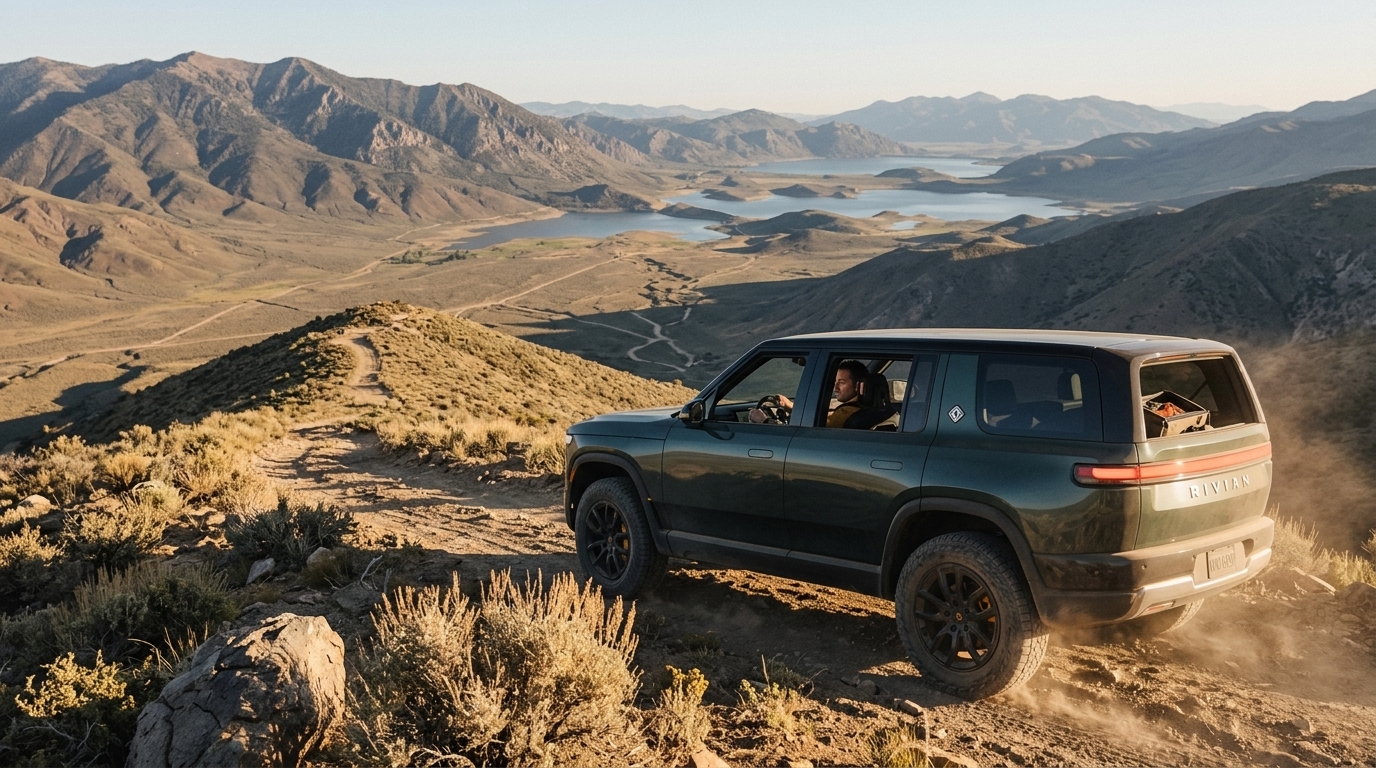
The automotive industry is at a crossroads, and for Rivian, the year 2026 is not just another milestone on the calendar, but a moment of truth. The Rivian R2, the American company's long-awaited mid-sized SUV, isn't just coming to add another entry to the EV catalog. It’s here to prove whether a startup that began with dreams of "electric adventure" can survive the brutal arena of mass production.
Design and Philosophy: The Rivian Identity in a Smaller Package
The R2 retains the aesthetic that made the R1T and R1S stand out: the signature vertical "stadium" headlights and the clean, boxy lines that evoke classic off-road vehicles with a modern, minimalist twist. However, the difference lies in the details. The R2 is significantly smaller than its predecessor, aiming directly at the heart of the compact SUV segment—the territory currently dominated by the Tesla Model Y.
One of the most interesting interior innovations is a return to ergonomics. After years of criticism regarding over-reliance on touchscreens, Rivian has equipped the R2 with two large scroll wheels on the steering wheel that provide tactile, haptic feedback. These "fidget spinners" for drivers allow for the control of critical functions without the driver having to take their eyes off the road. Furthermore, the R2 features a unique trait: every seat, including the driver and front passenger seats, folds completely flat, turning the cabin into an ideal space for in-car camping.
Technical Specifications and Performance
Rivian hasn't compromised on power. The R2 will be offered in three motor configurations: Single-Motor (Rear-Wheel Drive), Dual-Motor (All-Wheel Drive), and the top-tier Tri-Motor version. The latter promises a 0-60 mph acceleration in under 3 seconds, a performance figure that places it firmly in supercar territory.
- Range: Over 300 miles (480 km) for all battery configurations.
- Charging: Adoption of the NACS (Tesla Supercharger) standard from day one, allowing 10% to 80% charge in less than 30 minutes.
- Architecture: A new "zonal" architecture drastically reduces wiring and weight, improving efficiency and the robustness of Over-the-Air (OTA) software updates.
"The R2 is the expression of who we are as a company, but at a price point that makes it accessible to many more people," said RJ Scaringe, Rivian CEO, during a recent briefing.
The Challenge of Mass Production and the Market
The big question remains price and availability. With a starting price of around $45,000, the R2 is strategically positioned against the competition. However, Rivian must avoid the production pitfalls that nearly derailed the company during the R1 launch. Moving production to the existing Normal, Illinois plant, rather than the new Georgia facility (which has been paused to conserve cash), shows a new, more pragmatic approach to scaling.
In a market increasingly flooded by Chinese offerings and the ubiquitous Tesla, Rivian is betting on brand loyalty and its image as a company that builds tools for an active lifestyle. The R2 is not just a mode of transport; it’s a ticket to adventure, equipped with accessories like tool-less bike mounts and a rear window that rolls down completely to accommodate surfboards or simply provide an open-air feeling.
Conclusion
The 2026 Rivian R2 represents the maturation of a promise. If the company can stick to its timelines and maintain high manufacturing quality, the R2 could become Rivian's "Model 3"—the vehicle that moves it beyond the niche of early adopters and firmly onto the global automotive map. For consumers, it’s a reminder that the electric future can be practical, affordable, and, above all, exciting.