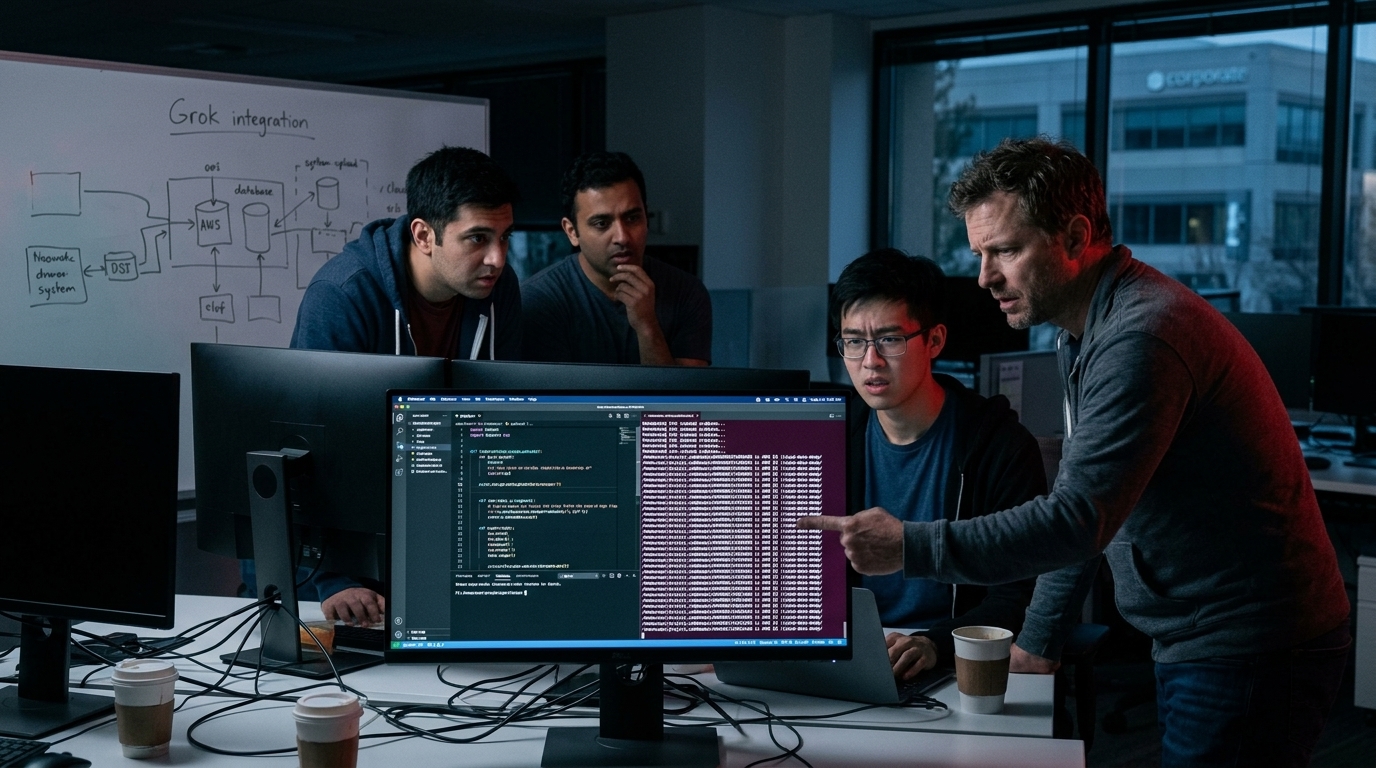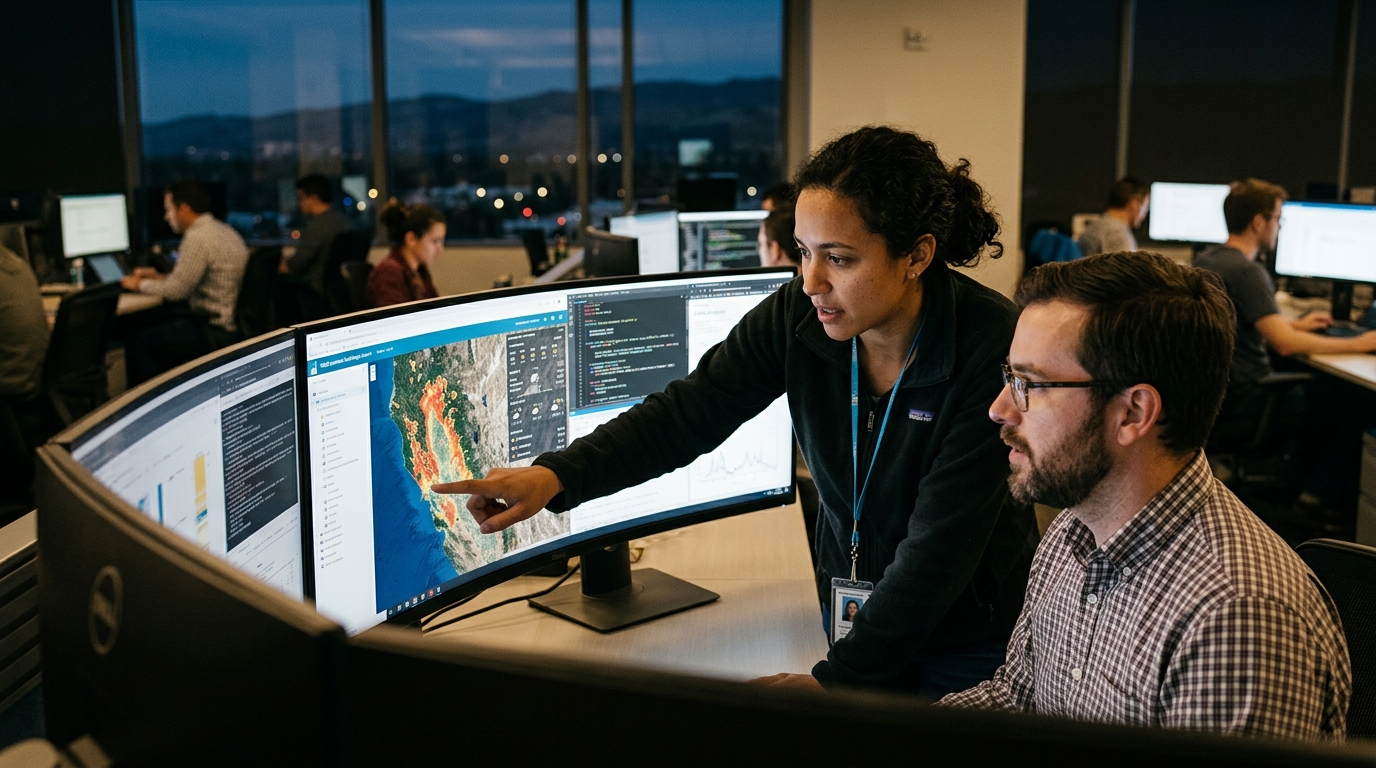
In an era where the climate crisis is transforming California's landscapes into tinderboxes, Pacific Gas and Electric (PG&E) is turning to cutting-edge technology to prevent the next catastrophe. The utility giant's use of Artificial Intelligence (AI) is no longer in an experimental phase; it has become a critical pillar of its operational strategy. By integrating machine learning models that analyze billions of data points in real-time, the company is attempting to predict where and when a spark from its equipment might ignite a devastating wildfire.
The Architecture of Prevention: Data and Algorithms
The system deployed by PG&E relies on a sophisticated interplay of data from weather stations, satellite imagery, and high-definition cameras equipped with computer vision. These algorithms process information regarding wind speed, fuel moisture levels (the dryness of vegetation), and the structural integrity of the grid. The result is a dynamic fire potential index that is constantly updated, allowing the company to make decisions regarding Public Safety Power Shutoffs (PSPS) with surgical precision.
One of the most impressive tools is the use of LiDAR (Light Detection and Ranging) combined with AI for vegetation management. Instead of traditional, time-consuming ground inspections, drones and helicopters scan thousands of miles of transmission lines. AI then analyzes these 3D renderings to identify trees that have grown dangerously close to wires or show signs of disease that could cause them to fall during a wind event.
The Challenge of Accuracy and Social Cost
However, the deployment of AI is not without its hurdles. The greatest difficulty lies in avoiding "false positives." An unnecessary power shutoff to an entire community can have severe economic repercussions and endanger vulnerable citizens who rely on life-sustaining medical equipment. PG&E maintains that thanks to AI, shutoffs are now more targeted, affecting significantly fewer customers than in previous years, while restoration times have been drastically reduced.
"Technology allows us to see the invisible. We aren't just forecasting the weather; we are forecasting our grid's reaction to it," company officials state.
Despite these technological strides, public skepticism remains high. Following the catastrophic fires of previous years, such as the 2018 Camp Fire, PG&E is under constant scrutiny from regulators. AI offers a tool for accountability, as every decision is backed by measurable data rather than subjective estimation. This "digital breadcrumb trail" is essential for the company's legal defense and for rebuilding trust with its consumer base.
The Future: From Reaction to Prediction
Looking ahead, PG&E plans to integrate even more advanced "digital twin" models. These are complete digital replicas of California's electrical grid, where thousands of disaster scenarios can be simulated before they occur in reality. This proactive approach could radically change how utilities worldwide manage the risks associated with climate change.
The PG&E case serves as a global experiment. If AI can successfully mitigate fire risk in one of the most geographically challenging regions in the world, this model could be exported to other nations facing similar threats, such as Greece and Australia. Technology is not a panacea, but in the lopsided battle against the climate crisis, it is perhaps the most powerful ally we have at our disposal.
- Reduction of proactive power shutoffs through more accurate predictive modeling.
- Automated inspection of thousands of grid miles using LiDAR and AI vision.
- Real-time monitoring of fuel moisture levels across diverse topographies.
- Enhanced transparency and accountability for regulatory compliance.