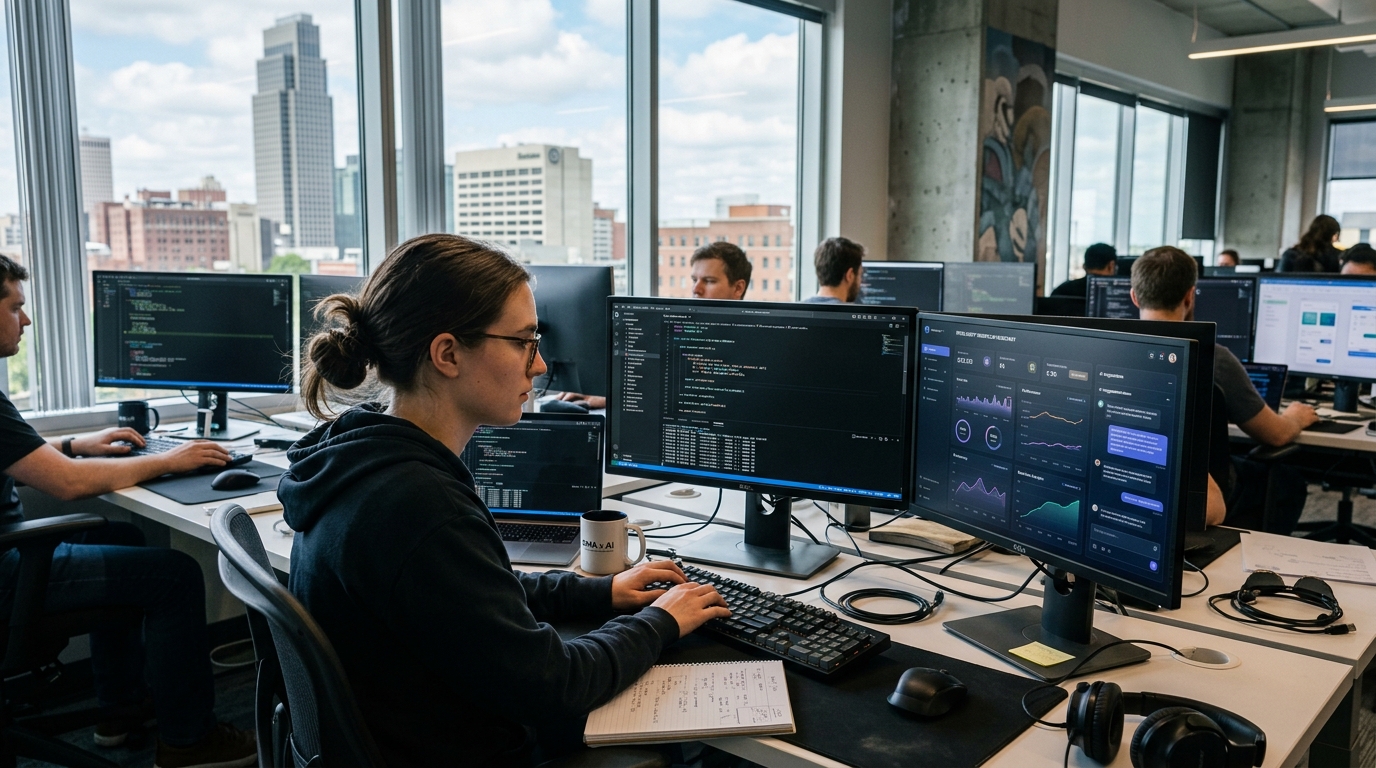
In the heart of the United States, far from the neon glow of Silicon Valley, a new technological force is coalescing. The so-called "Silicon Prairie"—the rapidly growing tech sector of the Midwest—is preparing for one of the most significant events of the year. The University of Nebraska at Omaha (UNO) has announced the availability of tickets for the OMA x AI conference, scheduled for June 30, 2026. This gathering is not merely an academic exercise; it is a critical nexus for understanding how artificial intelligence tools are reshaping daily labor, education, and local economies.
The Silicon Prairie Renaissance and Omaha’s Strategic Importance
For decades, innovation in computing was seen as the exclusive domain of coastal metropolises. However, Omaha has successfully built an ecosystem that blends traditional industrial strength with high-tech ambition. The OMA x AI conference represents the culmination of this effort. UNO, serving as a bridge between theoretical research and practical application, aims to demonstrate that AI is no longer a futuristic promise but an immediate tool for productivity. The conference agenda covers a broad spectrum, from Large Language Models (LLMs) to workflow automation and the ethical challenges inherent in their deployment.
The timing of the event, at the end of June, coincides with a period of intense volatility and growth in the AI tools market. With major players like OpenAI and Google releasing updated iterations of their models, regional businesses are seeking definitive guidance on how to integrate these technologies without compromising data security. OMA x AI promises to provide answers through workshops and panels focusing on "practical AI"—the kind that can be leveraged by a mid-sized firm or a freelancer the very next day.
From Theory to Tools: What to Expect
A central pillar of the conference will be the showcase of specialized AI tools that move beyond generic chatbots. Attendees will have the opportunity to explore applications in data analytics, content creation, and project management. The emphasis is heavily placed on the "democratization" of technology. As organizers point out, the goal is to equip Nebraskans with the skills necessary to remain competitive in a global market that is evolving at a geometric rate.
- Generative AI Workflow: Building production chains using disparate AI models.
- AI Ethics in Practice: Moving beyond theory to ensure algorithmic fairness in hiring and customer service.
- Local Economic Impact: Analyzing how AI can bolster traditional sectors like agriculture and insurance.
UNO has invited tech leaders and local entrepreneurs who have already navigated the digital transformation. This blend of perspectives is what makes OMA x AI unique. It is not a sales pitch; it is a space for critical thinking and knowledge exchange. The involvement of the academic community ensures that the conversation extends beyond mere profit margins to include the social implications of widespread automation.
The Role of Higher Education in the AI Era
The University of Nebraska at Omaha is more than just a host; it is a catalyst for a paradigm shift. By integrating AI into its curricula, UNO is preparing the next generation of the workforce. The conference functions as an open classroom where students and professionals interact. According to experts, the ability to use AI tools will soon be as fundamental as literacy or basic computer skills were in previous decades.
"AI will not replace humans, but humans who use AI will replace those who do not," is a sentiment frequently echoed within the Silicon Prairie circles.
In conclusion, OMA x AI on June 30 is expected to lay the groundwork for a new regional development strategy. With tickets selling out rapidly, it is evident that there is a profound hunger for knowledge and a desire to participate in the future. Omaha is proving that innovation knows no geographical boundaries and that the next major leap in artificial intelligence might just originate from the American heartland.