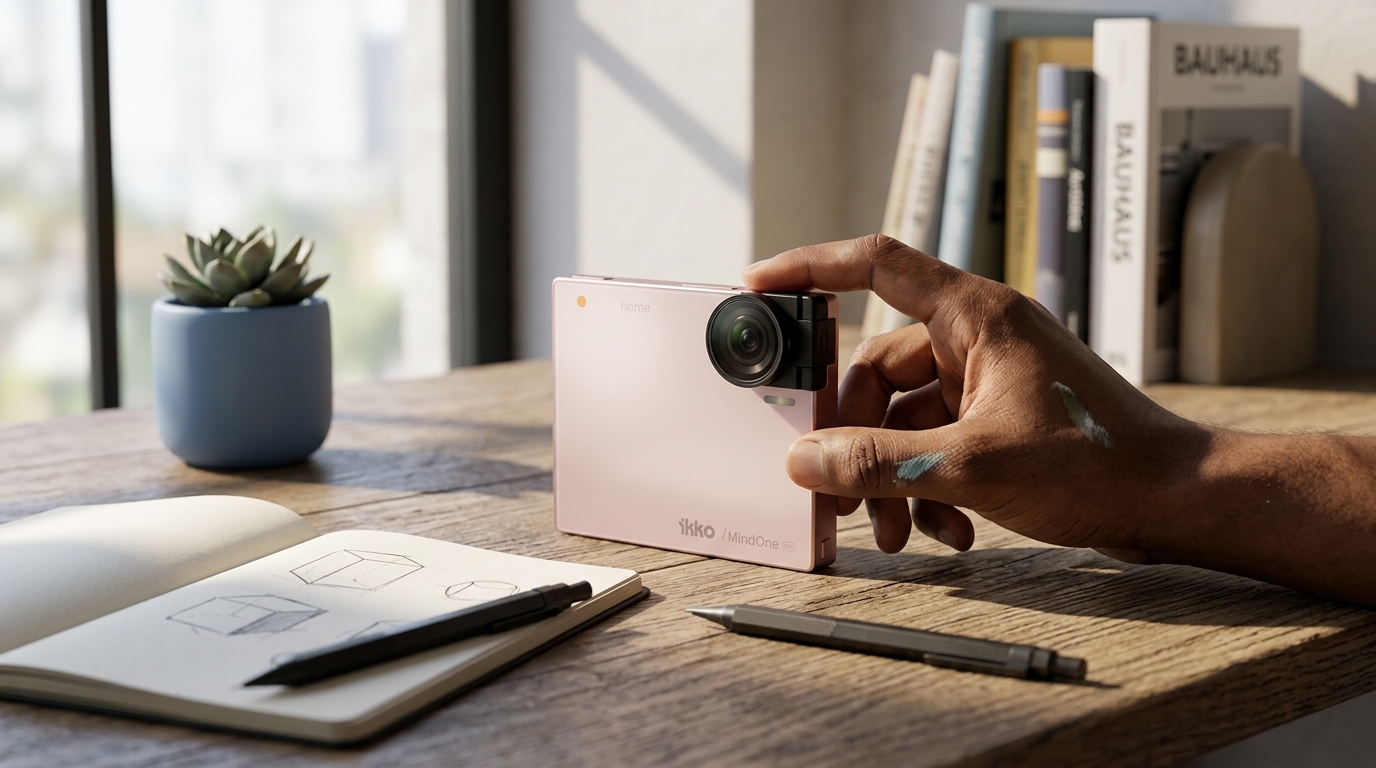
In the monolithic landscape of modern mobile technology, where smartphones have converged into nearly identical slabs of glass and metal, the Ikko MindOne Pro arrives like a manifesto of design rebellion. It is a device that flatly refuses to follow the 6.7-inch industry standard, proposing instead a form factor that edges toward a perfect square. Yet, as is often the case with hardware that dares to deviate, the chasm between aesthetic allure and day-to-day utility proves to be a formidable challenge.
The Ergonomic Return to the Palm
The first sensation upon holding the MindOne Pro is one of profound relief. In an era where phones require finger gymnastics just to reach the notification shade, Ikko’s proposition is refreshingly compact. Its shape, while technically a squat rectangle, gives the visual impression of a square, echoing the golden age of the Palm Pre or the BlackBerry Passport. The build quality is surprisingly premium, featuring a flip-up camera module that doubles as a mechanical kickstand, allowing the device to prop itself up on a desk without external help.
This design choice isn't merely an aesthetic whim; it is a statement of intent. The MindOne Pro targets those exhausted by the "tyranny of the large screen." It is a tool that fits into a pocket without bulging, enables effortless one-handed use, and sparks immediate conversation. However, the elegance of the physical object quickly collides with the harsh reality of the digital environment it inhabits.
The Collision with the Android Ecosystem
The primary struggle of the Ikko MindOne Pro isn't the hardware itself, but the world it is forced to navigate. Modern web content and social media platforms are meticulously engineered for 16:9 or even taller aspect ratios (20:9). Attempting to run Instagram, TikTok, or even a standard email client on a square-ish screen results in a fragmented experience. Content is cropped, UI elements overlap, and the amount of visible information is drastically reduced compared to a conventional device.
While Ikko has attempted to mitigate these issues through software skinning and custom scaling, the truth remains: Android is fundamentally hostile to non-standard aspect ratios. App developers rarely optimize for devices that represent a fraction of a percent of the market. Consequently, the user is left with a beautiful object that forces them to fight against the very content they wish to consume. It is a classic case of form following function, only for the function to have already been dictated by the giants of Silicon Valley.
Digital Detox or Technological Compromise?
There is a compelling argument that devices like the MindOne Pro serve as tools for "intentional computing." Because video consumption and infinite scrolling are inherently awkward on such a screen, the user is naturally nudged toward using the phone only for essentials: calls, messaging, quick notes, and perhaps high-fidelity audio (a nod to Ikko's roots in the audiophile world). In this light, the MindOne Pro isn't a failed smartphone, but a successful minimalist companion.
However, its price point and technical specifications don't always align with the "dumbphone" ethos. If one seeks a detoxification tool, there are cheaper, more focused alternatives. The MindOne Pro attempts to straddle two worlds: it wants to be a fully capable smartphone and a specialized boutique gadget simultaneously. This dichotomy makes it a niche product—reserved for design purists willing to endure the friction of poorly scaled apps in exchange for a unique tactile identity.
- The flip-up camera offers unique shooting angles and serves as a functional kickstand.
- The compact footprint is a masterclass in portability but a hurdle for productivity.
- Third-party app optimization remains the device's Achilles' heel.
- The screen quality is surprisingly high, despite its unconventional dimensions.
In conclusion, the Ikko MindOne Pro is a love letter to a different era of technology—a time when experimentation was the rule rather than the exception. It is a device you desperately want to love for its bravery, yet find yourself putting down due to the daily friction of a rectangular-centric world. Ultimately, it serves as a reminder that hardware innovation is hamstrung if the software ecosystem remains trapped in rigid boxes.