In an era where technology is fundamentally reshaping the landscape of modern conflict, the Israel Defense Forces (IDF) have announced a major expansion in the deployment of the SMASH Hopper system. This AI-driven Remote Controlled Weapon Station (RCWS) utilizes advanced computer vision to provide unparalleled precision for both static and mobile units. This move is not merely a hardware upgrade; it represents a strategic shift toward 'algorithmic warfare,' where decision-making speed and the minimization of collateral damage are paramount.
The Anatomy of SMASH Hopper: Precision as a Standard
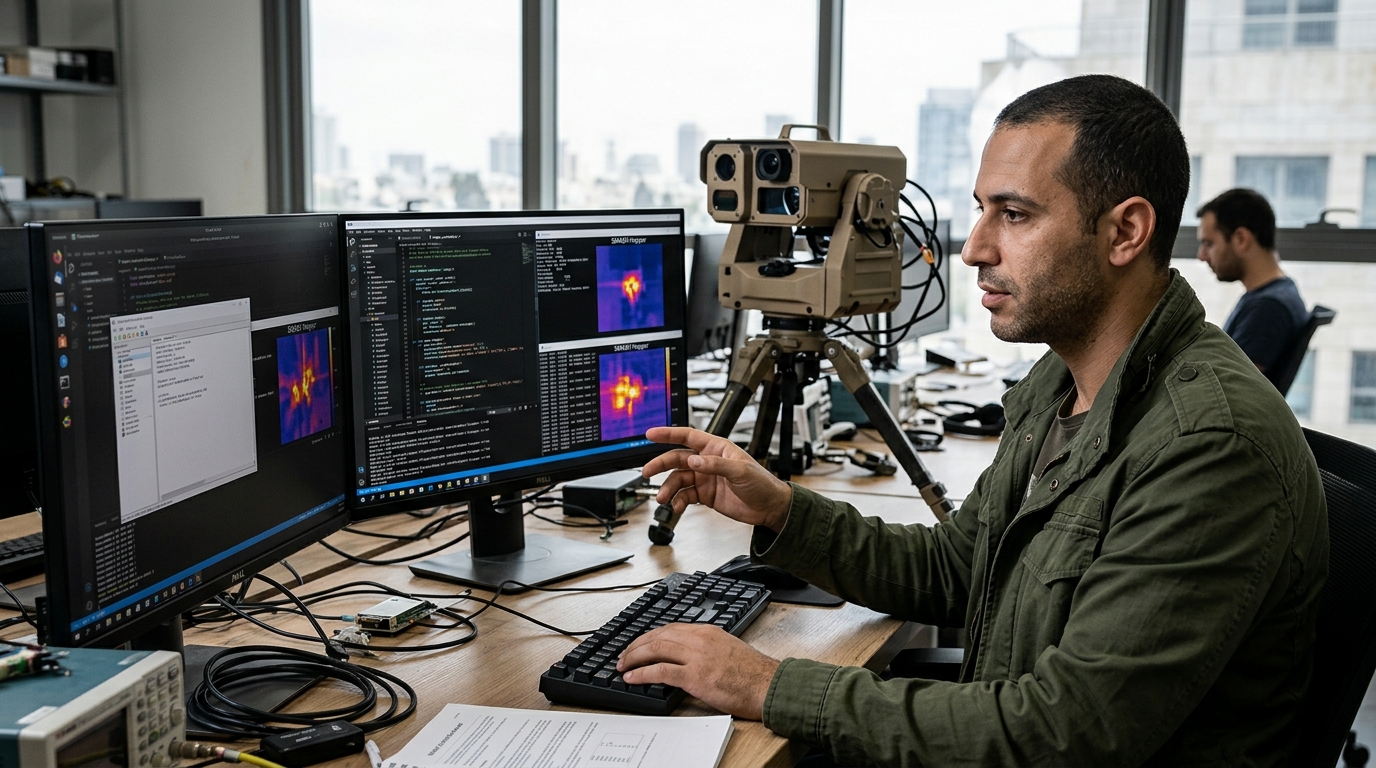
Developed by the Israeli firm Smart Shooter, the SMASH Hopper system integrates sophisticated image-processing algorithms that allow operators to 'lock onto' targets with unprecedented ease. Unlike traditional sighting systems, SMASH prevents the weapon from firing unless the system confirms a guaranteed hit. This philosophy, termed 'One Shot, One Hit,' drastically reduces ammunition consumption and mitigates the risks faced by frontline soldiers.
The Hopper is the lightweight, remotely operated iteration of this technology, capable of being mounted on tripods, tactical vehicles, or even unmanned ground vehicles (UGVs). Its ability to operate day and night, under any weather conditions, makes it an ideal solution for border security and the protection of sensitive infrastructure. The AI integration allows the system to automatically detect threats, such as loitering munitions or enemy combatants, classifying them based on their threat profile.
Counter-UAS and the Evolution of Border Security
One of the most critical applications for the SMASH Hopper in the current 2026 security climate is the neutralization of small Unmanned Aerial Systems (UAS). Drones have become a significant challenge for modern militaries, often proving difficult to detect and intercept with conventional anti-air measures. The SMASH Hopper, however, leverages AI to predict a drone's flight path and direct kinetic fire with surgical accuracy.
- Real-time automatic detection and tracking of multiple targets.
- Capability to engage high-speed moving targets with high probability of kill.
- Reduction of operator cognitive load through automated targeting assistance.
- Seamless integration into existing Command and Control (C2) networks.
The IDF has already field-tested the system in operational environments along the borders with Gaza and Lebanon, reporting high success rates. The decision to scale its deployment suggests that military leadership views this technology as the definitive answer to the asymmetric threats facing Israel today. As regional actors increasingly rely on swarm tactics, AI-assisted kinetic systems provide a cost-effective and reliable layer of defense.
Strategic Implications and the Ethics of Algorithmic Warfare
Despite the tactical advantages, the increasing reliance on systems like SMASH Hopper raises profound ethical and legal questions. While Smart Shooter emphasizes that a 'human-in-the-loop' always makes the final decision to fire, the line between assisted and autonomous action is becoming increasingly blurred. Critics argue that delegating target acquisition to algorithms could lead to a dehumanization of conflict and a potential lowering of the threshold for the use of force.
"Technology is never neutral. When we outsource the mechanics of aiming to an algorithm, we fundamentally alter the nature of moral accountability on the battlefield," argue international law experts.
Furthermore, the global proliferation of such systems could trigger a new arms race in military AI. As Israel exports these technologies to various nations, including NATO members, the SMASH Hopper is becoming the blueprint for future warfare: reduced risk for the user, but increased pressure on opponents and civilians caught in the crossfire. The challenge for the international community will be to establish norms that govern these systems before they become fully autonomous.
In conclusion, the IDF’s expansion of the SMASH Hopper signifies the full maturation of AI in tactical weaponry. It is no longer an experimental luxury but a necessary tool for survival in a battlespace where milliseconds define the outcome. The challenge for Israel remains balancing this technological edge with the ethical imperatives of modern warfare, ensuring that precision does not come at the cost of accountability.