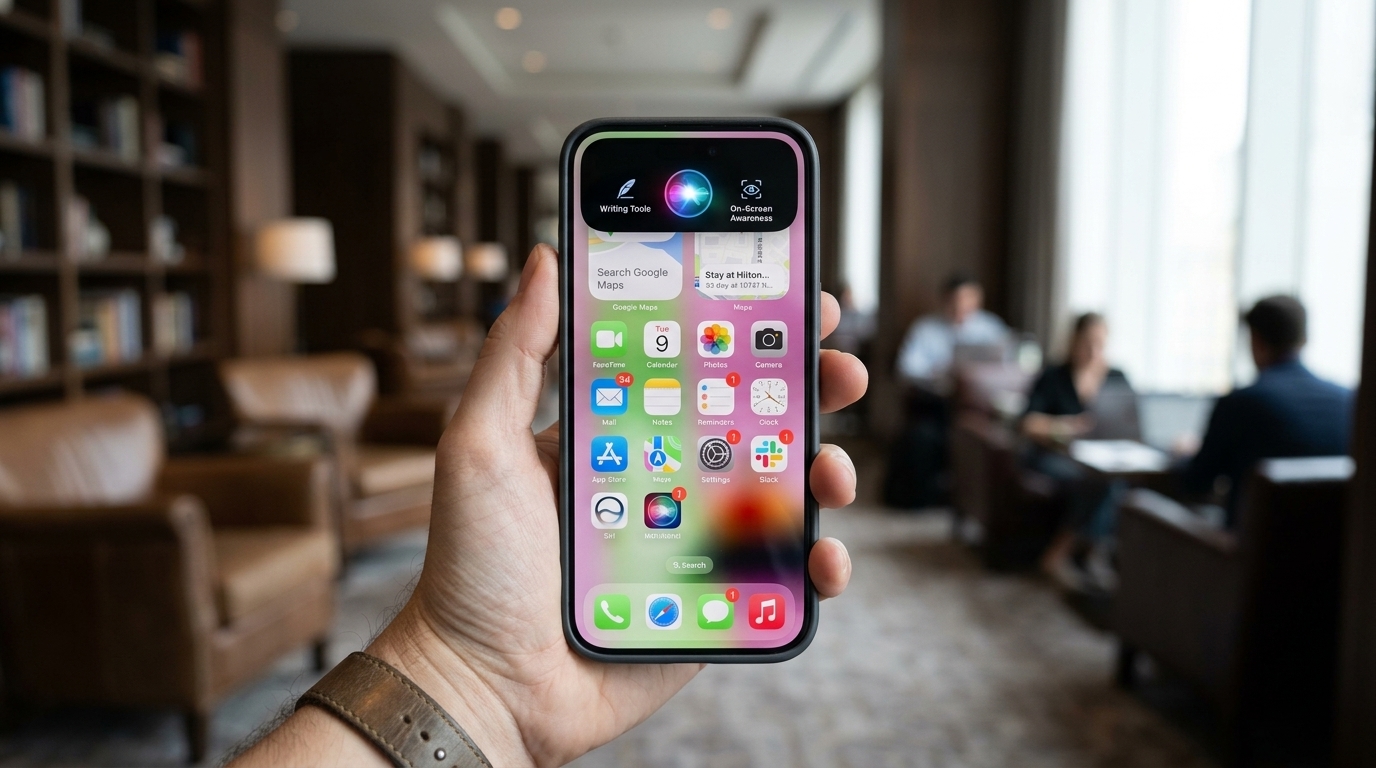
For over a decade, Siri was the tech world's favorite punchline. It was the assistant that could set a timer or tell you the weather but failed miserably at anything requiring basic linguistic nuance or context. Today, June 10, 2026, the landscape has fundamentally shifted. With the full integration of Apple Intelligence, Siri is no longer just a voice interface; it is an AI agent that finally seems to "understand" what we need.
The Daily Life Test: From Chaos to Calendar
The biggest challenge for any parent or busy professional isn't solving complex mathematical equations; it's managing the administrative burden of daily life. My recent testing focused exactly on this: Siri's ability to extract information from messy, unstructured sources. I received a school email with a poorly formatted schedule for "Spirit Week" and a photo of a crumpled flyer for soccer practices. In the past, this would have required ten minutes of manual data entry. Now, with a simple command—"Siri, add these events to my calendar"—the system recognized dates, times, and themes, accurately placing them on the correct days.
What makes the difference isn't the Large Language Model (LLM) technology itself, but Siri's access to our personal data in a secure manner. Siri now possesses what Apple calls a "Semantic Index," allowing it to search for information across messages, emails, notes, and photos without sending that data to a privacy-invading central cloud.
The Architecture of "Personal Intelligence"
The success of the new Siri rests on three pillars: natural language understanding, on-screen awareness, and cross-app actions. During my testing, I noticed that Siri can now self-correct if I stumble or change my mind mid-sentence. "Siri, set a reminder for... actually, send a message to George that I'll be five minutes late." The transition is seamless, something that previously would have led to total confusion.
- On-Screen Awareness: If you're looking at an address in Maps, you can say "Send this to my dad," and Siri knows exactly what you mean.
- Contextual Relevance: You can ask questions like "When does Maria's flight land?" and Siri will scan recent emails and messages to find the answer.
- Privacy First: The use of Private Cloud Compute ensures that complex requests are processed on Apple servers with encryption so robust that even the company itself cannot access the data.
Why This Changes the Game for Apple
While Google and Microsoft have focused on generative AI tools that create text or images, Apple chose the path of utility. The new Siri isn't trying to write a poem (though it can); it's trying to save you time on daily chores. This "AI for the rest of us" approach is what makes the iPhone indispensable again. The integration is so deep that users are beginning to perceive Siri not as an app, but as the connective tissue of the entire iOS operating system.
"Real artificial intelligence isn't what impresses in a demo; it's what disappears into daily life, solving problems before we even think of them."
However, there is still room for improvement. In some cases, Siri still struggles with complex commands involving third-party apps that haven't yet updated their App Intents. Additionally, battery consumption during heavy use of Apple Intelligence remains a concern for older iPhone models that support the tech. Nevertheless, the conclusion is clear: Siri is no longer the joke of Silicon Valley. It is a capable assistant that, for the first time, actually works.