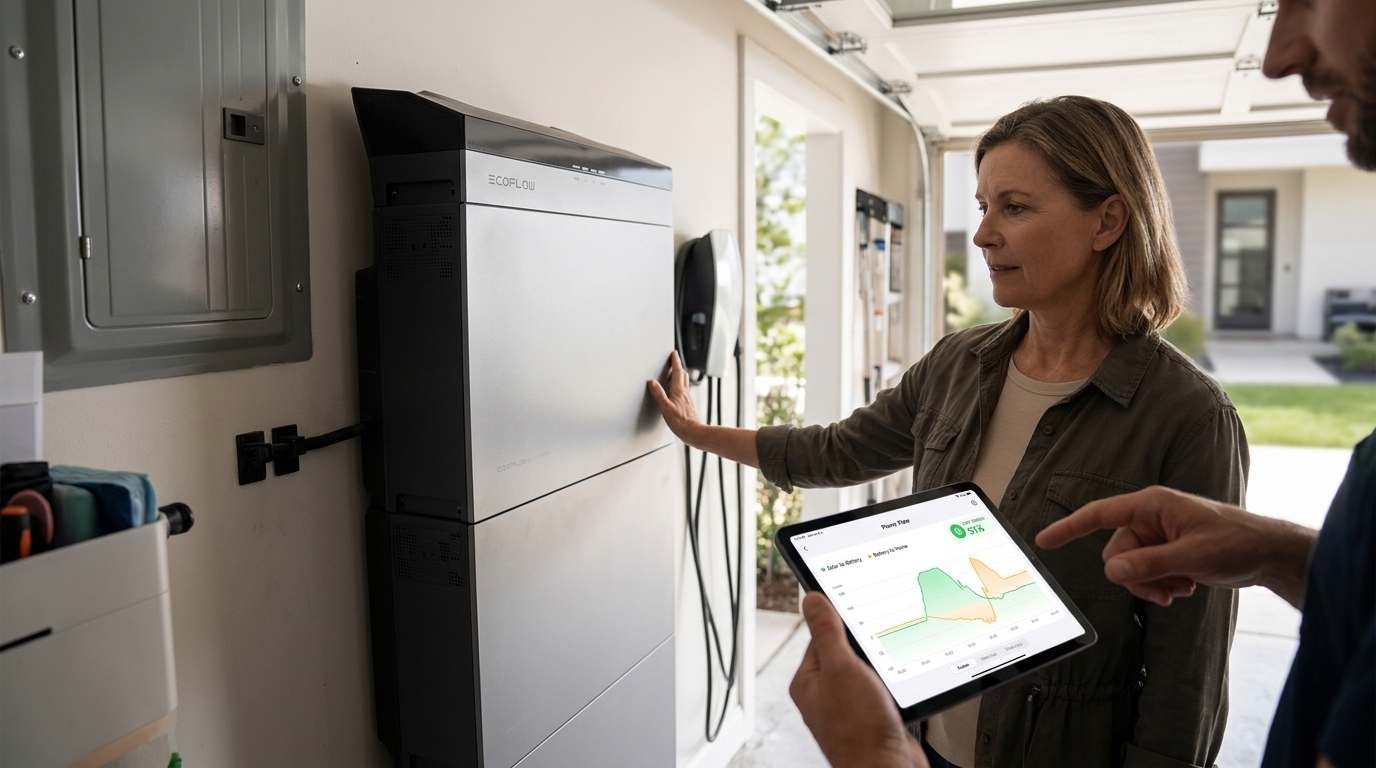
In an era where the energy landscape is shifting faster than ever, the need for home autonomy is no longer a luxury for the few, but a strategic survival move for the middle class. The EcoFlow PowerOcean is not just a battery; it is a comprehensive energy management system that aims to change how we interact with the electrical grid. As we move through the summer of 2026, with temperatures soaring and air conditioning demand pushing grids to their limits, EcoFlow's solution feels more relevant than ever.
Design and LFP Technology
The PowerOcean stands out from the competition thanks to its modular design. Starting with a base unit of 5kWh, the system can expand up to 45kWh, allowing homeowners to tailor their investment to their actual needs. The use of Lithium Iron Phosphate (LFP) chemistry represents the gold standard for safety and longevity. Unlike traditional lithium-ion batteries, LFP batteries have a much lower risk of thermal runaway and can withstand over 6,000 charge cycles before their capacity drops to 80%.
This translates to approximately 15 years of daily use, making the PowerOcean a long-term infrastructure investment. EcoFlow has invested heavily in an 800V high-voltage architecture, which reduces energy losses during conversion and allows for thinner wiring, simplifying installation and improving the aesthetics of the installation space.
The Economic Dimension: Arbitrage and Autonomy
The real advantage of the PowerOcean lies not only in storing energy from solar panels but in smart grid management. Through the EcoFlow app, users can schedule the system to charge during off-peak hours (night tariffs or low-demand periods) and power the home during peak hours when electricity prices skyrocket. This practice, known as energy arbitrage, can reduce electricity bill costs by up to 50%, even without solar panels.
- Reduced Dependency: Protection against price fluctuations in the wholesale energy market.
- Backup Power: Instant transition to battery mode during a power outage, with a response time that protects sensitive devices.
- Green Footprint: Maximizing the use of renewable energy sources by storing excess production.
In many markets, where Net Metering is giving way to Net Billing, having a battery becomes a prerequisite for the ROI of a solar investment. The PowerOcean allows the user to consume their own energy at night, rather than selling it at rock-bottom prices to the grid during the day.
Installation and User Experience
Installing such a system remains a complex process requiring a certified electrician, something EcoFlow tries to simplify through the "plug-and-play" design of its modules. However, installation costs remain a significant factor to be considered. The company's app is exceptionally intuitive, offering real-time data on consumption, production, and battery health.
"Energy is no longer an invisible commodity we pay for at the end of the month, but a resource we actively manage," states the Wired review, highlighting the shift towards the 'prosumer' model.
In conclusion, the EcoFlow PowerOcean represents the maturation of the home battery market. It is not the cheapest solution available, but its reliability, scalability, and smart software make it one of the strongest contenders against the Tesla Powerwall. For those seeking true energy independence in 2026, investing in such a system now appears to be a rational financial move rather than an experiment for tech enthusiasts.