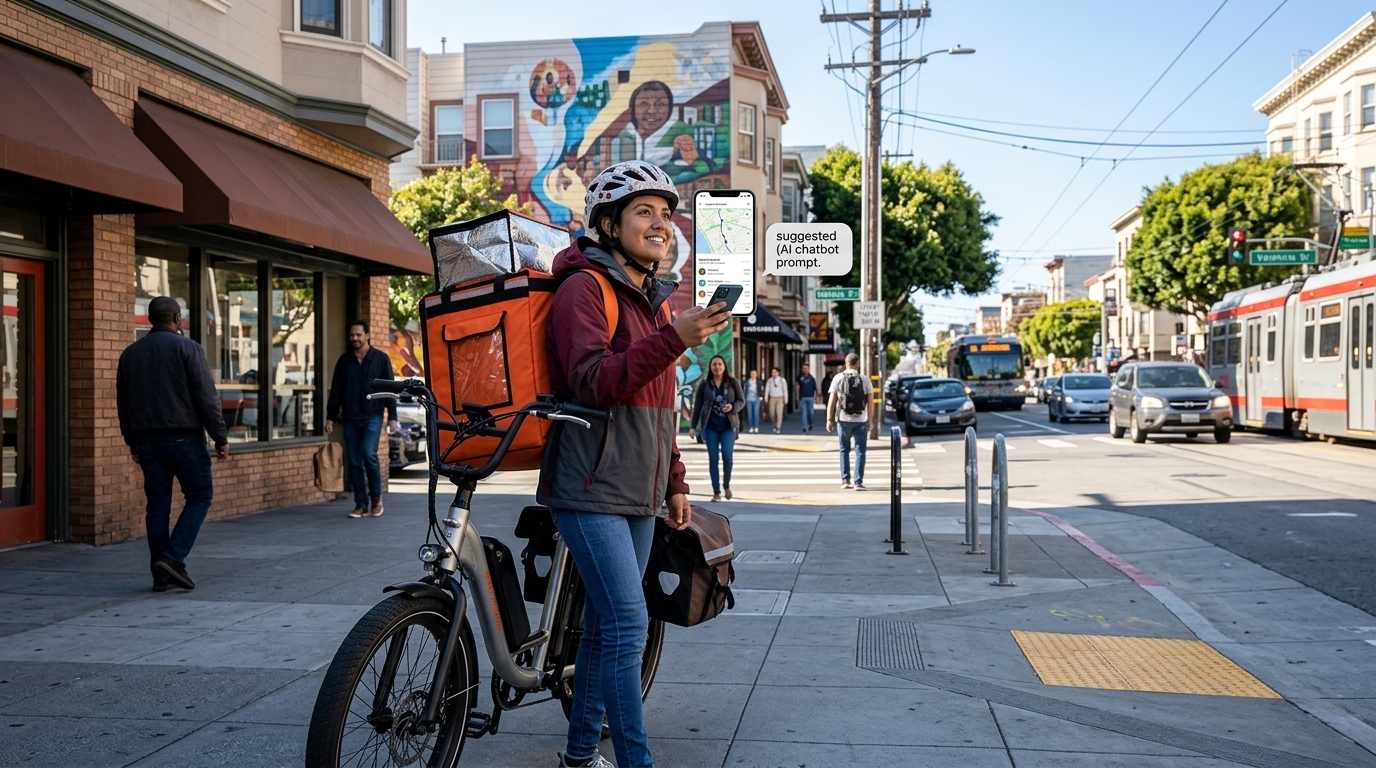
In today's digital landscape, the paradox of choice has become a daily burden. 'Analysis paralysis' is a phenomenon experienced by millions of food delivery app users, who often spend more time scrolling through endless grids of restaurant tiles than actually enjoying their meals. DoorDash, the dominant force in the U.S. delivery market, has decided to tackle this friction head-on by leveraging the power of Generative AI.
The new feature, dubbed 'Ask DoorDash,' is far more than a standard search bar. It is a sophisticated digital assistant capable of understanding complex, natural language queries. Instead of manually toggling filters for cuisine, price, or delivery time, users can now type—or speak—prompts as specific as: 'I want a high-protein, gluten-free dinner that isn't a salad and costs under $25.' The system parses thousands of menus in seconds and provides curated recommendations, often explaining why a particular dish fits the user's criteria.
The Psychology of the Conversational Interface
DoorDash’s strategic pivot is rooted in a deep understanding of consumer psychology. Research suggests that over-exposure to visual stimuli—the 'endless scroll' of food photography—can lead to cognitive fatigue and decision dissatisfaction. By shifting to a conversational interface, DoorDash aims to reduce this cognitive load. As industry analysts point out, the experience is moving from 'discovery by browsing' to 'discovery by dialogue,' mimicking the interaction one might have with a knowledgeable waiter or a local foodie friend.
This AI model isn't just looking at ingredients. It integrates vast amounts of data, including user reviews, past ordering habits, and real-time operational data. For instance, if a user asks for 'something comforting for a rainy day,' the chatbot can suggest ramen or pasta from restaurants that have high scores for 'packaging integrity,' ensuring the food arrives hot and satisfying despite the weather conditions.
Impact on Restaurants and the Competitive Landscape
The introduction of the AI chatbot doesn't just change the user experience; it fundamentally alters the playing field for restaurant owners. Until now, visibility on platforms like DoorDash, Uber Eats, or Deliveroo was largely driven by paid promotions and traditional SEO (Search Engine Optimization). In the age of AI, we are entering the era of AIO (AI Optimization). Restaurants must now ensure their digital menus are incredibly detailed and data-rich, as the chatbot 'reads' every description to match dishes with specific user intents.
However, this shift brings risks, notably algorithmic bias. There is a valid concern that the chatbot might systematically favor large national chains that have the resources to optimize their data, potentially sidelining small, independent eateries. While DoorDash maintains that the algorithm prioritizes relevance and quality, the transparency of these AI 'black boxes' remains a significant point of contention for regulators and small business advocates alike.
The Future: From Food to the 'Everything App'
DoorDash’s AI strategy is a key component of its broader ambition to become an 'everything app.' The chatbot's capabilities are expected to extend far beyond prepared meals. The company is already expanding into groceries, alcohol, flowers, and convenience store items. Imagine telling the AI, 'I'm coming down with a cold, get me everything I need to feel better,' and having the system automatically bundle chicken soup, Vitamin C, and tissues from various merchants into a single coordinated delivery.
As of June 2026, the rollout of 'Ask DoorDash' represents a critical milestone in the 'convenience economy.' The ultimate success of this tool will depend on its accuracy and the degree to which it feels helpful rather than intrusive. If DoorDash can successfully transition users from the scroll to the chat, it will not only capture more of their time but also gain unprecedented insights into the 'why' behind consumer choices—data that is worth its weight in gold in the modern economy. The era of the menu as a static list is dying; the era of the menu as a conversation has begun.